Zeri fry contains no jelly, wears no batter, and is — technically — not fried the way its name suggests either: it is a plain deep-fried oval of okara and potato, glazed with sauce, that Gyoda City has eaten since the Meiji years. Its name is a pun that wore smooth: zeni-furai, the little money-fry, after the koban coin its shape copies.
A vegetable manju comes home from a war
The origin on the record is a soldier’s memory. The master of the Ippuku Chaya, a tea house in Gyoda’s Mochida district, served in north-east China during the Russo-Japanese War and ate a vegetable manju there; what he built from it back home — okara and boiled potato worked together with carrot, negi and other vegetables, shaped and plain-fried — was being sold by the late Meiji years and never left.
The proportions are each shop’s own: some bind with egg, some lean on the potato, and the record is plain that the ratio of okara to potato differs from counter to counter. What does not change is the form — an oval patty, fried without any coating at all, which is why the texture is its own: crisp at the edges, soft and faintly sweet within, finished with sauce.
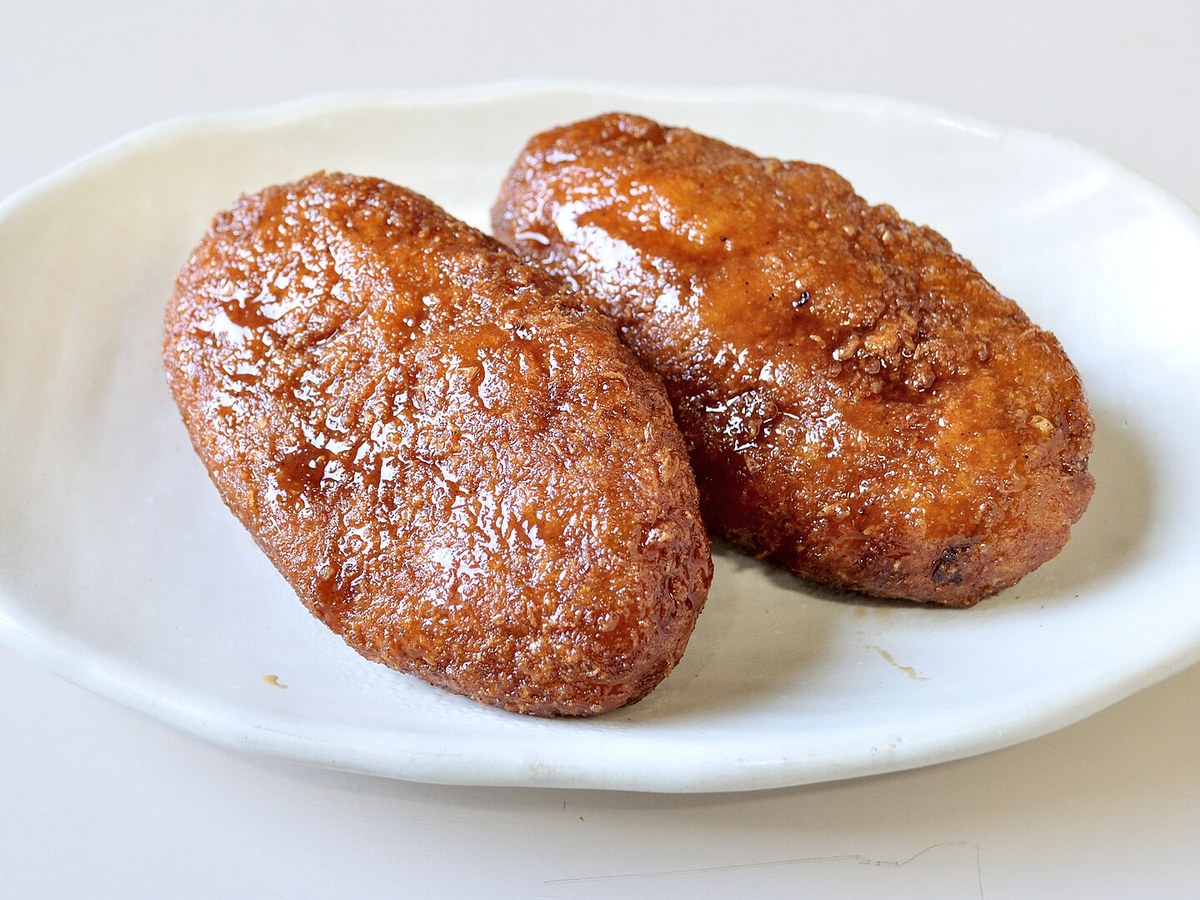
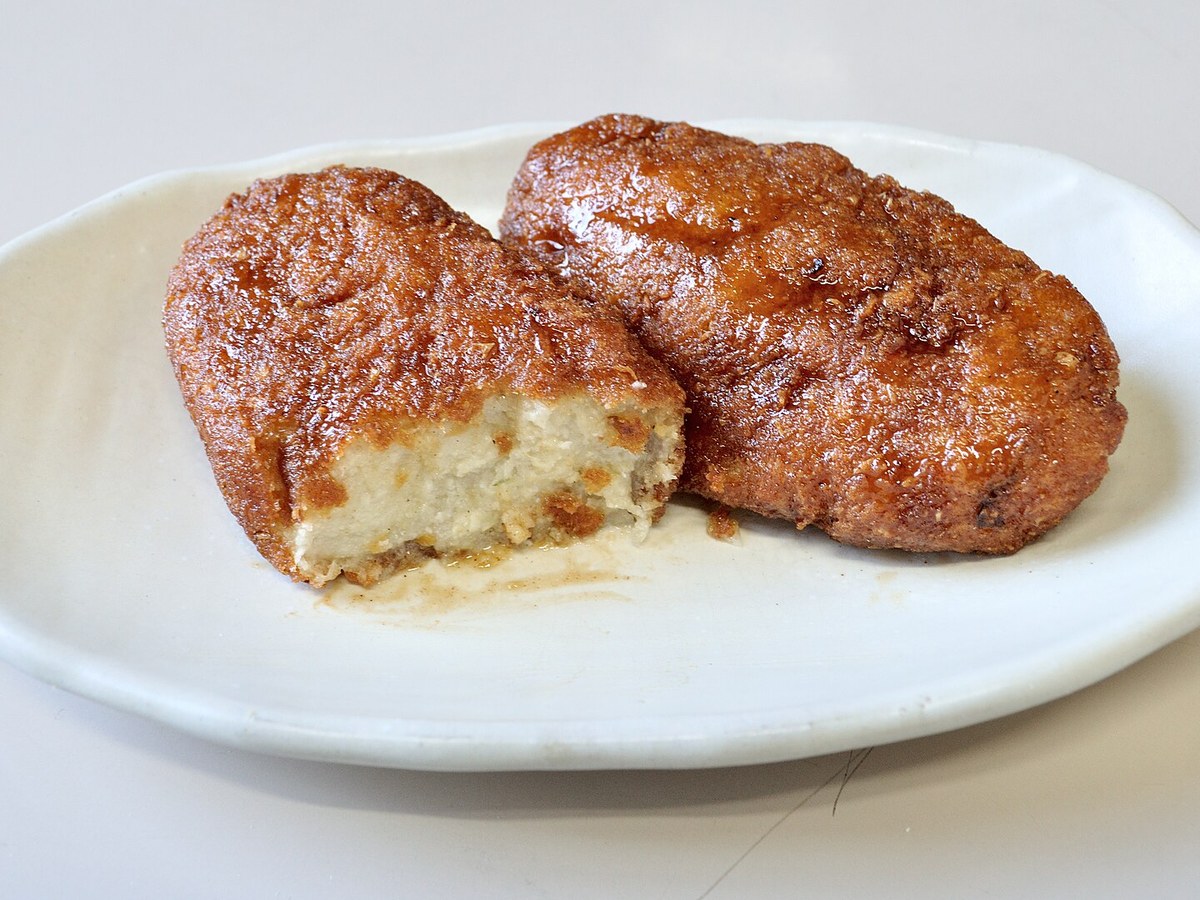
Not jelly: the money pun
Say the name carefully. The “zeri” is not the gelatin sweet: the standard account derives it from “zeni-furai” — zeni, small money, because the patty copies the oval koban coin, plus furai — worn down in local mouths to zeri-furai. The record keeps a rival derivation alive (the “furai” half from Gyoda’s cloth trade, “fu” from fabric) and states honestly that the matter is not settled; a Gyoda tofu maker has even disputed the money story outright in the prefectural press. The pun, settled or not, is the one the city and the agriculture ministry repeat.
The city has put its name on the dish in the modern way as well: “Gyoda Zeri Fry” is Gyoda’s registered trademark, and the mascot Kozeni-chan — “little money” — fronts the promotion.
The tabi town’s working snack
Gyoda was a town of tabi: the split-toe socks were its industry, the storehouses its landscape, and cheap filling snacks its canteen. Compiled accounts describe zeri fry as the treat of the tabi-factory women in the early Showa years — one piece, hot from a butcher’s or tofu shop’s counter, sauce-dark and sustaining. It is sold that way still: at stands and counters across the city and at festival stalls in season, a snack rather than a dish.
In 2017 the Agency for Cultural Affairs made the pair of them — zeri fry and Gyoda fry — component assets of the Japan Heritage story of Gyoda, the tabi-storehouse town, the first Japan Heritage listing in Saitama; the Agency’s 100-Year Food programme then chose both for its modern division, the foods born in Meiji and Taisho.
One hundred yen of Gyoda
The price is part of the identity: on the record, resting on the city tourism association, a zeri fry averages about ¥100 a piece. Order two. Eat the first as it comes, sauce-glazed from the fryer; the second teaches you the interior — pale, soft okara, nothing like a meat croquette and not trying to be.
One warning before you order in Gyoda: do not ask simply for “fry”. In this city that word belongs to the other dish — Gyoda fry, a flour-batter pancake grilled on a teppan — and the two specialities are sold, mostly, by different shops that do not forgive the confusion. Ask for zeri fry by its full, misleading name.
Sources — checked 14 November 2026
- Zeri fry — encyclopedia record (the Ippuku Chaya origin, the name dispute, the heritage listings)
- Saitama Magazine — “Why is zeri fry called jelly?” (Gyoda City and MAFF accounts compared, 2026)
Checked 14 November 2026 (stored links re-fetched and judged per product): reserved where the page says so, with an editorial review note kept per product. Press, PR and travel use stays outside the grant.
Editorial review 2026-11-14