Soy sauce feels too ordinary to have a birthplace. It has one: Yuasa, a port town on Wakayama's coast, where — the standard account runs — the liquid that collected in barrels of Kinzanji miso in the Kamakura period turned out to be a seasoning in its own right. Seven and a half centuries later the town still brews, in streets the state preserves because brewing built them.
The liquid in the miso barrel
The food-culture atlas tells the origin with a scholar's honesty. Kinzanji miso, a chunky preserving miso, was introduced from Song China in the Kamakura period — tradition attaches it to the monk Kakushin. In Yuasa, makers noticed the reddish-brown liquid pooling in the miso barrels: deep umami, aroma, salt and a hint of sweetness in one liquor. They refined it, deliberately, until it stood alone as soy sauce. And then the atlas adds, in the same breath, that clear records of exactly when Yuasa brewing began are lacking and the timing has theories. This page keeps both halves of that sentence, as the source does.
What is documented is the trade that followed. A record from 1535 has a little over 100 koku of Yuasa soy sauce loaded onto fishing boats, shipped to Osaka and sold there. Under the Kishu Domain's protection the town swelled: at its Edo-period peak, about ninety-two brewers lined Yuasa's streets. The brewing money built the townscape — machiya with tiled roofs and earthen storehouses on an Edo street plan — that in 2006 became the first soy sauce brewing town selected as a national Important Preservation District, and in 2017 was recognised as Japan Heritage: 'The First Drop: Kishu Yuasa, Birthplace of Soy Sauce Brewing.'
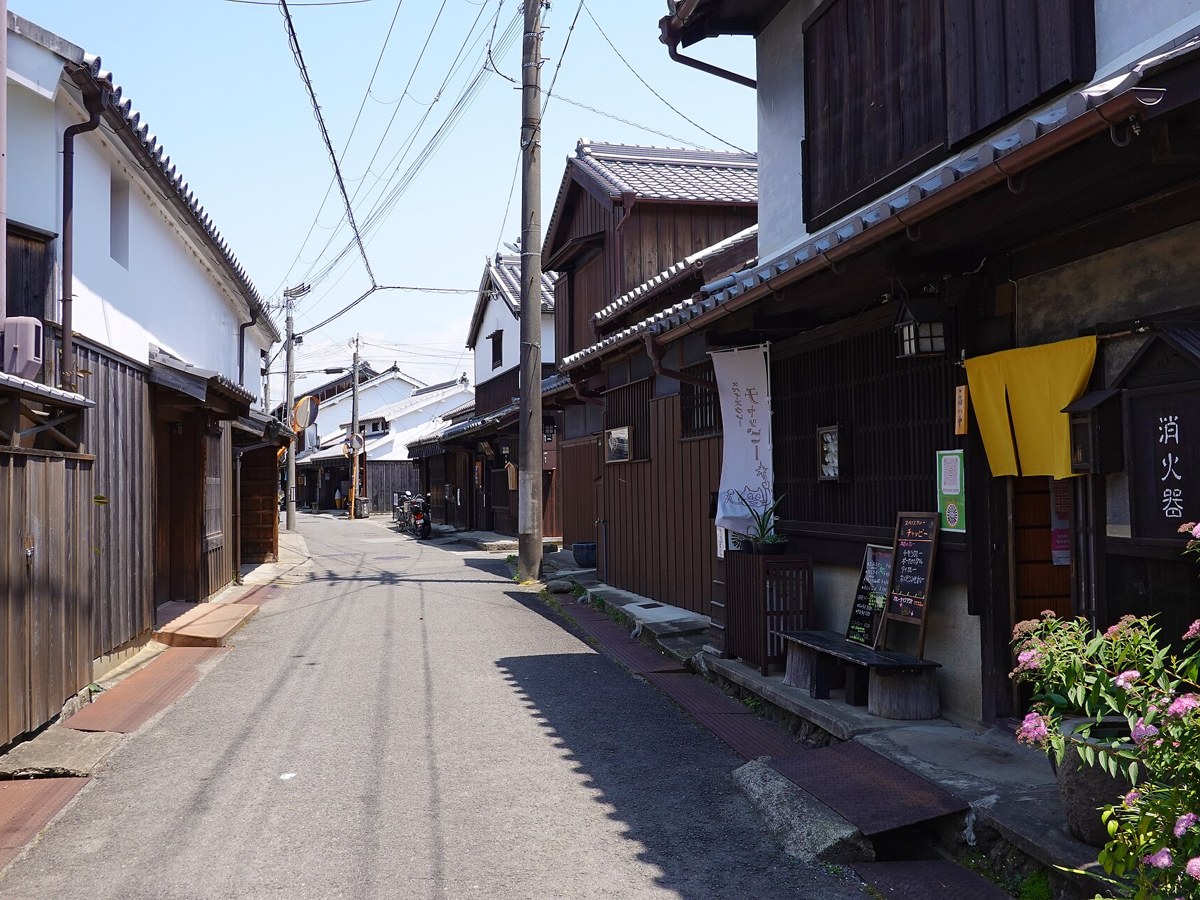
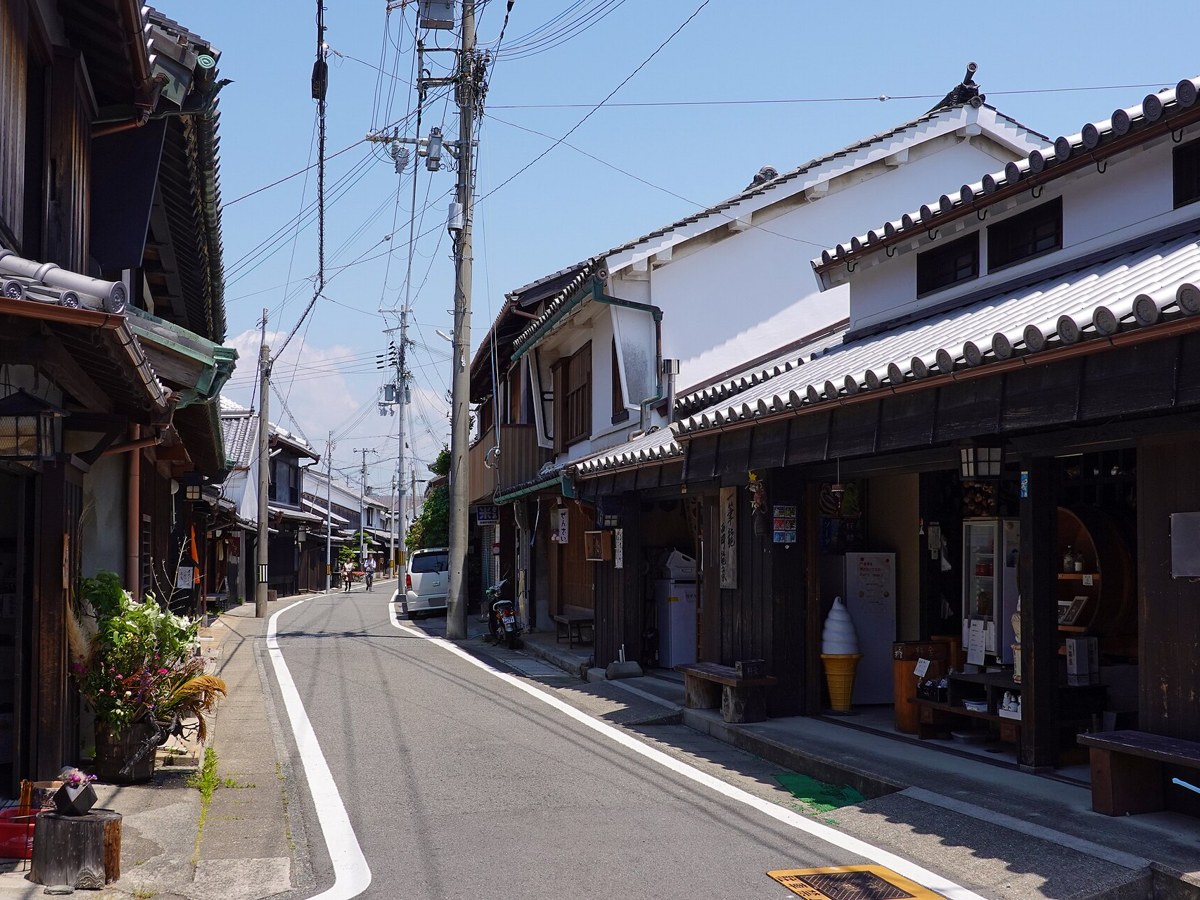
Cedar barrels and winter brewing
The atlas fixes the traditional forms that still define the town's make. The ingredients are the plain three — soybeans, wheat, salt — worked by koji. Yuasa keeps breweries that mature their sauce slowly in large cedar barrels, and breweries that hold to kan-jikomi: brewing only in winter, when the cold does the controlling. It also records the town's most austere product, Nigori Bishio, in which only the liquid the koji itself releases is drawn off — unpressed, unheated, the fermentation's own first runnings.
The living scale of it is in one maker's own numbers. Yuasa Soy Sauce Ltd states on its own site that the town at its heyday held ninety-two factories and that four remain; its own sauce is made by hand, without machines, because the traditional method never had them. The town brews as a heritage site that happens to work, not a museum that happens to sell — brewery tours run, soy sauce soft-serve is sold in the preservation district, and since 2008 all four of the town's elementary schools have run the programme in which children grow soybeans and make soy sauce themselves.
Two years against six months
The maker states the modern contrast itself: industrial fermentation has shrunk to between one and six months, while its sauce undergoes traditional fermentation of one to two years — the Cabinet Office's own magazine puts it at up to two years, as much as four times longer than industrial sauces — and is made from ingredients sourced entirely within Japan, with no artificial preservatives, flavours or colours. Its signature addition is the black soybean of Tanba, and its water is Yuasa's own, whose mineral content the company calls ideally suited to the make. The external verdicts are on its page too: Belgium's Monde Selection award annually since 2006 — a Gold Quality Award every year on the government magazine's account — and a place at the top of Japan's official soy sauce ranking, which tests nitrogen content among other measures. The same magazine counts nine Michelin-starred restaurants across Europe cooking with it.
The price of the slow way, on checked listings: the house's Kurasho Taru-shikomi — its barrel-built standard — in a 720ml bottle lists at ¥1,950 on one checked listing and ¥2,130 tax included on the maker-group listing. Wakayama's standing stories are a plum, a ramen and a lacquerware; Yuasa is the prefecture's first brewed seasoning — and the only story in this collection that seasons most of the others.
Visiting the first drop
Yuasa rewards the slow visit the sauce is made by. Walk the preservation district first — the storehouses and tiled machiya are the brewing industry's own architecture — then take a brewery tour, which the prefecture's tourism site lists as free and about twenty minutes at the Yuasa Soy Sauce brewery, with the shop selling the range, soy sauce ice cream included.
Buy the barrel-built bottle, and taste it against the supermarket sauce you grew up with, neat, on a spoon. The difference the two years buy is not strength — it is the absence of edges. That, on the maker's telling, is what Yuasa has been protecting since a miso barrel first wept.
Sources — checked 10 November 2026
- Food-culture atlas: Yuasa shoyu (checked atlas entry)
- Yuasa Soy Sauce Ltd: the company's own English page (maker's own site, read first-hand)
- Highlighting Japan (Cabinet Office): An Unmistakable Aroma — Yuasa Soy Sauce (official profile)
- Kauche: Yuasa Soy Sauce Kurasho Taru-shikomi 720ml (checked retail listing)
Original prose and official links only; no source text or maker media reproduced. Photos are credited Creative Commons works, not product photographs.
Editorial review 2026-11-10