A white powder so labour-intensive that a kilogram of wild kudzu root yields a hundred grams of it — and so easy to fake that Nara had to trademark it. Yoshino honkuzu is kudzu starch refined in the Yoshino region by cold-water washing, the Yoshino-sarashi method, from root starch and nothing else. Blends may call themselves Yoshino kuzu. Only the 100 percent powder, made by the four houses of the makers cooperative, is honkuzu.
A trademark that means 100 percent
Nara Prefecture’s own definition is exact. Yoshino honkuzu is kudzu flour manufactured in the Yoshino region of Nara, made by washing and refining the starch of the kudzu root in water by the traditional Yoshino-sarashi — also called kanzarashi, cold-water exposure — method, using 100 percent kudzu-root starch. The name is protected as a regional collective trademark (No. 5063960), held by the Yoshino Kuzu Manufacturers’ Cooperative, whose four members are Inoue Tengyokudo, Kurokawa Honke, Morino Yoshino Kuzu Honpo and Nada Shoji.
The distinction the trademark polices is purity. As the Tengyokudo shop record puts it: 100 percent pure kudzu flour is hon kuzu, and hon kuzu purified in Nara is Yoshino Hon Kuzu — while plain “Yoshino Kuzu” can be a mixture of kudzu flour and sweet-potato starch. The two sit side by side in the same maker’s catalogue at very different prices, which is the surest sign the difference is real.
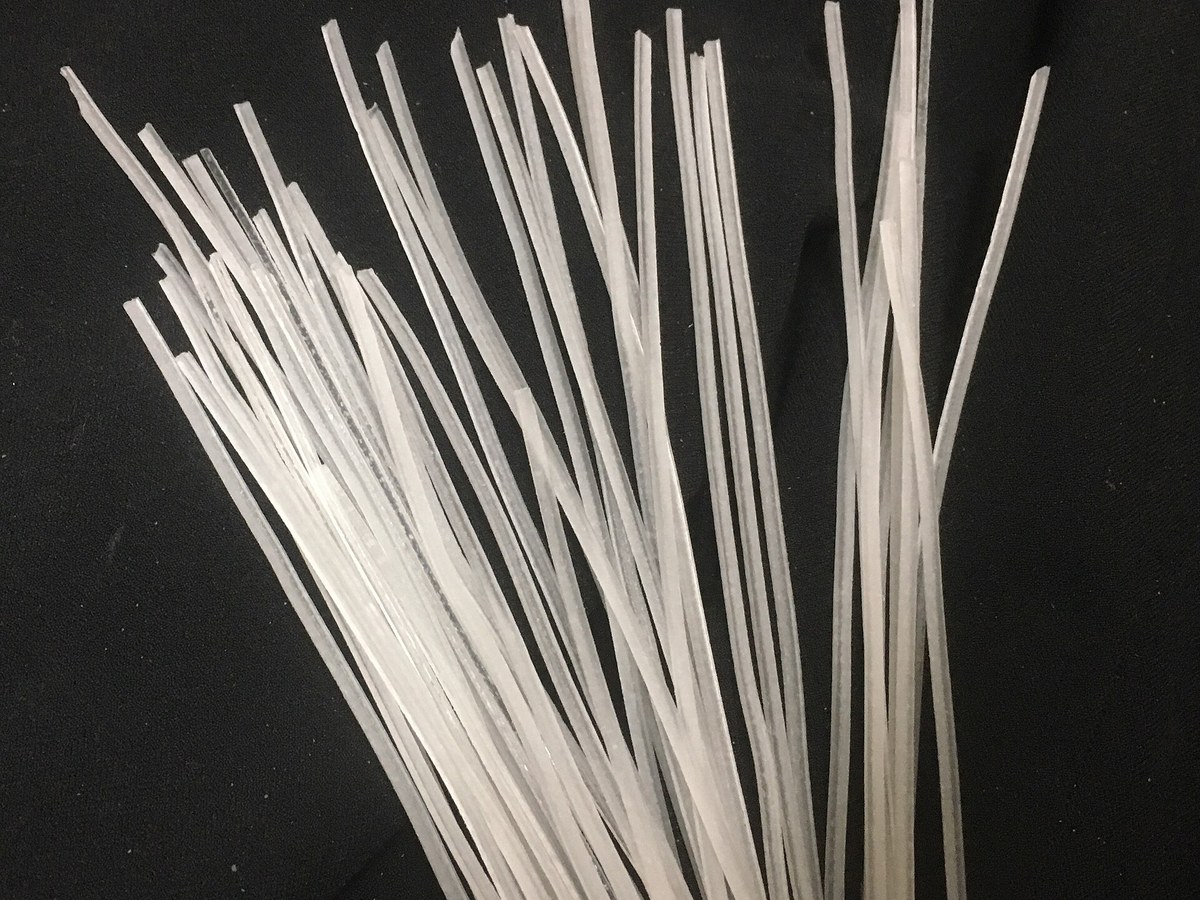
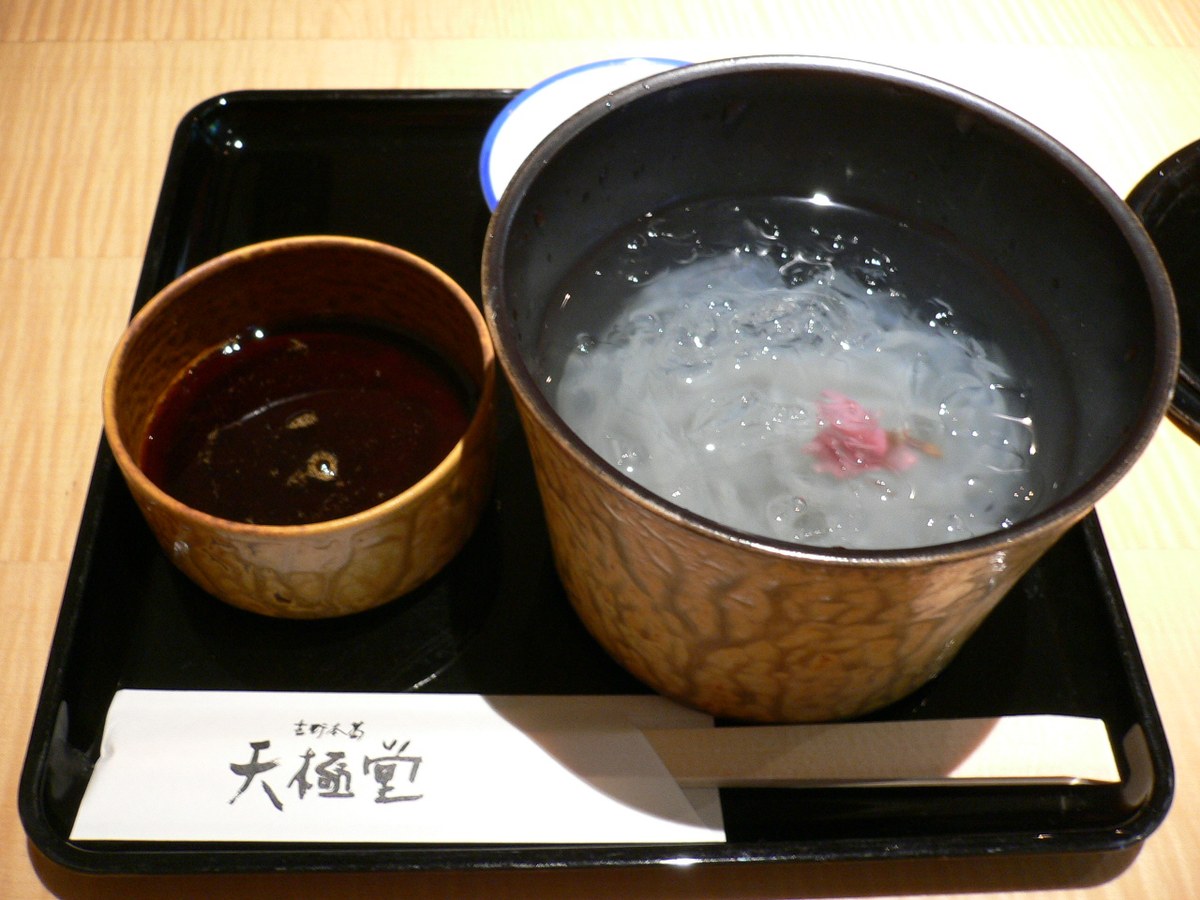
A hundred grams from a kilogram of root
Kudzu is a leguminous climbing plant, one of the seven flowers of autumn, and its root is mostly work. Only about 100 grams of flour can be extracted from a kilogram of root, which is why genuine honkuzu has always been a luxury ingredient rather than a thickener. The Yoshino-sarashi refining — repeated washing and settling in cold water — is what the Yoshino houses have guarded for generations; it is the step that turns root starch into the clean, faintly sweet powder wagashi makers specify by name.
The flour’s uses are the classic kuzu repertoire: kuzuyu, the hot sweet drink; goma-dofu, the sesame “tofu” set with kuzu instead of soy; kuzu-mochi; and above all kuzukiri — translucent noodles cut from a set sheet of kuzu jelly, served cold with dark kuromitsu syrup, where there is nowhere for an inferior starch to hide.
Tengyokudo: 150 years, and a shop by Todaiji
The best-known of the four cooperative houses is Inoue Tengyokudo, established in 1870 and making its honkuzu in Gose City. Its directly run Nara main shop stands near the Nishimon gate ruins of Todaiji, a ten-minute walk from Kintetsu Nara Station (open 10:00–19:30, closed Tuesdays), and serves the flour’s whole repertoire made fresh: chewy kuzu-kiri, jiggly kuzu-mochi, elastic goma-tofu and a reservation-only all-kudzu course, at a budget of 1,500 to 2,000 yen. The retail corner sells the flour itself for home cooking.
The priced record is the maker’s own flagship bag: Tengyokudo’s Tenkyoku Yoshino Honkuzu, 150 grams of 100 percent honkuzu from wild kudzu roots, lists at 1,250 yen including tax at Yodobashi’s maker store. Set that beside the same house’s blended Yoshino Kuzu at 692 yen for the same weight and the article’s point makes itself: in Yoshino, purity is the product, and it is priced like one.
Why Yoshino honkuzu belongs to one region
Kudzu grows all over Japan, and kudzu starch is made elsewhere. The article documented here is defined by a chain that exists in one place only: a named region (Yoshino, Nara), a named method (Yoshino-sarashi cold-water refining), a 100 percent purity rule, and a regional collective trademark held by a four-house cooperative to enforce all three. A bag that meets the definition can come from nowhere else, because the definition itself is the address.
It is also a definition with a flavour. Chefs do not specify honkuzu out of sentiment: the cold-refined pure starch sets clearer, melts cleaner and tastes faintly of the root, which is why a noodle made of nothing but kuzu, water and syrup can be a destination dish in Nara — and why the blended powder, however serviceable, is a different product.
Sources — checked 13 November 2026
- Nara Prefecture — Yoshino Honkuzu report (definition, trademark and makers)
- GOOD LUCK TRIP — Yoshino Hon Kudzu Tengyokudo Nara main shop
- Yodobashi.com maker record — Inoue Tengyokudo Tenkyoku Yoshino Honkuzu 150 g
Checked 13 November 2026 (stored links re-fetched and judged per product): reserved where the page says so, with an editorial review note kept per product. Press, PR and travel use stays outside the grant.
Editorial review 2026-11-13