It is the only product in this collection made to be eaten by someone else — and that someone is wild, sacred and occasionally pushy. Shika senbei, the deer crackers of Nara Park, are plain discs of rice bran and wheat flour, sold in banded bundles for 200 yen, that exist for exactly one purpose: feeding the park's free-roaming deer, messengers of Kasuga Taisha, protected as a national treasure. The name is a registered trademark, the paper band funds deer conservation, and people have been buying crackers for these deer since at least the 1670s.
A snack with one intended eater
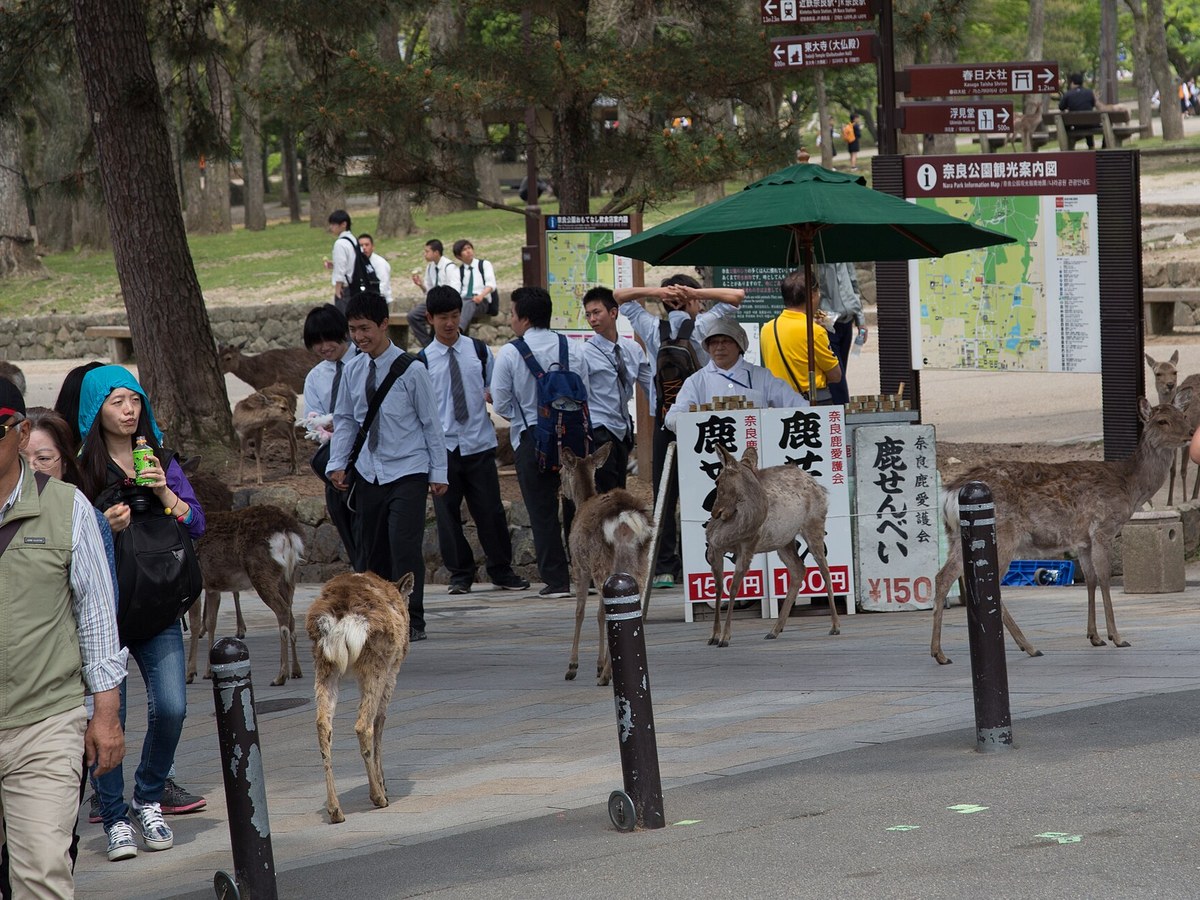
Deer crackers are made from just two main ingredients — rice bran and wheat flour — with no added sugar, salt or preservatives, because they are animal feed, not human food (Nara guide record). A single cracker weighs only about three to four grams, a snack against the roughly five kilograms of grass, leaves and acorns a deer eats in a day, but the deer have strong opinions about them anyway: buy a bundle and nearby deer gather at once, some bowing their heads in the famous learned gesture.
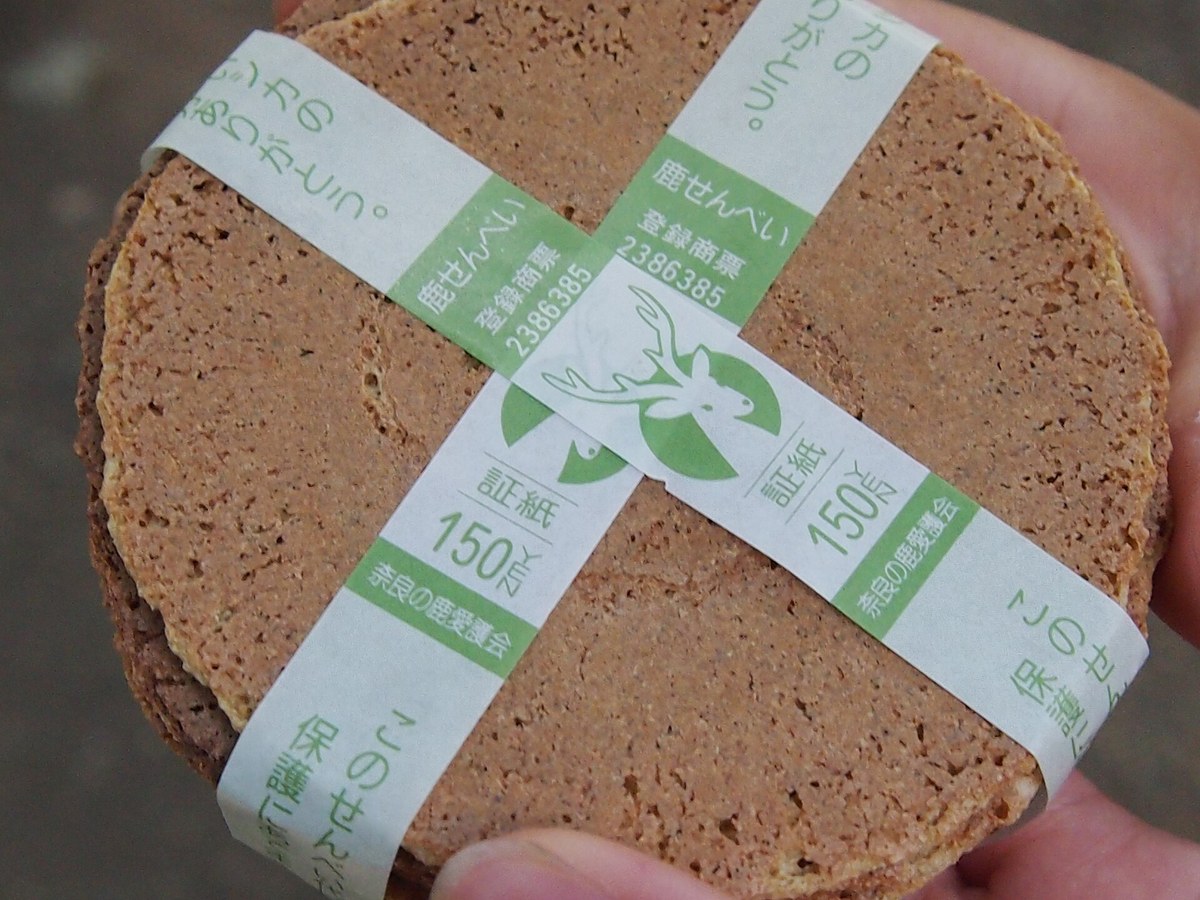
The official crackers are recognisable by their band: tied with a white paper band bearing a deer logo. Even the band is engineered for deer — 100% pulp, printed with soybean-based ink and secured with edible glue, so it does no harm if a deer swallows it. Visitors are told to feed the deer only these official crackers and nothing else.
Three centuries of feeding the sacred deer
The tradition is old. Deer crackers are believed to have been sold as early as the 1670s, in the Edo period, and an illustrated guidebook of 1791, the Yamato Meisho Zue, already depicts people offering flat pieces of food to deer at teahouses near Kasuga Taisha Shrine (Nara guide record). The deer themselves are the messengers of the Kasuga deity and are protected as a national natural treasure; the crackers grew up alongside that sacred status.
The modern system dates to 1913, when the certification-band scheme began as a way to raise funds for deer conservation. Today the name Shika Senbei is a registered trademark of the Nara Deer Preservation Foundation, which does not manufacture the crackers but issues the official bands; band sales generate approximately 30 million yen a year, spent on treating injured deer and protecting mothers and fawns.
What they cost and where to buy them
The price has moved slowly and publicly: deer crackers cost 100 yen until 1991, then 150 yen, and rose to 200 yen in October 2019 (Nara guide record). That 2019 rise was the first in 28 years, announced by the Nara Deer Preservation Foundation, which owns the trademark, citing higher production costs and the consumption-tax increase (Japan Deluxe Tours, updated 11 May 2026). Licensed stalls sell the banded bundles all over Nara Park for that uniform 200 yen.
Since 2022 the crackers can also be bought after the stalls close: "I LOVE Shika" vending machines, installed around the Kasuga Taisha Deer Park area and parking-lot rest facilities, sell a boxed bundle of ten. And if you want more sport from your senbei, the Deer Cracker Throwing Contest has run on Mount Wakakusa since 1993 — competitors throw oversized crackers for distance, and the all-time record stands at 74.55 metres.
Why shika senbei exist only in Nara
Rice-bran crackers could be baked anywhere; shika senbei cannot be sold just anywhere, because the name itself is the Nara Deer Preservation Foundation's registered trademark and the genuine article is defined by its certification band, its two-ingredient recipe and its single customer species. It is a product whose entire reason to exist is one park, one herd and one shrine tradition.
It is also a small masterpiece of conservation economics: every bundle a visitor buys to be bowed at pays, through the band, for the vets and fences that keep the deer wild and safe. Three and a half centuries after the first crackers were sold by Kasuga Taisha, the arrangement still works.
Sources — checked 13 November 2026
- Nara travel guide — Shika Senbei: Deer Crackers of Nara (accessed 13 November 2026)
- Japan Deluxe Tours — Nara Deer Park Cookies price increase (published 2 October 2019, updated 11 May 2026)
Checked 13 November 2026 (stored links re-fetched and judged per product): reserved where the page says so, with an editorial review note kept per product. Press, PR and travel use stays outside the grant.
Editorial review 2026-11-13