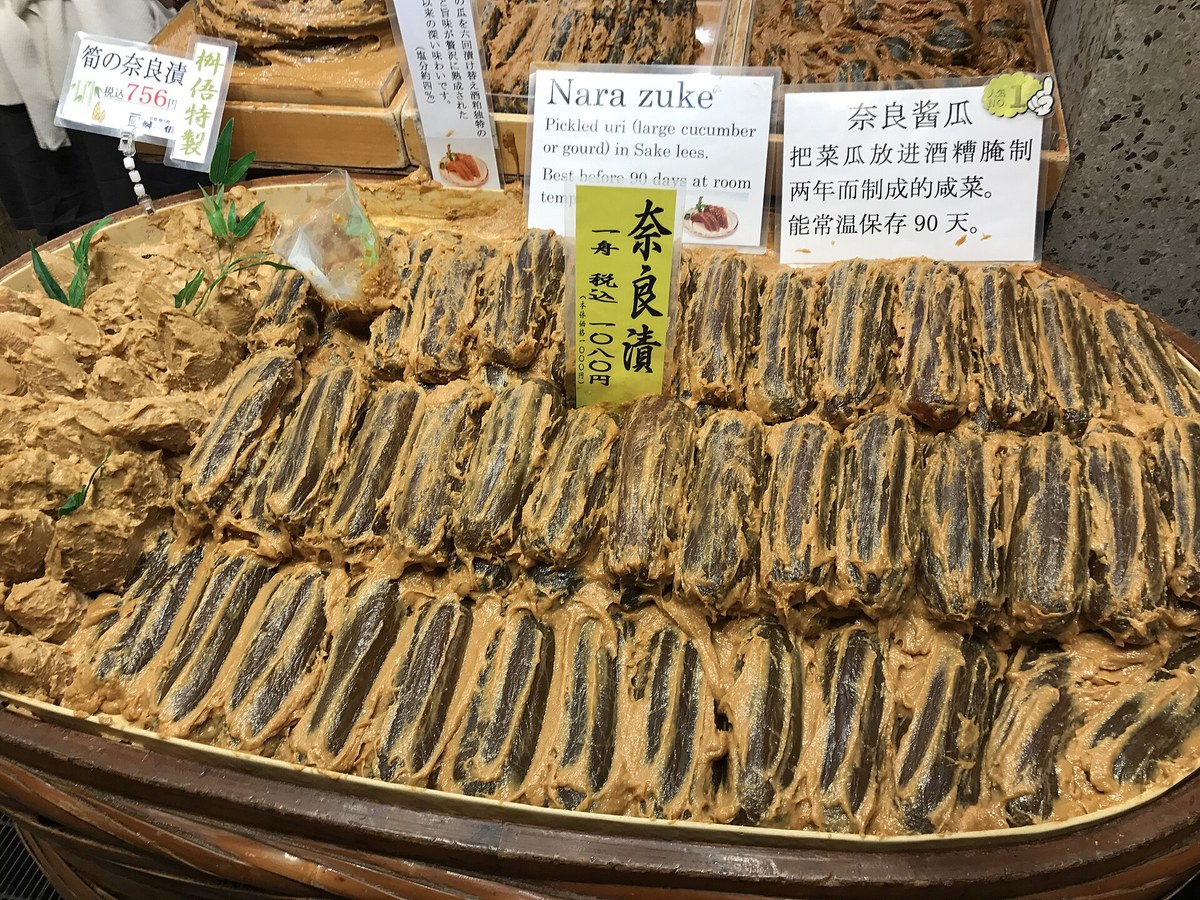
Most pickles are a garnish. Narazuke is an archive: shirouri melons and other vegetables salted, then buried in sake lees — the fragrant sediment of the brew — taken out and re-buried in fresh lees again and again until they turn the colour of dark amber and taste unmistakably of sake. The food is older than its name: wooden tablets dug up at Heijo-kyo, the capital that stood at Nara in the 8th century, already record it, as 'kasuzuke'. The Ministry of Agriculture files narazuke as a traditional food of Nara City and the whole prefecture — and the name never left home.
Written on wood at the old capital
The ministry's register gives the food a documentary birthday few products can match: the earliest historical mention of nara-zuke was found in excavations of Heijo-kyo, the capital of Japan during the Nara period, where the food's name was recorded on wooden tablets — mokkan — as 'Kasuzuke', evidencing that the pickles were eaten more than 1,300 years ago. The first lees were those of doburoku, the cloudy unfiltered sake of the time: after the sake was drunk off the top, the sediment pickled the pre-salted vegetables — a precious alcohol, and at first an upper-class food.
The modern form followed the modern brew. When filtered sake spread in the Muromachi period, sake lees became plentiful and the nara-zuke we know took shape; it was commercialised by Itoya Sosen, a doctor from Nara, who manufactured and sold shirouri pickles steeped in sake lees through the Azuchi-Momoyama and Edo periods — and under his hand the name settled as narazuke, Nara's own word for its pickle.
A year or two in the lees
The register's production account is a lesson in patience. The vegetable is first covered in salt — a curing of a month to as much as half a year. Then the lees are kneaded and the cured vegetables buried in them; how often they are taken out and re-pickled depends on the crop, the season and the maker, and a batch may be ready in three months or take up to a year and a half, the alcohol in the lees both flavouring the vegetable and keeping it.
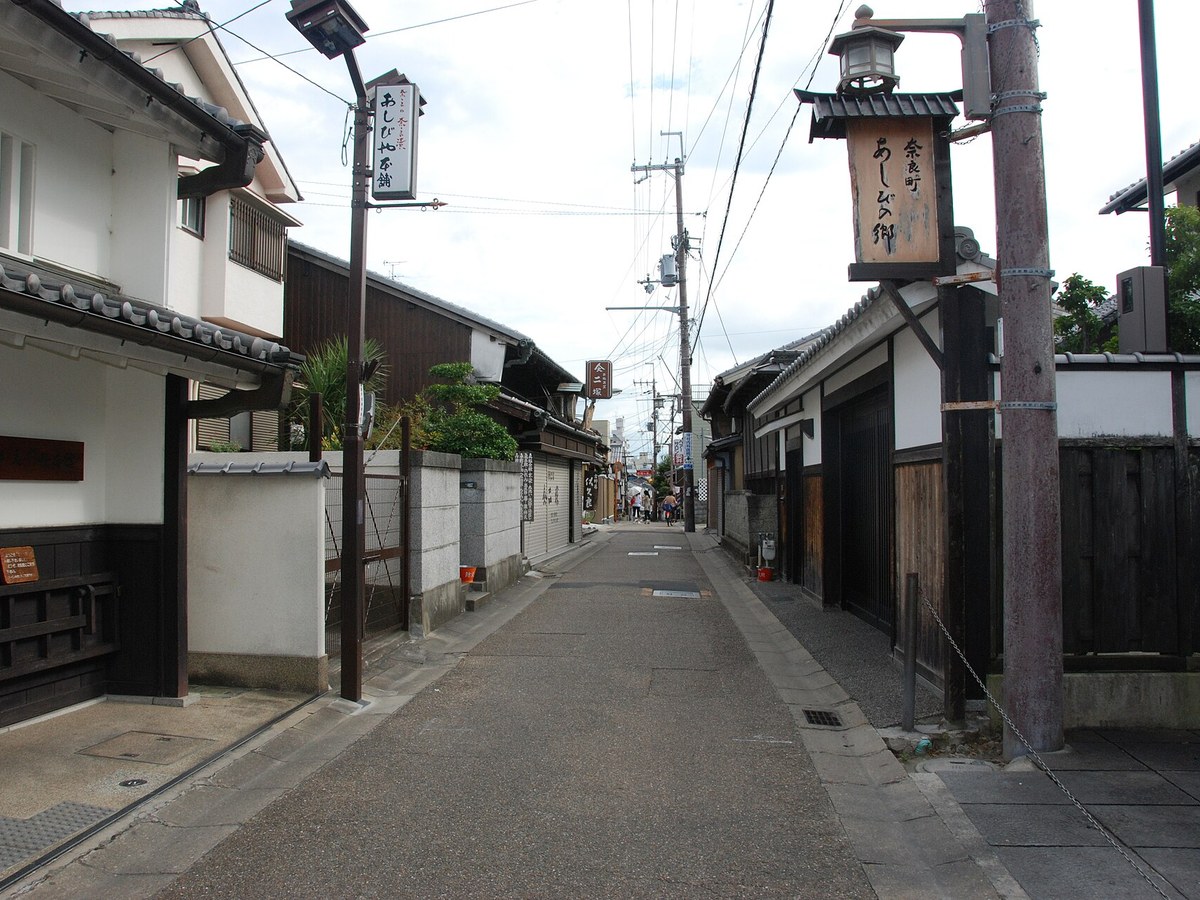
Nara's standing maker describes the same discipline from inside the trade. Mori Naraduketen, founded in 1869 on the approach to Todai-ji's Great South Gate, runs a five-step process — salting, then first, second, third and final pickling — that takes one to two years before shipping, using only domestic vegetables, natural salt from Ako and sake lees: no mirin lees, no sugar, no sweeteners, and the used lees themselves re-worked rather than discarded. Shirouri is the classic; the shop's list runs to cucumber, eggplant, watermelon, plum, ginger and more.
The prefecture keeps its pickle
The name is curated as a prefectural asset: the Nara Prefecture Tsukemono (pickles) Cooperative was formed, the register records, to modernise the pickle industry and raise its standing, and it handles the publicity and promotion of Nara Prefecture's pickles — narazuke first among them. Around it, the specialty shops of Nara City still sell the pickle in its gift forms, from sliced everyday bags to wooden barrels and boxes for presentation.
Honesty about the name's travels belongs here: kasuzuke was made across the Kansai from the Nara period, pickling in lees for one to three years, and the method was handed down throughout Japan — Kyoto's old houses make celebrated narazuke too. What no other city holds is the mokkan: the written record, in the ground of the capital that named it.
Buying narazuke in Nara
The checked retail record is the Yamazakiya narazuke shop on JR West's WESTER Mall: a boxed assortment of four kinds of narazuke — uri melon, cucumber, watermelon and eggplant, 840 g in a wooden box — at ¥5,500 including tax with free shipping, the barrel assortment of 1,770 g standing at ¥12,500 on the same shop. In Nara City, Mori Naraduketen and the old-town shops sell the pickle at the counter in its full ladder, from small sliced bags upward.
What to check on any pack: the maker and the method — salted first, then lees-pickled with the lees replaced, over months — and expect the alcohol: narazuke carries the sake in it, a few percent, which is the flavour and also a fact for drivers and children. A three-day 'narazuke-style' pickle is the name without the years.
Sources — checked 12 November 2026
- MAFF — Traditional Foods in Japan: Nara-zuke
- Mori Naraduketen (Nara, founded 1869) — the maker and its method (Marukome magazine record and the maker's own account)
- WESTER Mall (JR West) — Yamazakiya narazuke shop, boxed assortment (checked 12 November 2026)
- Kasuzuke — method record (Wikipedia)
Original prose and official links only; no source text or maker media reproduced. Photos are credited Creative Commons works, not product photographs.
Editorial review 2026-11-12