Saga's two stories in this collection are both porcelain. Its third is what the porcelain was for. Ureshino, a hot-spring town in the prefecture's west, has grown tea for some five and a half centuries, and it makes that tea differently: curled into commas instead of needles, or fired in iron pans in a method older than steaming. A town that once gave its tea away free with the bath now builds tea rooms in the fields and charges, proudly, for a single cup.
Five hundred and fifty years by the springs
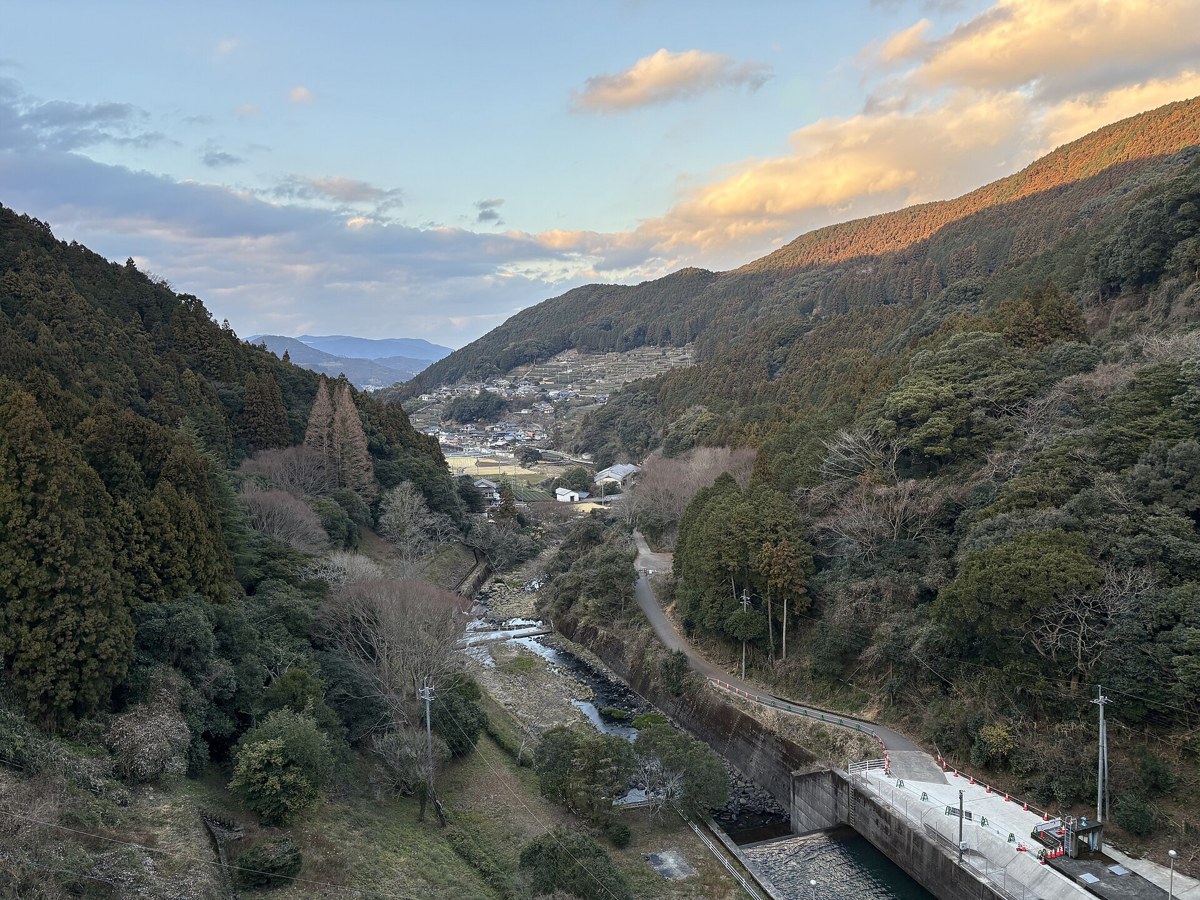
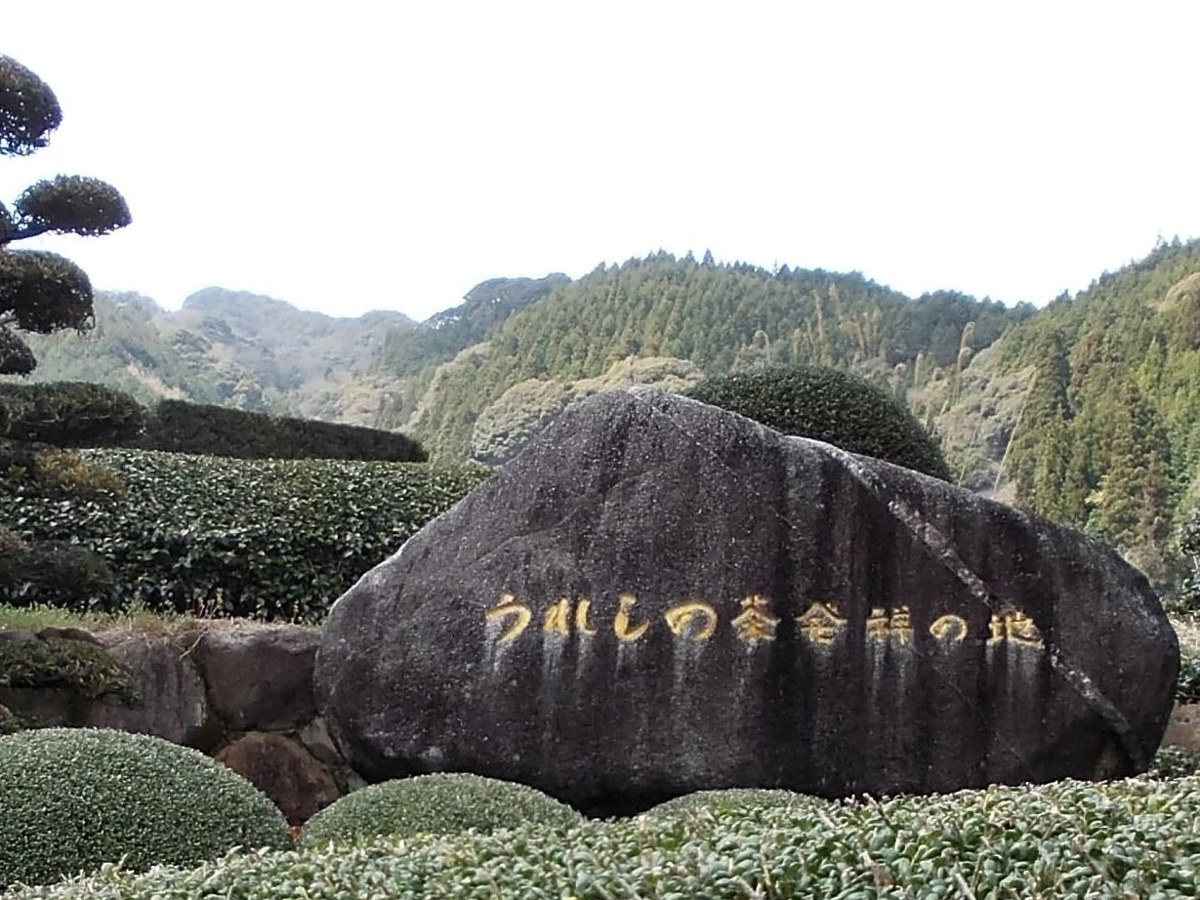
The setting explains the tea. Ureshino is one of Japan's celebrated beauty-skin hot springs, a sodium-bicarbonate water that has drawn bathers for well over a thousand years, and its hillsides have grown tea since 1440 on the Saga Prefectural Tourism Federation's count — JNTO's official guide likewise puts cultivation in the 16th century, with tea, hot springs and pottery as the city's three hearts since ancient times. The region's tea story starts even earlier and nearby: the monk Eisai brought tea seed back from China in 1191 and planted it at Higashi-Sefuri, in what is now Saga's Yoshinogari — the starting point of Japanese green tea, with Ureshino growing into the heart of the prefecture's tea industry.
The town grew up as a post station on the Nagasaki Kaido, the road between Nagasaki and Kokura, and its tea travelled: in the Edo period and after, Ureshino's leaf was among the first Japanese teas shipped to the outside world through Nagasaki. The modern chapter is institutional — a tea exchange hall among the fields, a tea village with a working factory, and a tourism project that treats the harvest as the attraction.
The curled leaf and the fired leaf
Look at the dry leaf and you can name the town. Most Japanese green tea is sencha, finished as straight, needle-like strands; Ureshino's signature is tamaryokucha, called guricha — curly tea — because the leaf is rolled into a curled, comma-like shape, a gyokuro-style make with a rounder, softer flavour and a deep green liquor. A pot of it looks wrong to a sencha drinker for exactly one second, until the aroma arrives.
The town's second form is older still. Kamairicha is pan-fired tea — the leaf roasted in an iron kama rather than steamed, the Chinese-derived method that predates steaming in Japan — and Ureshino is known as one of its birthplaces, keeping a make that most of the country abandoned. Between the curled leaf and the fired leaf, the town holds two distinct answers to the same plant, and its shops will pour both and make you choose.
Tea tourism: the farmers pour
In 2016 the town began serving its tea the way wine country serves wine. The Ureshino Chadoki project — tea time in Ureshino — puts the farmers themselves in the role of tea masters, pouring their own leaf for guests at tea spaces built in and over the fields: the Tenchadai observatory above the terraces, a tea room in the forest, a tea tower looking toward Omura Bay, and a tea room in a renovated kiln yard that ties the town's tea to its Hizen Yoshida porcelain. JNTO's guide presents the project as the city's exclusive tea experience, roughly an hour and upward, booked through the tea-tourism site.
The project began, its organisers record, from a provocation: at a 2016 event the farmers sold a cup of their tea for ¥800 in a town where inn tea had always been free, and nobody complained — the discovery that became a programme, and whose top tours have since climbed far beyond that first price. The principle is the one this collection keeps meeting in different crafts: the maker's own hand, at the maker's own table, is the product.
Tasting it for ¥1,000
The accessible doors are priced for a day trip. At Chaoshiru, the Ureshino Tea Exchange Hall set among the plantations, the tea-brewing experience takes about thirty minutes and costs ¥1,000 — the place to learn the low temperatures and short steeps this leaf rewards, with the year's tea for sale direct from the surrounding farms. At Ochacha Mura, the tea village a short drive away, the factory tour is free, and in spring (about April to May) a thirty-minute hand-picking experience, basket in hand among the rows, also runs at ¥1,000, with tastings in the factory shop all year.
Buy the curled leaf to take home and brew it cooler than sencha habit suggests. Saga's shelf in this collection held two kilns and nothing to drink; Ureshino tea completes the prefecture's table — porcelain from Arita and Karatsu, and at last the tea the cups were made for, from the one town in Saga that has grown it for five and a half centuries.
Sources — checked 10 November 2026
- JNTO (Japan National Tourism Organization): Indulge in a Perfect Cup of Tea — Ureshino City
- Visit Ureshino (Saga Prefectural Tourism Federation-sponsored): Japan's Green Tea Origin, Ureshino
- Ureshino Tea and Onsen Tofu: A Complete Saga Guide (checked guide)
Original prose and official links only; no source text or maker media reproduced. Photos are credited Creative Commons works, not product photographs.
Editorial review 2026-11-10