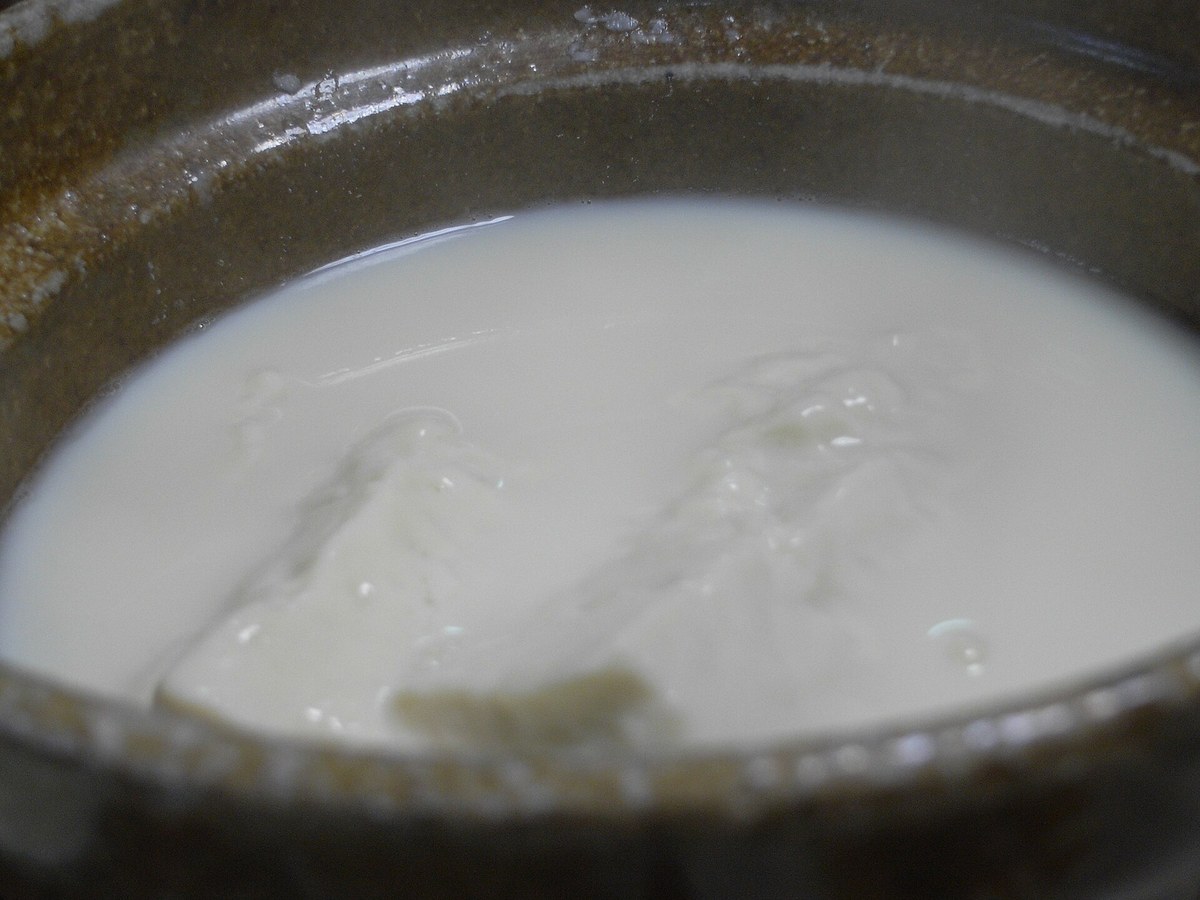
In Ureshino the hot spring is not just for bathing — it cooks. Tofu simmered in the town’s alkaline spring water slowly comes apart at the edges, clouding its own pot milky white and turning silk-soft: onsen yudofu, the dish that made a skin-beautifying spa town famous a second time, as a place to eat.
The spring that softens tofu
Ureshino’s spring is a sodium bicarbonate-chloride water, mildly alkaline at pH 7.5–8.5 on the spring company’s figures. Simmer momen tofu in it and the alkali works on the bean protein and the nigari that set it: the corners round off, the surface begins to dissolve, and the cooking water clouds to the colour of soy milk. The tofu that comes out is trembling, creamy and faintly sweet — a texture plain water cannot give it.
The inns traditionally cooked with dedicated cooking water drawn for the pot, not bathwater — the town’s own accounts are careful on the point, and the specialist houses make their tofu for the spring: Soan Yokocho’s is a house momen made to be simmered in it.
A post town learns its second trade
Ureshino is an old spring — the eighth-century Hizen no Kuni Fudoki already praises its healing waters on the town’s account — and in the Edo period it prospered as a post town on the Nagasaki Kaido, the road to the trading port. The official tourism database dates the discovery of the tofu-softening effect to the Edo period; no surviving Edo document was produced in the sources read for this story, and the date is carried here as the town’s tradition, not as a document.
The modern dish has a named house: Soan Yokocho, founded in 1957 on its own record, which presents itself as the origin house of onsen yudofu. What carried the pot nationwide was print: the manga Oishinbo devoted its “Onsen Yudofu” chapter (volume 39, 1993) to it, and the queues at Yokocho date from that fame.
A registered name, a town of pots
The dish is a registered regional brand: the tourism association’s trademark (No. 5077556) was reported by the agriculture ministry in 2007, and the town counts its serving houses in dozens — a 2012 Saga survey counted 41 inns and hotels and 23 restaurants serving the tofu as of 2009. The standard local soybean is Fukuyutaka, and the specialist houses guard their own tofu, water and tare as one set.
Yokocho’s published menu is the price reference for this story: the basic yudofu at ¥620, the set with rice and small dishes at ¥1,100, and a deluxe set at ¥1,340 (menu as checked 24 October 2026 on the citing survey). For a signature dish of a famous spa town, the basic pot remains a three-coin lunch.
Eating it in Ureshino
Eat it in the town, in order: bathe first if you can — the same alkaline water is one of Japan’s three great skin-beautifying springs — then sit down to the pot while the tofu is still dissolving. The etiquette is patience: let the edges melt, lift the softened pieces with the tare the house serves, and drink the milky broth’s bean sweetness as part of the dish, not a by-product.
Take-home sets (house tofu, cooking water, tare) exist from the specialist houses, but the water is the dish: outside Ureshino the spring has to travel in a bottle, and the served pot in the spa town remains the original.
Sources — checked 14 November 2026
Checked 14 November 2026 (stored links re-fetched and judged per product): reserved where the page says so, with an editorial review note kept per product. Press, PR and travel use stays outside the grant.
Editorial review 2026-11-14