Twice a day, the Ariake Sea walks away. Off Saga City the tide falls six metres — the height of a two-storey house — and the nori nets strung between poles stand dripping in the sun, sweetening. Then the water returns, river-fed and nutrient-rich, and the crop feeds. No machine sets this rhythm; Saga's farmers built their whole method around it, and the prefecture now grows more sheets of nori than any other in Japan.
A sea that breathes six metres
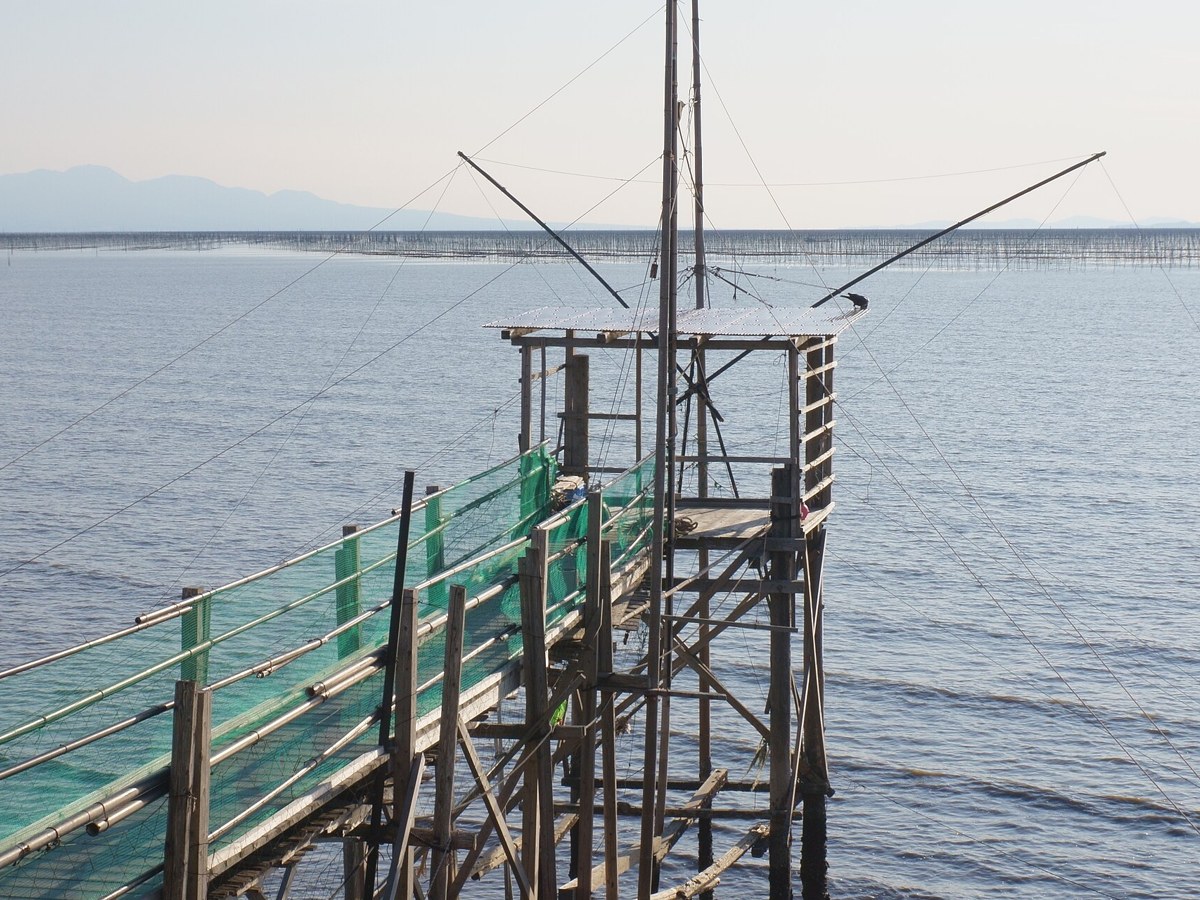
The Japanese Pantry's first-hand visit begins on a boat out of Saga City, down the Hayatsue River to where it empties into the Ariake Sea, past what seemed to be endless rows of poles in the shallow water — the nori farms. The account sets the sea's credentials plainly: although people in Japan have been eating nori for over 1,300 years, farming began only about 80 years ago, and since then the Ariake Sea has become the biggest production area in Japan, fed by multiple rivers and blessed with a tidal change of a full six metres, almost twenty feet, which suits it ideally to nori and produces very high-quality crops.
Saga's own method is tuned to that breathing. The maker's account names it shichu-shiki: the nets are set on poles in such a way that it takes advantage of the rise and fall of the tide to control the amount of time the nets spend underwater — finding, in the account's words, the perfect balance of the spores being underwater for colour and exposure to the sun for flavour. The visit saw the same bargain from the water: at low tide the nets are completely out of the water, basking in the sun, which makes the nori sweeter and softer; at high tide they lie deep below the surface, taking in nutrients.
The nori calendar, August to March
The year turns on allocation. In August, the visit records, the local nori union decides which farmers will get which plots in the local waters — the farms are kept in the relatively shallow waters near the coastline, however endless they look from a boat. In September each farmer sets the poles: seven to eight metres long, embedded a metre and a half to two metres into the seabed, in a grid pattern. In October the nets, seeded with nori, are tied to the poles, and the tide takes over the work.
Harvest follows ripeness, not convenience. The first harvest happens by the end of December and is highly sought after, celebrated the way Beaujolais Nouveau is — although, the account notes honestly, it is not actually the highest quality. The finest nori comes in the middle of the harvest season, in January and February; by the end of the season in March the quality declines and the colour lightens, which buyers read at a glance. A crop whose grades are written in its colour leaves its farmers nowhere to hide, and Saga's reputation is built inside that discipline.
Night harvest, small factories, winter auctions
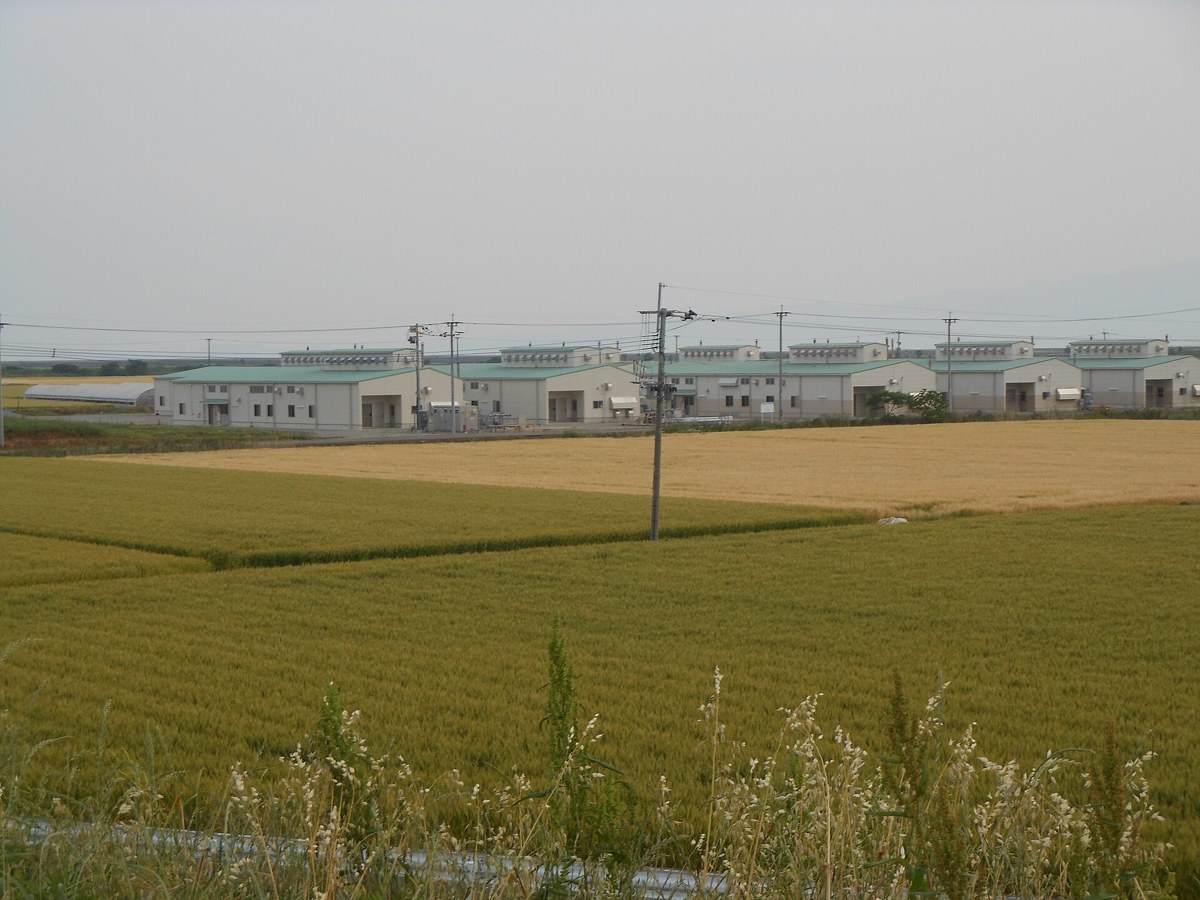
The cutting happens in the dark. When it is time to harvest, the fishermen come out in flat-bottomed boats only during the two hours on either side of each night's high tide; the boat is positioned between the rows of poles, the net is rolled onto a special machine aboard, and the nori is cut off as it rolls. A full boat returns to shore, where the harvest is pumped into a waiting tanker or directly into a processing facility — and the facilities, the visit stresses, are small, numerous and local, the one visited perhaps a thousand square feet.
Inside, the sheet is standardised to the size Japan settled in the Edo period: 19 by 21 centimetres. The nori is washed, mixed with seawater, cut — the cutting disk's holes are larger for the soft early harvests, smaller for the harder late ones — formed on mats, sponged, and dried for about three hours at 30 to 40 degrees. Then it is graded, packed and shipped to auction: through the December-to-April auction season, buyers judge each lot by colour, texture, lustre, aroma and whether it has any holes, a buying step so important that the account's host company's chief executive attends many auctions in person.
Japan's number-one coast, under pressure
The standing is the maker's own summary: Saga Prefecture is known as the nori-producing prefecture since it produces the highest amount of nori sheets per annum, ahead of Fukuoka, then Kumamoto and Nagasaki around the same sea. The shelf anchor matches the claim at working scale — Aeon's TOPVALU first-harvest hand-rolled nori from the Ariake Sea in Saga, its dried nori labelled as Saga Prefecture Ariake Sea produce and processed by San Nori Co. of Saga City, sells as sixteen hand-roll pieces, eight full sheets, at a base price of ¥758, described as fragrant and melt-in-the-mouth.
The pressure is real and the visit does not soften it: harvests in the Ariake Sea have dropped from 2.2 billion sheets in 2010 to around 1.7 billion recently, a fall of about 23 percent, as warming water pushes sowing from early October to late and ends the season in March instead of April, while the number of farmers decreases. Saga's standing stories are two kilns and a tea — Arita's porcelain, Karatsu's ware and Ureshino's leaves. Saga nori is the prefecture's fourth, and its first gift from the sea: the black sheet that a six-metre tide farms twice a day.
Sources — checked 11 November 2026
- The Japanese Pantry: Nori Harvest in the Ariake Sea (checked first-hand visit, February 2024)
- Mikuniya Nori: The Different Areas of Nori Cultivation (checked maker's account)
- Aeon TOPVALU: Saga Ariake Sea first-harvest hand-rolled nori (checked retail product record)
Original prose and official links only; no source text or maker media reproduced. Photos are credited Creative Commons works, not product photographs.
Editorial review 2026-11-11