Japan eats more elite strawberries than anywhere, and for over fifty years one prefecture has grown more of them than any other. Tochigi's title — the Strawberry Kingdom — rests on a single fruit: Tochiotome, bred at the prefecture's own agricultural experiment station, registered in 1996, and named, plainly, 'the maiden of Tochigi'. Large, conical and bright red, firm enough to travel and balanced between sweet and acid, it replaced the previous national standard within a few seasons and stayed Japan's most-grown strawberry for two decades. In winter and spring the kingdom opens its greenhouses: at farms like Ichigo no Sato in Oyama, you can pick Tochiotome standing in the rows where the prefecture's reputation grows.
Bred in Tochigi, named for it
The Food in Japan record, updated 9 November 2026, gives the cultivar a birth certificate. Breeders at the Tochigi Prefectural Agricultural Experiment Station crossed Kurume 49 — large fruit, high yield — with Tochi no Mine — sweetness, attractive appearance — and after years of testing and selection registered the new variety in 1996 as Tochiotome: Tochi from Tochigi, otome meaning maiden, a name chosen to carry the prefecture and its hopes in one word. Its references include the Tochigi Prefectural Government.
The fruit justified the name. The record describes a large, conical berry of vibrant red, firm in texture, rich and juicy, its sweetness balanced by enough acidity to taste like a strawberry rather than a sweet, and rich in vitamin C. Growers across Tochigi switched to it quickly, replacing the previously dominant Nyoho; by the early 2000s it was the prefecture's main variety — and, soon, the country's.
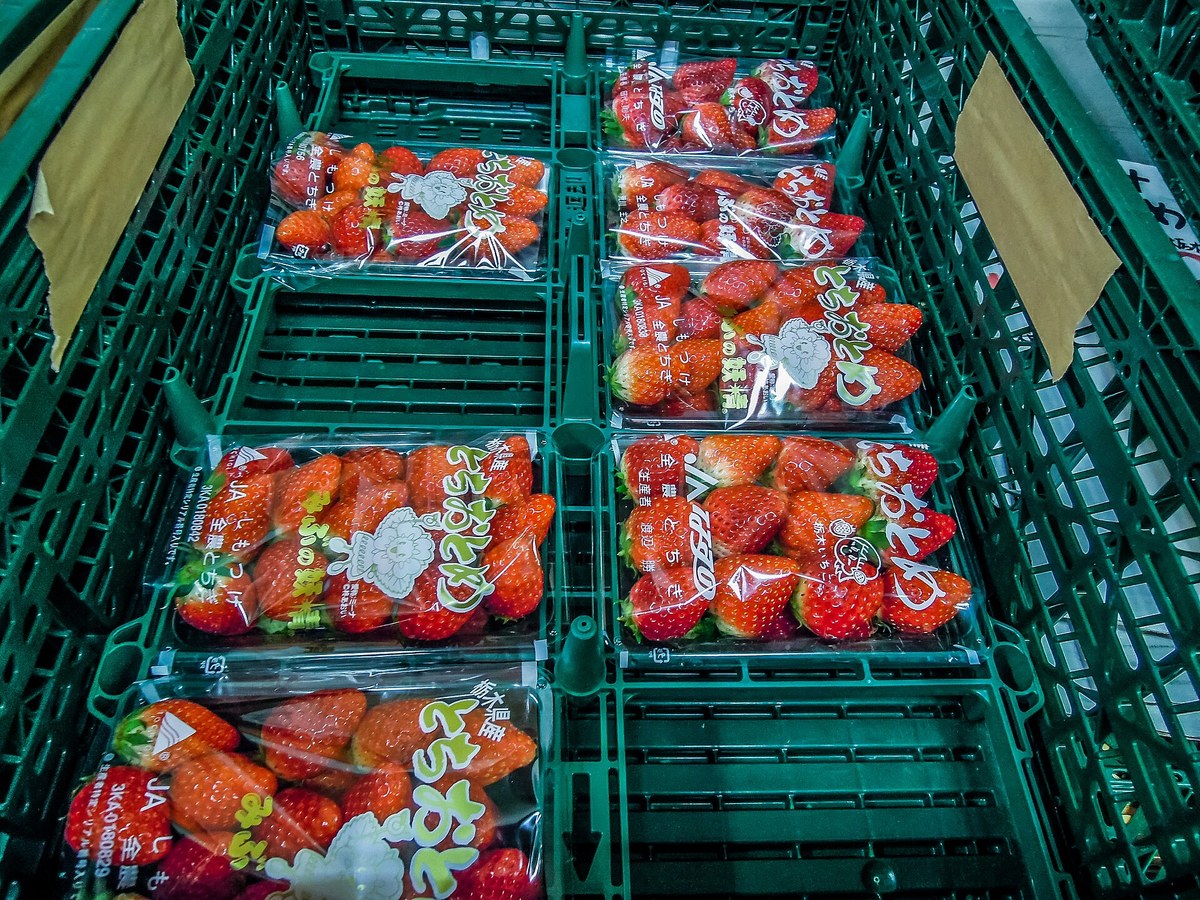
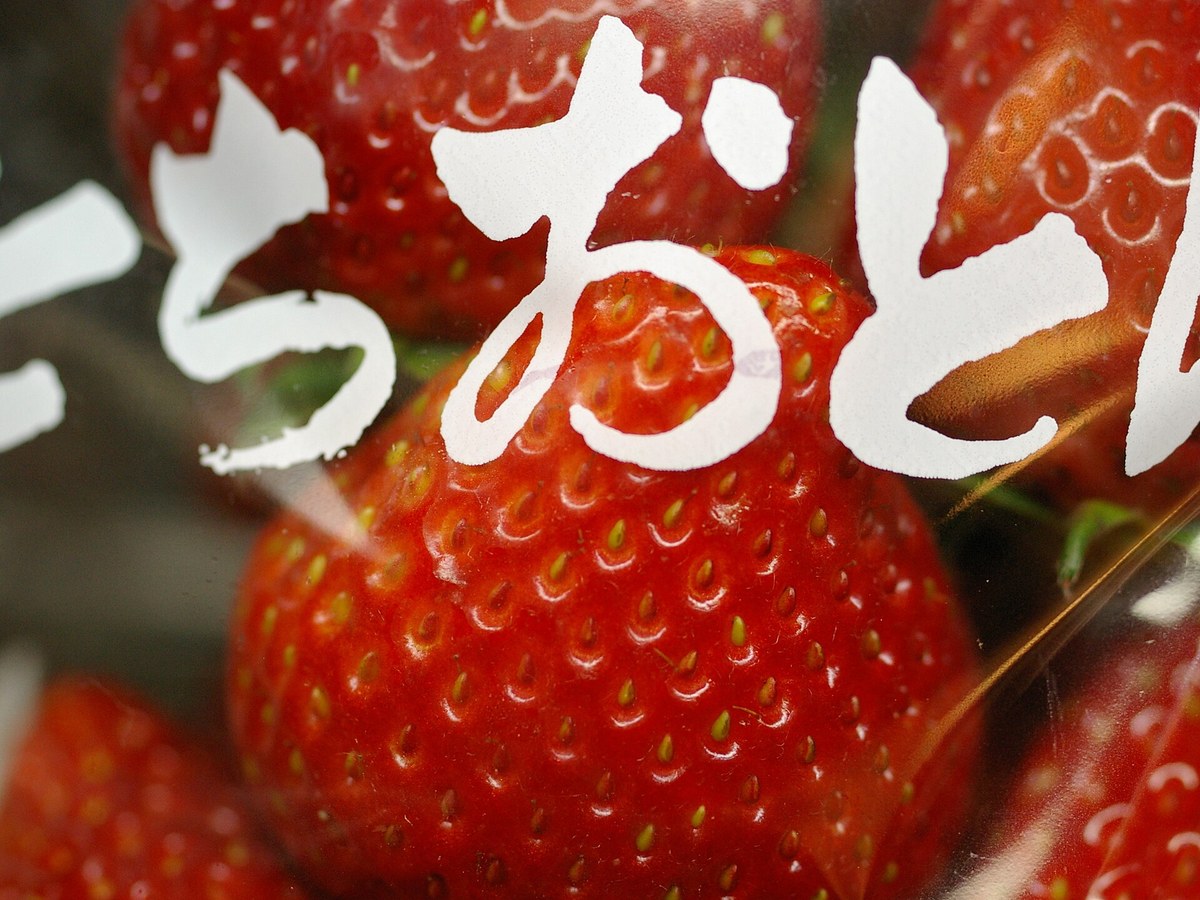
The kingdom and its numbers
The companion Tochigi Food Guide states the standing without hedging: Tochigi has produced more strawberries than any other prefecture for over 50 consecutive years, and Tochiotome became Japan's most produced variety for two decades. That is the double claim this article rests on — a prefecture that leads, and a cultivar that led. The season runs December to May, peaking in winter and early spring, when the greenhouses of Utsunomiya, Moka and Kaminokawa open for picking.
The line continues. Breeders later used Tochiotome in developing Skyberry, released in 2014 — a larger, rounder berry grown exclusively in Tochigi, which has its own article in this collection. Tochiotome remains the workhorse and the emblem: the variety in the farm shops, the variety on the Deluxe picking plans, the variety travellers ask for by name.
Picking it: Ichigo no Sato, Oyama
The record's named venue is Ichigo no Sato in Oyama — 408 Okawashima — a large farm resort where a buffet restaurant, Ichigo Ichie, and a café, Angel Fraise, serve Tochiotome dishes and desserts through the season. The picking guide's farm-by-farm reading, taken from the farms' own sites on 7 October 2026, gives its 2025-26 shape: booking is required, and there are two plans — 40 minutes of all-you-can-eat on Tochiaika and Skyberry, or the 60-minute five-variety Deluxe plan, which adds Tochiotome, Tochihime and Milky Berry.
The prices from the farm's own site: ¥2,640 on weekdays and ¥2,750 at weekends for elementary age and up, cash on the day, with online prepayment a little cheaper at ¥2,380 and ¥2,480; on the day the farm takes cash only. One etiquette rule with a commercial reason: berries you pick are eaten in the greenhouse, and the farm points you to its shop to buy boxes to take home. A second Tochigi farm in the same guide, Yoshimura Strawberry Park in Mashiko, grows Tochiotome with no time limit and no booking, its site showing the 2024-25 season at ¥2,500 for ages twelve and over.
Eating the kingdom's fruit
Go in season — December to May, best in the cold months — and pick the Deluxe hour at Ichigo no Sato if Tochiotome is the point of the trip: it is the only one of the farm's two plans that includes it. Budget ¥2,640 on a weekday on the 2025-26 prices read from the farm's own site on 7 October 2026. In the farm's café, the same fruit returns as parfaits and cakes once you have eaten your fill standing up.
Elsewhere in Tochigi the fruit is the default luxury: in farm shops along the picking belt, in the prefecture's souvenir sweets, and in season on Tokyo dessert counters, where the variety name is printed like a brand. What the kingdom sells is not secrecy — other prefectures grow Tochiotome too — but priority: this is where the berry was bred, where it is picked first and best, and where fifty years of practice stand behind the punnet.
Sources — checked 13 November 2026
- Food in Japan — Tochi Otome: Tochigi's Signature Strawberry (updated 9 November 2026)
- Food in Japan — Tochigi Food Guide: the Strawberry Kingdom (checked 13 November 2026)
- Honto Japan — Strawberry Picking in Japan: A Complete Guide (farm prices read from the farms' own sites, 7 October 2026)
Original prose and official links only; no source text or maker media reproduced. Photos are credited Creative Commons works, not product photographs.
Editorial review 2026-11-13