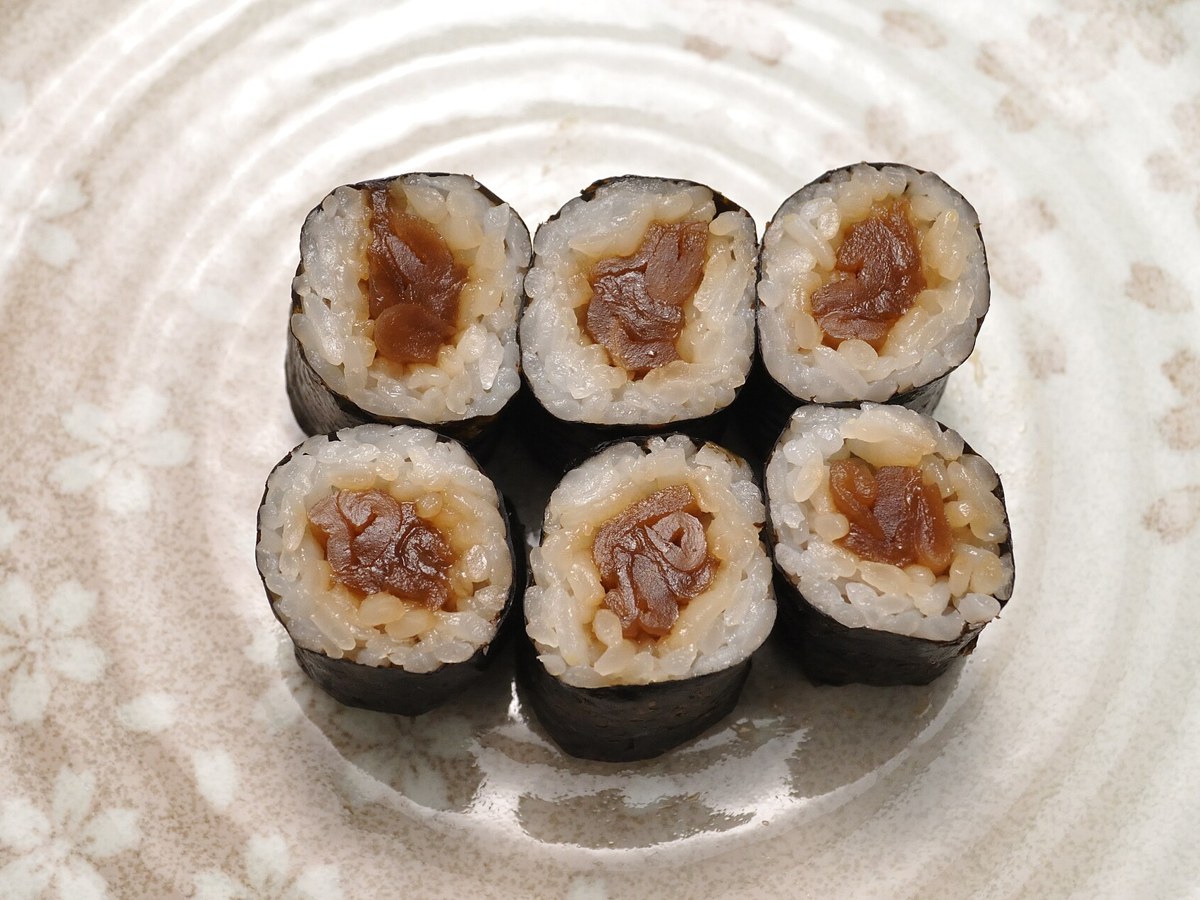
Every sushi counter in Japan serves it, and almost all of it grows in one prefecture. Tochigi's fifth story is kanpyo — the bottle gourd shaved into white ribbons, dried in the sun, and simmered into the sweet brown heart of the kanpyo-maki roll.
One prefecture, ninety-nine percent
The Mainichi's report from Shimotsuke states the monopoly in one line: Tochigi accounts for 99% of kanpyo production in Japan, and Shimotsuke is the country's top producing city. The prefecture's own farm pages say the same in Tochigi's voice — Japan's No.1 kanpyo producer. The share is of Japan-grown kanpyo; imported ribbons, chiefly from China, supply much of the rest of the market, which makes the domestic near-monopoly more remarkable, not less.
The ingredient itself is modest: the yugao, a bottle gourd, its flesh cut into long strips and dried. Nothing is added and nothing is flavoured at this stage — the dried ribbon is a pantry staple, sold pale and stiff, waiting for water and seasoning. Shimotsuke has built its identity on that modesty: the city's mascot is Kanpi-kun, a character made from the gourd itself.
The seed that moved with a lord
The received tradition — carried here as tradition, as the local record tells it — dates the crop to 1712. The lord Torii Tadahide, transferred from Minakuchi to the Mibu domain, brought yugao seed with him from his old posting, and the gourd took to the Tochigi soil so well that the domain became its country. Minakuchi, in today's Shiga, still dries its own kanpyo; the pupil prefecture simply outgrew the teacher.
What is documented rather than traditional is the depth of the cultivation since: the checked retail record for Tochigi kanpyo counts more than 290 years of growing history in the prefecture, with Tochigi first in Japan in both planted area and production. Three centuries is long enough for a transferred seed to stop being an import and become the definition of the crop.
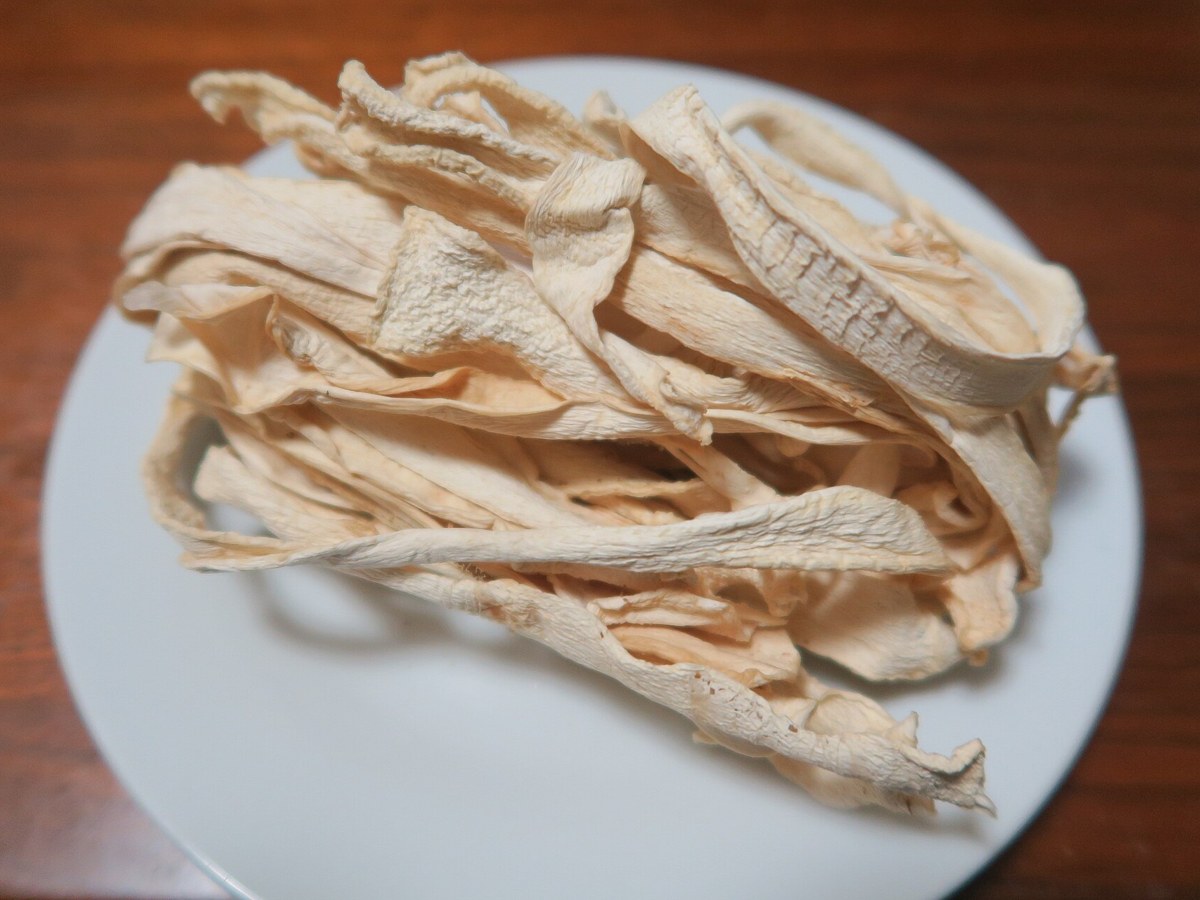
The geography of the tradition is visible in this page's second photograph: dried kanpyo ribbons of Minakuchi itself, the town the seed is said to have come from. Minakuchi never stopped drying the gourd — its kanpyo is the tradition's home article — but the centre of production crossed the country with the lord's household and never came back. Tochigi's advantage was scale married to soil: three centuries of farms in the Mibu and Shimotsuke country planting the same gourd every year turned a transferred crop into a prefectural industry, the kind that ends with the prefecture's name on the national statistics and the crop's character on the city's mascot. The ribbon in a Tokyo sushi roll is, by weight of probability, a Tochigi ribbon.
A ribbon a metre and three quarters long
The making is a single gesture repeated: the harvested yugao — a fruit picked at seven or eight kilograms — is shaved in a continuous spiral, so one gourd becomes ribbons of 1.8 metres and more, and the ribbons are dried in the sun until they keep. The checked product record stresses the sorting: the dried kanpyo is hand-sorted piece by piece before it is bagged, and the Tochigi product carries the prefecture's E-mark certification.
In the kitchen the ribbon reverses. Soaked, it swells to six or seven times its dried weight, and Tochigi's fibre is the firmer for it — the product record contrasts it with the softer imported article. Simmered in soy, sugar and mirin, the pale ribbon turns the deep amber that sushi eaters know, ready to be rolled, tied or stewed.
The quiet roll
Kanpyo's fame is a supporting role: kanpyo-maki, the maki roll whose only filling is the seasoned ribbon, is the traditional closer of a sushi meal — the roll the Mainichi's Shimotsuke report names when it explains why the city grows the gourd at all. It is also the knot of kampyo tradition: kampyo ribbons tie the parcels of kobumaki and a dozen other simmered dishes, the ribbon as string.
Buying the genuine article is a small purchase done precisely. The checked listing is Yamake's 'Motto Nippon!' bag — twenty grams of 100% Tochigi yugao kanpyo, hand-sorted and E-mark certified — at ¥464 including tax. Twenty grams sounds like nothing until the soaking bowl: at six or seven times the weight, one bag is a family pot of simmered ribbon, three centuries after a lord's luggage brought the seed.
Sources — checked 11 November 2026
- The Mainichi: Shimotsuke, Japan's top kanpyo city (city government photographs)
- Tochigi Prefecture agrinet: Tochigi, Japan's No.1 kanpyo producer
- Yodobashi: Yamake Motto Nippon! Tochigi-ken-san Kanpyo 20 g
Original prose and official links only; no source text or maker media reproduced. Photos are credited Creative Commons works, not product photographs.
Editorial review 2026-11-11