Everybody calls tenmusu a Nagoya food, and everybody is one prefecture off. The little rice ball with a shrimp tempura tail sticking out of the nori was born in the late 1950s in Tsu, Mie — in a tempura set-meal shop called Senju, where the proprietor, too busy to make her husband lunch, wrapped the shop’s small shrimp tempura in salted rice instead. Nagoya made it famous in the 1980s, television made it a star, but the agriculture ministry still files it where it started: Tsu.
A husband’s lunch, wrapped in nori
The birth story is told the same way by the ministry record and by the Senju house itself, and it is a story about being too busy. In the late 1950s, Mizutani Yukiko — Yone in the house’s own telling — ran Senju, a tempura set-meal restaurant in Daimon, Tsu. On days too hectic to cook a proper lunch for her husband, she took the shop’s small shrimp tempura, seasoned it, cut it and tucked it into an onigiri of salted rice rolled in nori: portable, nourishing, and good cold. He liked it. So, soon, did the regulars.
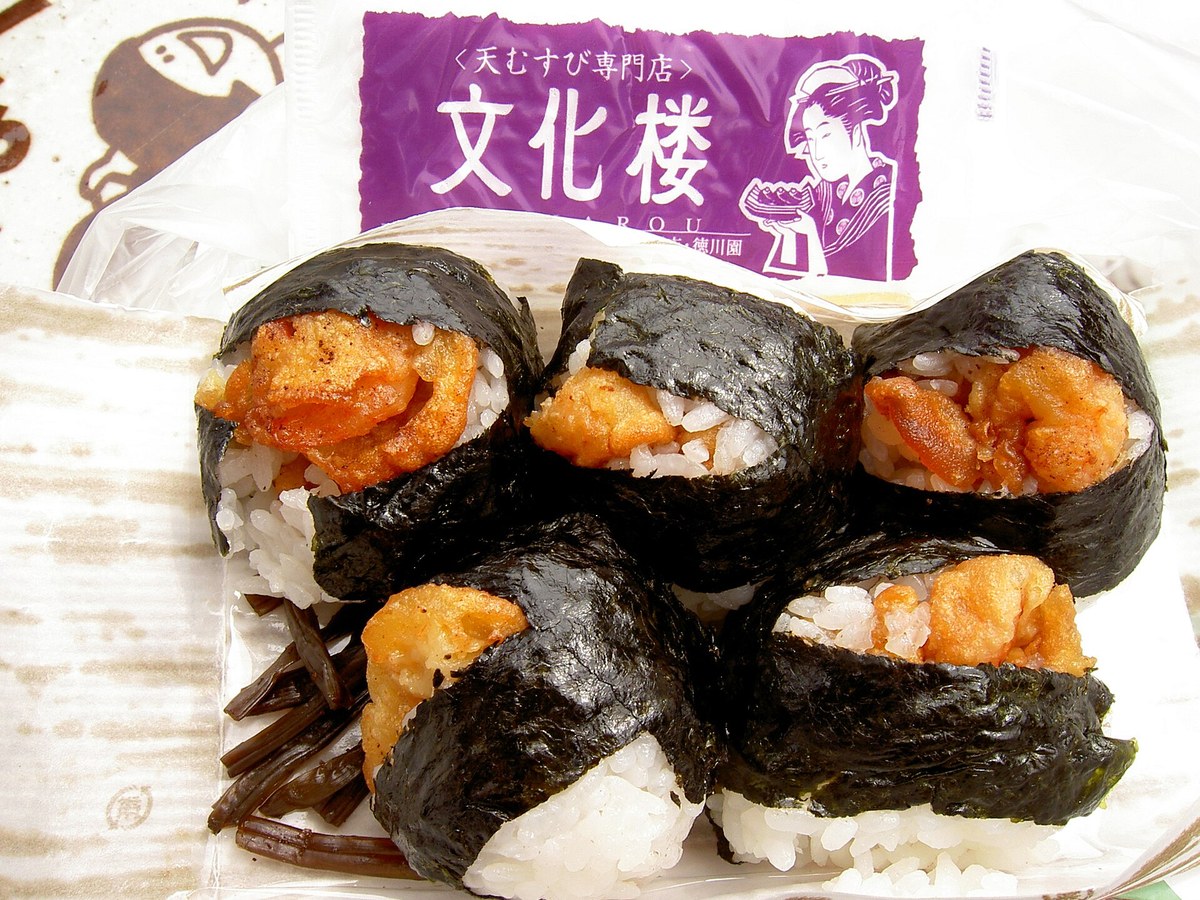
What began as a staff meal became a quiet menu item and then the shop’s signature. The form has never changed: a small shrimp — at Senju, kuruma-ebi in the founding telling — tempura-seasoned, the rice lightly salted rather than vinegared, the nori wrapped so the shrimp’s tail shows, and a pickle of kyarabuki, butterbur stalk, on the side. Five pieces make about a bowl of rice: a lunch engineered by a woman who had no time to make lunch.
How Tsu’s rice ball became “Nagoya-meshi”
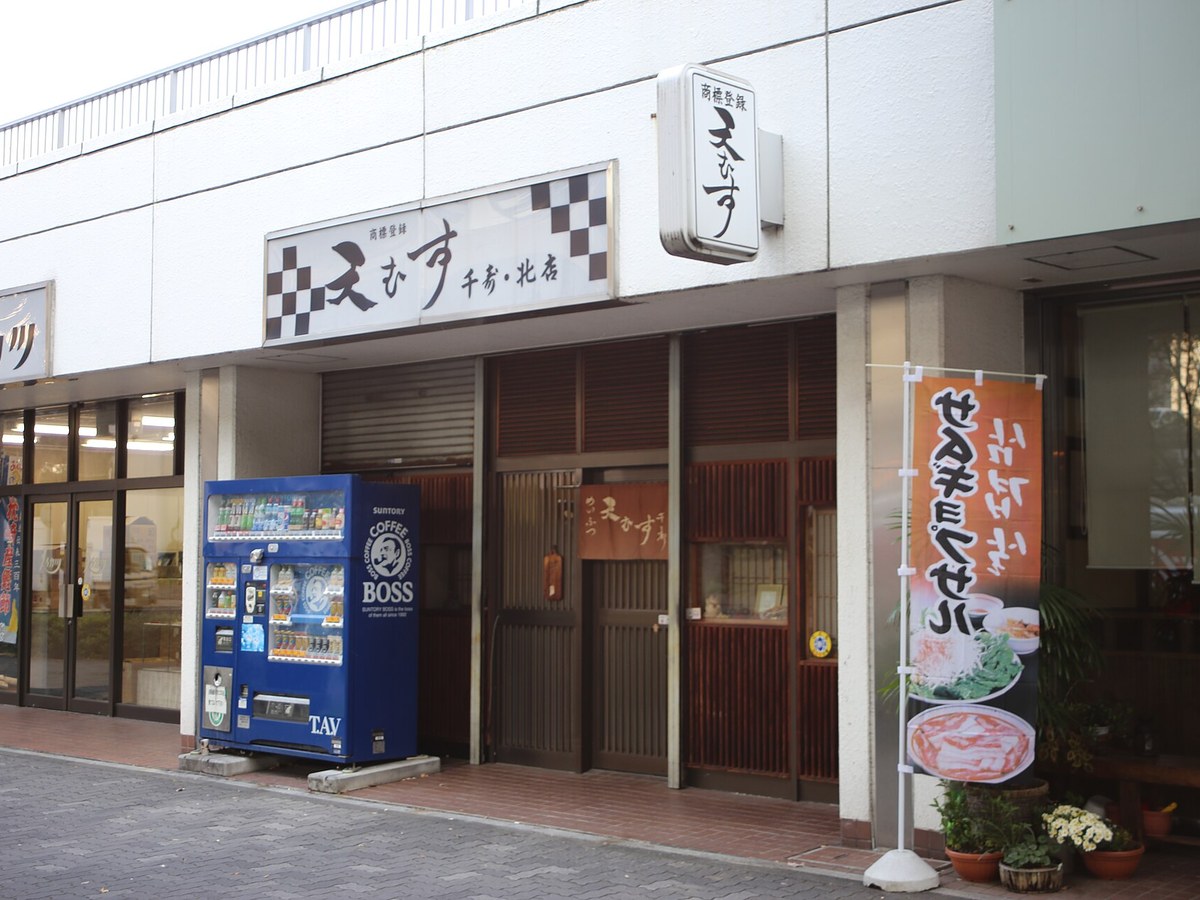
The second act belongs to Nagoya, and Tsu tells it generously. In the 1980s a Nagoya operator who had fallen for Senju’s tenmusu negotiated for years to receive noren-wake — formal branch rights, with the recipe taught by the Tsu house — and opened a Senju in Nagoya, at first on a promise not to advertise it. The promise proved unnecessary to break: actors carried the boxes away from Nagoya studios as green-room gifts, television picked the dish up, and tenmusu rode the Nagoya-meshi wave to national fame wearing Nagoya’s name.
Mie’s answer is paperwork. The agriculture ministry’s regional-cuisines record files tenmusu under Tsu City, Mie; the trademark sits with the Tsu house; and the Nagoya Senju itself prints the Tsu birth story on its own website. Eat it in Nagoya by all means — the Nagoya houses are excellent — but the rice ball’s passport is stamped in Tsu.
Salt rice, small shrimp, no vinegar
Tenmusu is easy to confuse with a sushi roll and wrong to. The rice is plain salted rice, not sushi rice; the shrimp is a whole small tempura, seasoned — at the Tsu original with a salty finish, at the Nagoya houses often with a soy-based tare — and the ball is rolled small enough to eat in two bites, in a train seat, a dressing room or a park. The nori does the carrying work, and the dish is designed to be eaten at room temperature, even cold from a box: that was the point of it from the first staff lunch.
The two great houses mark the dish’s poles. Tsu’s Ganso Senju keeps the originator’s larger, salt-forward style; Nagoya’s Senju Honten and Jiraiya, the other famous name, work in the bite-size, tare-seasoned Nagoya manner. Around them a small industry has grown — station boxes, ekiben, catering trays of thirty-three — but the definition stays the ministry’s: shrimp tempura, salt rice, nori, from Tsu.
What five pieces cost
Tenmusu is sold by the five-piece box, and the box sits just under a thousand yen at the famous houses. Jiraiya’s catering list prices five tenmusu at 918 yen including tax — with the caterer’s note that five pieces equal about one bowl of rice — and JR Central Tours’ plan for Senju Honten’s Esca shop, in Nagoya Station’s underground mall, bundles five Senju tenmusu with a bottle of tea at 920 yen. In Tsu itself, the Ganso Senju counter is the pilgrimage stop; in Nagoya, the Esca and station shops make the box the city’s default edible souvenir.
Buy it to eat the same day: the dish was designed for a lunch hour, not a shelf. Warm it not at all — the seasoning, the salt rice and the nori are balanced for room temperature, exactly as the first one was eaten, standing up, between orders, in a busy Tsu kitchen.
Sources — checked 14 November 2026
- MAFF, Our Regional Cuisines — Tenmusu (Mie), via the MAFF-based Mie regional record
- Senju Honten official site — The secret story of tenmusu’s birth
- Jiraiya catering list — tenmusu, five pieces
- JR Central Tours — Senju Honten Esca shop plan (five tenmusu with tea)
Checked 14 November 2026 (stored links re-fetched and judged per product): reserved where the page says so, with an editorial review note kept per product. Press, PR and travel use stays outside the grant.
Editorial review 2026-11-14