Mie's first story here was a sweet for pilgrims; its second is what the pilgrims ate first. Ise udon breaks every rule visitors bring from Sanuki: the noodles are two to three times as thick, boiled for the better part of an hour until they give way at a touch, and served not in broth but with a few dark spoonfuls of tamari sauce pooled at the bottom of the bowl. Stir it up, and you are eating the fast food of the Edo-period shrine town — now a certified 100-Year Food.
Soft on purpose
Everything about the bowl is a decision. The noodle dough is ordinary — wheat flour, salt, water — but it is cut extra-thick and then boiled far beyond the point other regions would call done: at Tsutaya in Ise's Kawasaki quarter, a shop trading since 1945, the boil runs to about an hour. The result is pillowy rather than chewy, a gentle mochi-like give that chopsticks cut through easily.
The seasoning inverts udon just as completely. Instead of a soup to drink, a small amount of tare — tamari soy sauce, the dark, wheat-free style, blended with dashi and mirin — sits concentrated at the bottom of the bowl. You dig your chopsticks down and lift the sauce through the noodles before the first bite. The standard topping is chopped spring onion and little else.
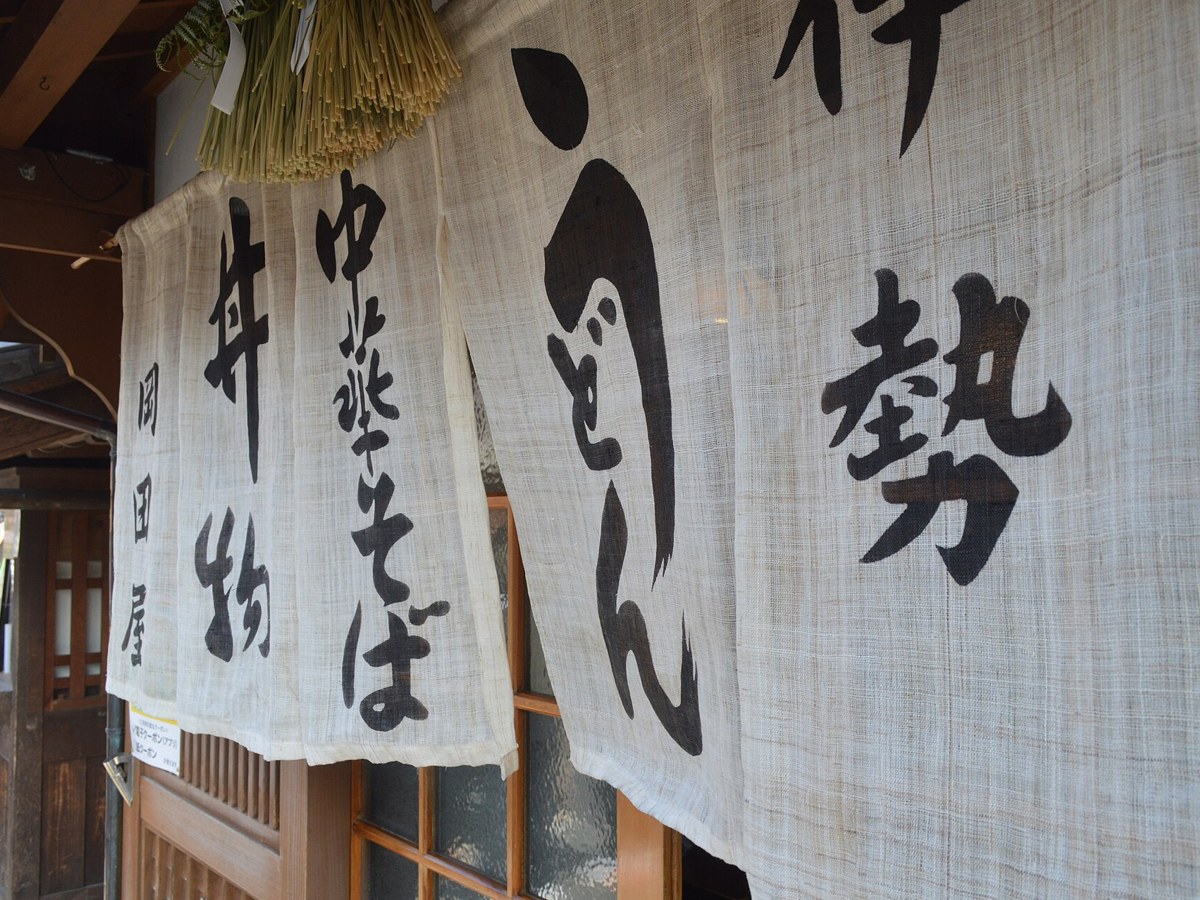
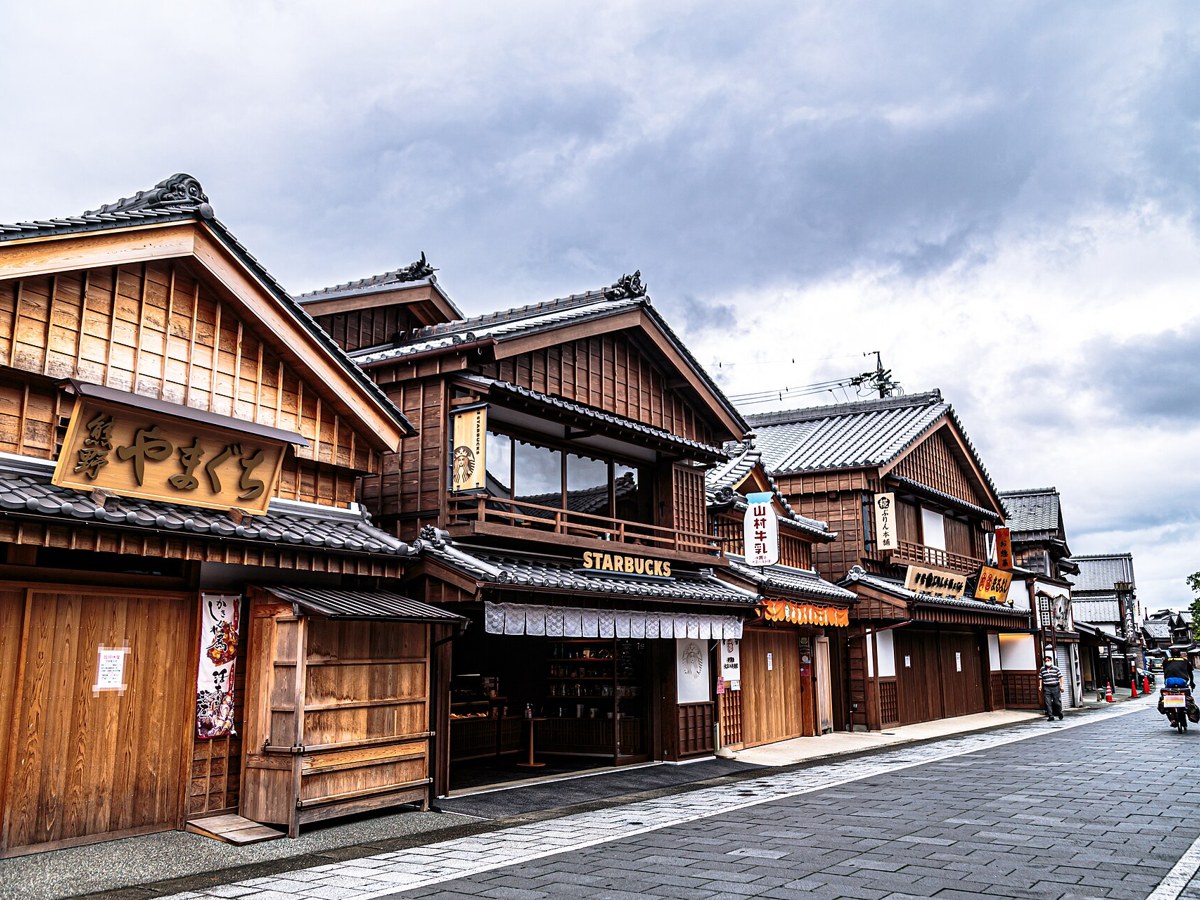
Fast food for the road to the shrine
The form follows the journey. Ise Jingu drew pilgrims from across Japan in the Edo period, many arriving on foot after weeks of travel; a bowl that was filling, ready in moments and easy on an exhausted stomach was exactly what the shrine town needed to sell them. Ise City gives that as the dish's own explanation — substantial, yet easy to digest — and the farmers' version behind it: home-milled wheat noodles dressed with the tamari that ran off the household miso.
The name is much younger than the dish. 'Ise udon' was adopted as the unified name only in 1972, by the Ise City noodle-restaurant association, and printed on member menus from then on. Recognition at national level arrived in fiscal 2024, when the Agency for Cultural Affairs certified Ise udon a '100-Year Food' — its programme for dishes handed down for a century or more — in the category for food culture continuing since the Edo period, with Ise City itself as the inheriting body.
Practical details: ¥600 a bowl in the merchant quarter
Eat it where the pilgrims' wholesalers did: the Kawasaki quarter, Ise's old riverside merchant district, about an eleven-minute walk from Iseshi Station. At Tsutaya (open from 11:00, closed Sundays; menu checked on an October 2026 visit) a plain bowl is ¥600, the full menu runs ¥600-1,000 — kayaku with fried tofu, fish cake, simmered shiitake and egg at ¥800, the house-recommended roast-pork bowl at ¥900, herring at ¥1,000, a large serving for ¥300 more.
Around the shrines, expect the same band: most Ise restaurants price a bowl at roughly ¥500-900, and Mie Tourism Federation listings put long-standing shops such as Chitose at about ¥600 for the plain bowl and ¥930 with meat. Shops cluster thickly in Oharaimachi and Okage Yokocho below the Inner Shrine, and are busiest from 11:00 to 13:00.
Taking the noodles home
The souvenir form is honest about what travels: packs of pre-boiled noodles with measured tare, sold at Okage Yokocho and Oharaimachi souvenir shops, at the Ise-shi Station kiosk and in supermarkets across Mie. Boiled at home to the same softness and dressed with the pack's sauce, they reproduce the dish more faithfully than most noodle souvenirs do — the style forgives a home kitchen because it was never about precision timing.
One warning the locals give every visitor, and this page repeats: do not judge the first mouthful unstirred. The sauce pools dark and strong at the bottom; unmixed, the top noodles taste of almost nothing. The dish only exists once the tare is lifted through the whole bowl.
The other pole of udon
This collection already holds Sanuki udon, Kagawa's hymn to firmness. Ise udon is the other pole of the same national dish — the proof that 'proper udon' was never one thing. Kagawa prizes the spring of a noodle boiled briefly and rinsed cold; Ise prizes a noodle boiled until it yields, built for tired legs and quick counters.
Travellers doing both regions in one trip get the argument in its best form: two prefectures, two opposite answers, each defended locally as obvious. Ise's answer has simply been certified older.
Sources — checked 10 November 2026
- Food in Japan — Ise Udon guide
- Japan Food Style — Tsutaya, Ise (visited October 2026)
- JeePe — What is Ise Udon?
Original prose and official links only; no source text or maker media reproduced. Photos are credited Creative Commons works, not product photographs.
Editorial review 2026-11-10