Of Japan's Six Ancient Kilns, Tamba is the one that never learned to shout. Hyogo's fifth story is its ware — eight centuries of jars and tableware from the Tachikui valley, thrown on wheels that turn the wrong way, and coloured by nothing but ash and fire.
The oldest kilns' quiet member
KOGEI JAPAN's craft record places the ware around Konda, in today's Tamba-Sasayama, and counts it among the Six Ancient Kilns with Bizen, Echizen, Seto, Shigaraki and Tokoname. The kilns opened about eight hundred years ago, at the end of the Heian period, and the early ware — jars, pots and mortars for farm country — went by the name Onohara ware until the Azuchi-Momoyama years.
The state's paperwork arrived in February 1978, when the ware was designated a national Traditional Craft under the name Tamba Tachikui Ware, as Hyogo Prefecture's craft page records. By then the village had already been famous once, under the tea masters: in the Edo period its tea caddies and water jars were prized, and the ware's centre of gravity had shifted to the Tachikui hamlets whose name the designation keeps.
The tea world found the ware early, and the village's official history keeps the receipts. In the Kan'ei era, under the guidance of the tea master Kobori Enshu, Tamba produced tea bowls, caddies, water jars and waste-water bowls that circulated as 'Enshu Tamba'; Enshu himself used a Tamba caddy named Ikuno at a gathering in 1631, and a Tamba water jar appears in the shogunal tea records of the following decade. That a farm country's storage jars became tea utensils is the ware's whole arc in miniature — utility first, beauty noticed later — and it explains the modern range, in which the same kilns sell flower vases to Kyoto tastes and rice bowls to the village's own tables.
The wheel turns the other way
Tachikui's signature is a direction. Hyogo Prefecture notes that forming here is done on the kick wheel in the counterclockwise rotation unique to Tachikui — the wheel spins left, against the practice of Japan's other pottery towns, a habit the prefecture lists among the techniques inherited together with the climbing kiln. A Tachikui potter's hands are trained to a mirror image of the national craft.
The second signature arrived about 1611, when climbing kilns of Korean origin were built in Kamaya, Shimotachikui and Kamitachikui, as the pottery village's official history records, and production scaled from the single-chamber kiln to the hillside staircase of chambers. In Meiji the centre settled at Tachikui, and the ware's market reached, in the craft record's words, as far as Kyushu and Tohoku.
Sixty hours of ash
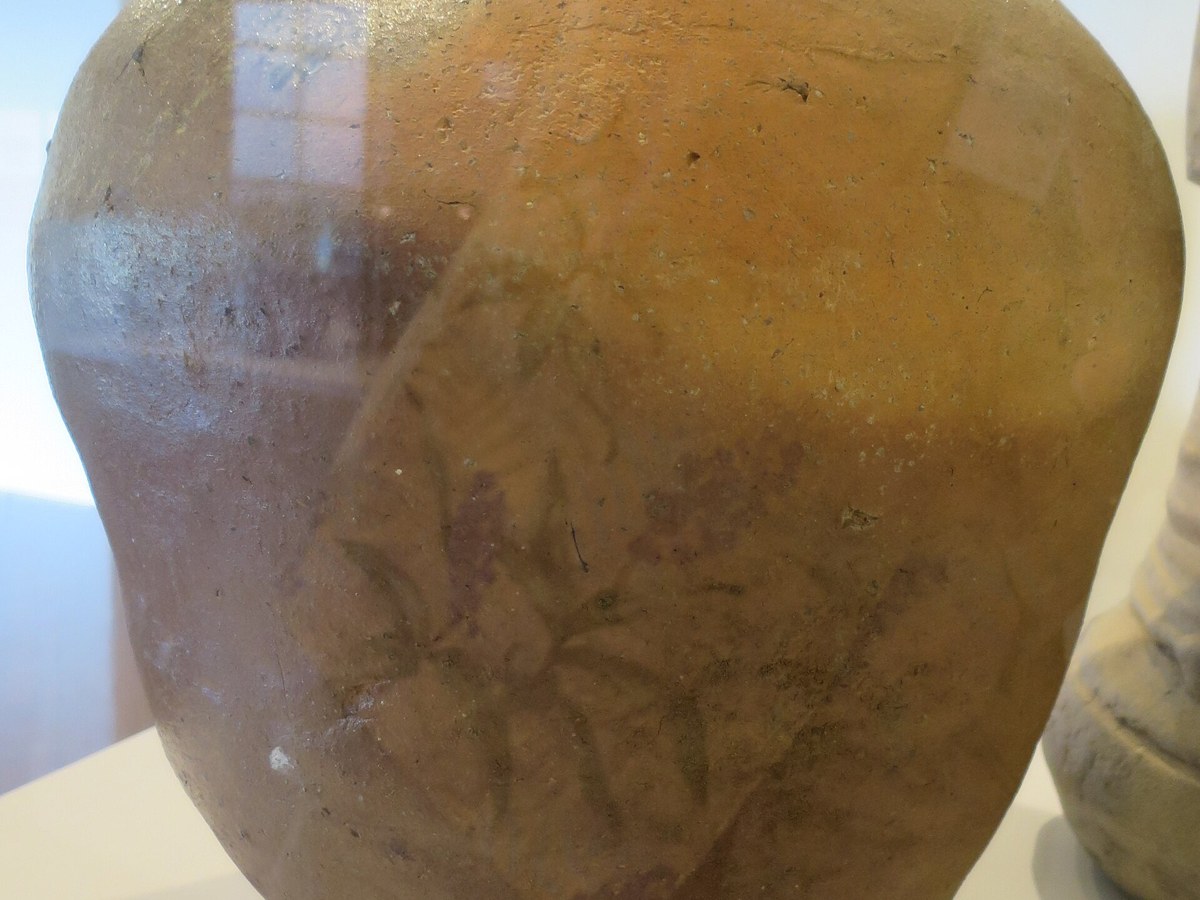
The colour of Tamba is an accident scheduled in advance. The craft record describes a climbing-kiln firing of about sixty hours at about 1,300 degrees, in which the pine fuel's ash settles on the ware and reacts with the iron in the clay — the hai-kaburi, ash-covered, effect that gives the ware its mottled greens, greys and rust. The full cycle, from the cooperative's refined clay to the cooled kiln, runs about a week.
The village shares its foundations: the clay is dug locally and refined at the cooperative's loam factory, built in 1963, and the kilns' techniques themselves — kiln-building and firing — were selected as a National Intangible Cultural Property in 1957. Bisque, ash glazes of wood, straw, rice husk, chestnut and bamboo leaf, then the long firing: ten steps, and the last of them is surrendered to the fire.
The village that sells its own
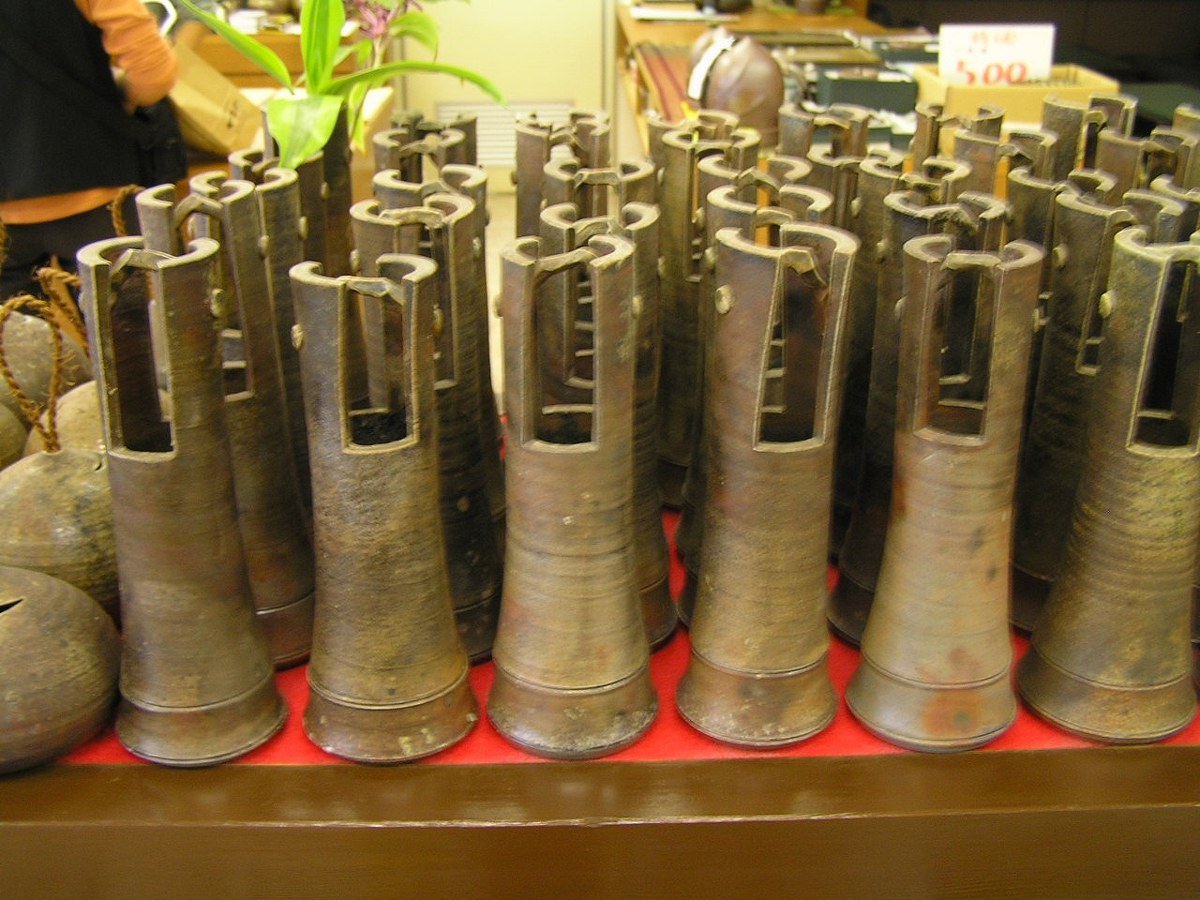
Tachikui today is a working pottery village, not a heritage set. The craft-export store Suigenkyo counts more than sixty Tamba ware kilns, and the cooperative sells its members' work on consignment at Sue-no-Sato, the Traditional Crafts Park in Kamitachikui — the prefecture's page lists the consignment sales among the cooperative's functions, beside the shared clay plant and joint purchasing.
The checked price shows the ware's new geography: Suigenkyo lists a red-glaze tea cup by the Tanbungama kiln — a Tachikui kiln that began with sake barrels for the Nada breweries and still fires its climbing kiln four or five times a year — at 383 Saudi riyals on its export storefront, nine centimetres across and 234 grams of ash-fired clay. The village that sold to Kyushu and Tohoku in Meiji now sells, by courier, to Riyadh.
Sources — checked 11 November 2026
- KOGEI JAPAN: Tamba Tachikui ware
- Hyogo Prefecture: Tamba Tachikui ware (designated traditional craft)
- Tamba Pottery Village (official): history of Tamba ware
- Suigenkyo Online Store: Tea Cup / Tanba Ware / Aka-Tanba Red Glaze (Tanbungama)
Original prose and official links only; no source text or maker media reproduced. Photos are credited Creative Commons works, not product photographs.
Editorial review 2026-11-11