Takana meshi is a preservation turned into a signature: Aso’s mustard greens, salt-pickled in spring and aged a full year until they yellow, chopped and stir-fried and mixed through hot rice. For generations it was simply what Aso homes did with the pickle barrel. Then, in 1968, a drive-in in front of a country station put a mother’s supper dish on its menu — and the home rice of the caldera became the dish travellers drive the caldera to eat.
The pickle that waits a year
Everything in the dish is downstream of the pickle. Aso takana is the mustard green of the caldera, raised in volcanic-ash soil under the mountain range’s hard swing of temperatures; pickled in salt in spring, it is not eaten young and green but aged — furuzuke, the old pickle — until, over the better part of a year, it turns yellow and its raw bite deepens into something sour, salty and mellow. The Aso accounts describe the home logic plainly: the spring barrel was a store, and takana meshi was one of the ways the store was eaten well, all the way down.
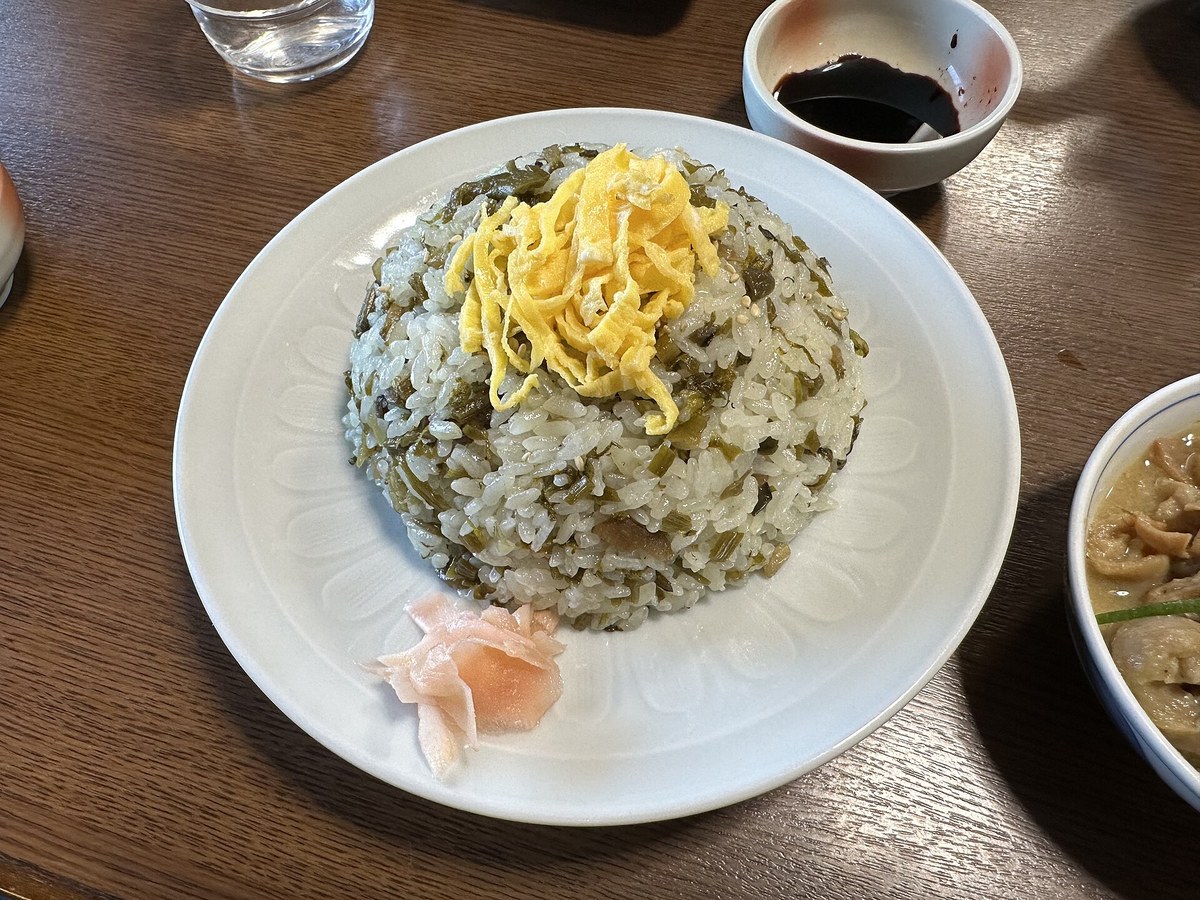
For the dish, the aged stems are chopped fine and stir-fried — at the originator’s counter, with bamboo shoots — then mixed through steaming rice and seasoned with nothing more than soy sauce and salt. It is not takana pilaf and not takana fried rice: the encyclopedia record is careful to separate the plain Aso method from both, and the regulars’ loyalty, it notes, is to exactly that plainness.
A mother’s supper, sold from 1968
The dish’s named history is a family one. Before it was a product it was the evening meal Saki made for her children in the years just after the war, when rice itself was scarce — the pickle stretched the bowl, and the children remembered the taste. Her family opened the drive-in Asoji in March 1968, on the Hohi Main Line in front of Ichinokawa Station, and it was one of her sons who proposed putting the remembered dish on the menu: sold there as “Ganso takana meshi” — the original takana meshi — it was, on the record, the first time the dish was sold as a product anywhere in Aso.
From that counter it settled, gradually and then completely, into Aso’s signature: the guidebooks pair it automatically with dago-jiru, the caldera’s dumpling soup, and the roadside-station association’s current restaurant guide still leads its Aso list with Asoji as the takana-meshi originator.
The mound shaped like a mountain
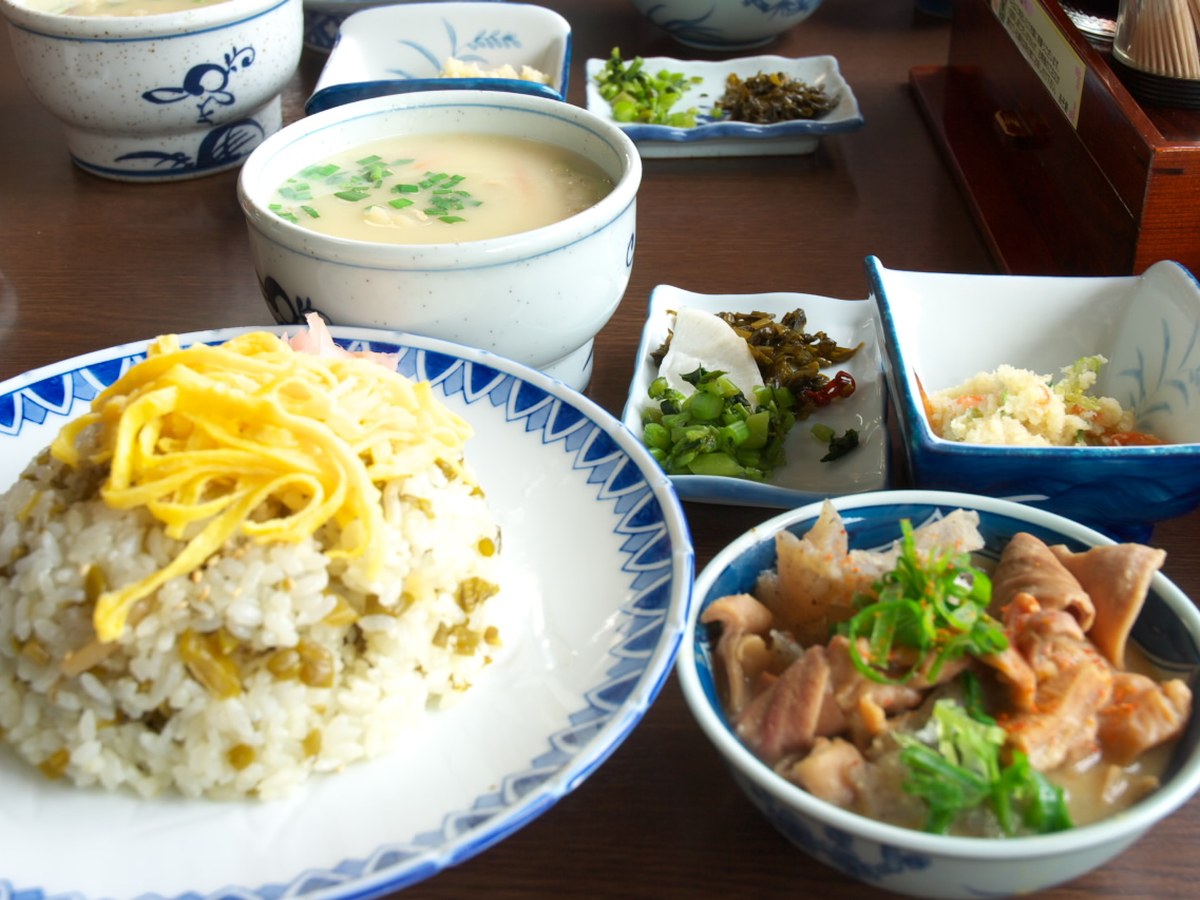
The serving has a geography of its own. The best-known account of the originator’s plate — carried by the international guide record — says the rice is mounded in the shape of Kometsuka, the smooth grass cone that stands on the caldera floor in view of the restaurant: a little green-brown mountain of pickle rice on the plate, the landscape served back to the traveller who has just driven through it. Both photographs in this story show that mound, one close under its ribbons of egg, one in its full Aso set.
Around the mound the set arranges the rest of the caldera kitchen: dago-jiru with its hand-kneaded dumplings, a stewed dish, pickles — and at Asoji, on the same menu, the prefecture’s other signatures, basashi and akaushi beef. But the mound is the order that defines the table, and the one the copyists across the caldera all reproduce.
Eating it in the caldera
Eat it in Aso, along the national route that crosses the caldera floor, at lunch — most of the old houses keep lunch hours only. The prices stay at country level: the Mapple guide’s Aso listing gives Ajidokoro Naka, a local-dish house in Kurokawa, Minamioguni, serving its takanameshi at ¥750 among its set meals, and the current guides put the general run of the dish in Aso at around a thousand yen, more with the full set of dago-jiru and stewed offal.
Order the set once, to learn the grammar — mound, soup, pickles — and then judge the houses by the pickle itself: the depth of the yellow, the sourness held against the salt, and the rice mixed hot enough that the fat of the stir-fry shines. That is the whole contest, and it has been running since 1968.
Sources — checked 14 November 2026
- Takana meshi — encyclopedia record (Aso takana, the Asoji origin)
- Roadside Station Aso (ASO Denku) — Aso local-restaurant guide, 2026 (Asoji as the takana-meshi originator)
- Asoji — GOOD LUCK TRIP directory record (the Kometsuka mound and the founding account)
- Mapple — Aso and Kuju Japanese-restaurant listing (Ajidokoro Naka prices)
Checked 14 November 2026 (stored links re-fetched and judged per product): reserved where the page says so, with an editorial review note kept per product. Press, PR and travel use stays outside the grant.
Editorial review 2026-11-14