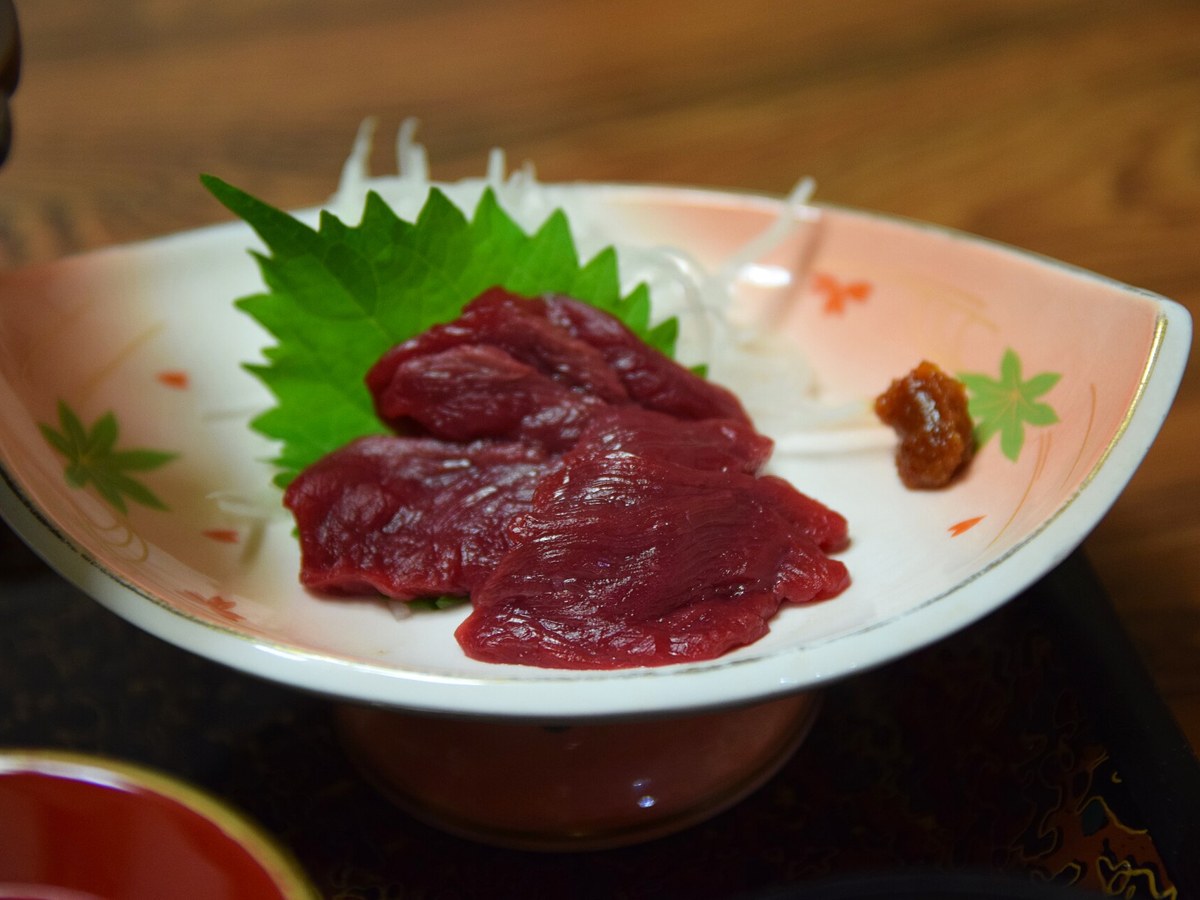
It is the colour that names it first: sakura niku, cherry-blossom meat, pink-red and marbled, sliced thin and eaten raw with garlic and soy. Basashi is horsemeat sashimi, and Kumamoto — which produces some forty per cent of Japan's horsemeat — is its capital by the Japan Tourism Agency's own account, which also makes it one of the prefecture's three great specialties. This collection already holds the other two. This page completes the set the Agency itself names.
The 1590s: a lord, a siege diet, a castle
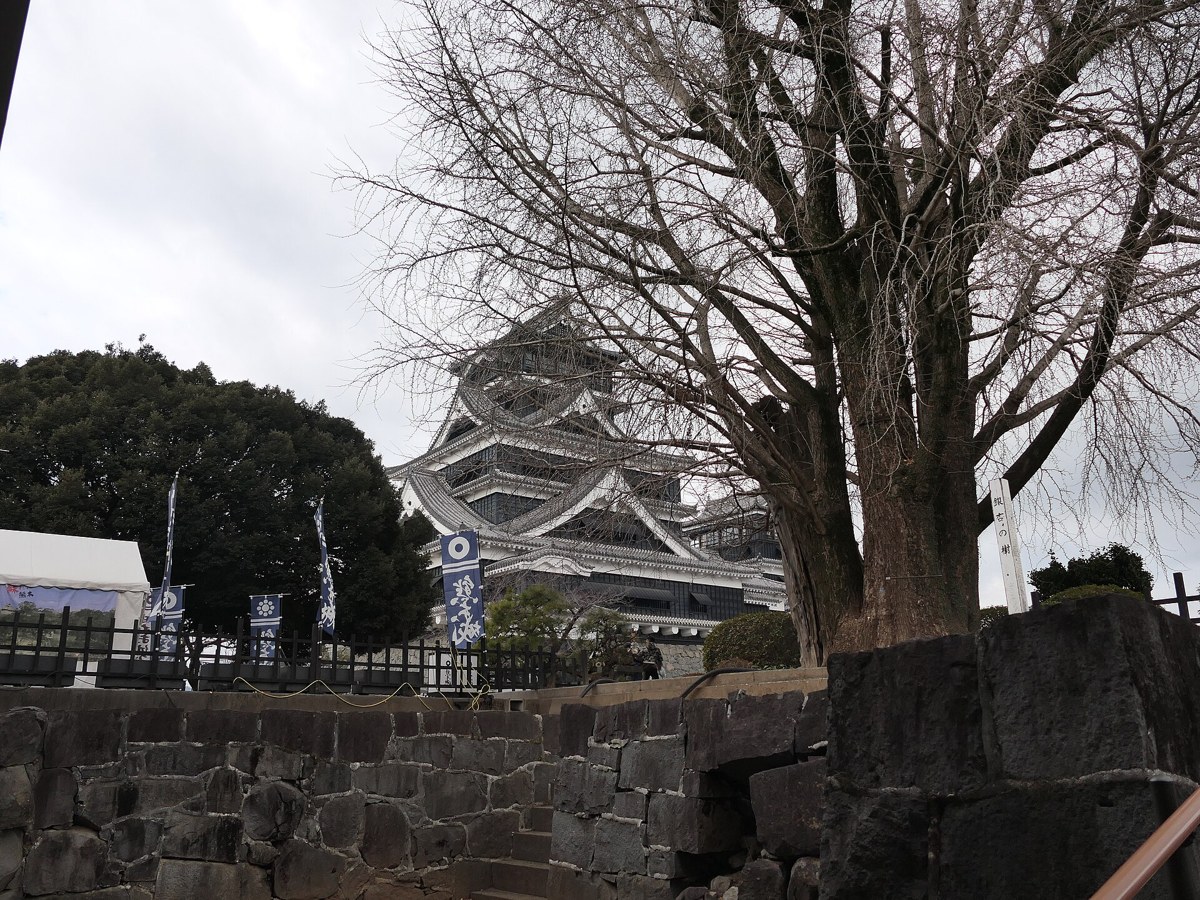
The official origin is a campaign story, and the Japan Tourism Agency tells it plainly. The practice of eating horsemeat is said to date back to the 1590s, when Kato Kiyomasa — lord of Higo, and the builder of Kumamoto Castle — took part in the invasions of the Korean Peninsula, and when food began running short he kept body and soul together by eating raw horsemeat. Kiyomasa came home, built his castle, and the habit his army had learned in hunger stayed in the domain he ruled: Kumamoto's horsemeat culture is conventionally traced to its most famous lord's worst-supplied war.
What hunger began, husbandry sustained. Kumamoto became a great horse-raising land, and the checked specialist guide fixes the modern scale: the prefecture accounts for about forty per cent of Japan's entire horsemeat production, the largest share in the country, raised on the spring water and highland pasture of the Aso country. The word itself is a compression — baniku, horsemeat, folded into sashi, sashimi — and the pink of the meat gave it its second name, sakura niku, cherry-blossom meat.
Why raw, and how Kumamoto serves it
The Agency's entry answers the obvious question on the official record. Horses carry a higher body temperature than other livestock and so harbour fewer parasites, making every part of the animal except the offal safe to eat uncooked; and horsemeat tends to grow tougher when cooked, which is why even an order of horsemeat steak in Kumamoto will be served rare by default. In Kumamoto, the Agency concludes, most horsemeat is still consumed raw, as basashi, with garlic, ginger and soy sauce — the condiment set is part of the definition.
The regions season differently, and the checked Kumamoto guide records the local grammar: Kumamoto style pairs the slices with garlic soy sauce, where Shinshu (Nagano) uses ginger soy and Aizu a spicy miso. Cuts run from lean akami through marbled shimofuri to the prized mane fat, and a mixed platter is the standard first order. None of this is folk improvisation: raw service operates under the health ministry's food-safety standards, and the standing advice of every guide is the same — basashi belongs at specialist houses, of which Kumamoto City has the deepest bench in Japan.
What a platter costs
The accessible door is a platter in the Ginza-dori quarter. At Mimura, a specialist izakaya among Kumamoto's horse restaurants, the sakura sashimi platters — as carried by a checked restaurant guide — run at ¥1,700 for three cuts and ¥2,300 for five, among the lowest prices in the district, with horse yakiniku, nigiri and hot pot beyond the raw board. At the top of the tradition stands Suganoya, the city's most famous basashi house: the checked guide notes its internationally certified specialist processing and prices its stone-grilled lunch set, which includes basashi, at ¥3,670, with dinner kaiseki around ¥6,000.
Kumamoto's shelf in this collection held, until now, mustard lotus root and a sweet-potato dumpling — the Agency's other two great specialties of the prefecture. Basashi completes the official three, and gives the prefecture its most storied plate: a daimyo's campaign ration, refined over four centuries into the pinkest sashimi in Japan. Order the mixed platter, use the garlic soy, and eat it in the city that produces two-fifths of the nation's supply.
Kumamoto's shelf, completed on the official record
Few prefectures in this collection can have their table audited against an official list, but Kumamoto can: the Tourism Agency names three great specialties, and with basashi the collection now holds all three — the mustard lotus root, the sweet-potato dumpling and the cherry-blossom meat. It is the first prefecture here whose standing set is complete by its own government's count, which is a fitting honour for the prefecture that also produces two-fifths of the dish itself.
Eat it in Kumamoto City, at a specialist house, as the first plate of the evening rather than the last: cold slices, warm rice to come, and the castle of the lord who — on the official account — started it all visible across the town he built.
Sources — checked 10 November 2026
- Japan Tourism Agency (MLIT) multilingual database: Horsemeat Sashimi (Basashi)
- Basashi: Horsemeat Sashimi of Kumamoto (checked specialist guide)
- Where to Eat Basashi in Kumamoto: Mimura (checked restaurant guide)
- Suganoya Kumamoto: Must-Try Food in Kumamoto (checked guide)
Original prose and official links only; no source text or maker media reproduced. Photos are credited Creative Commons works, not product photographs.
Editorial review 2026-11-10