Miyazaki's cheese manju was one bakery's invention. Its second story is a whole prefecture's dinner: chicken nanban, born as a staff meal in a Nobeoka Western-style restaurant in the late 1950s, and split ever since into two honest lineages — the original soaked in sweet vinegar and nothing else, and the tartar-sauced version the rest of Japan thinks is the original.
A staff meal in Nobeoka
The agriculture ministry's local-cuisine register lists chicken nanban for the whole of Miyazaki Prefecture and gives its origin plainly: Nobeoka City, in the late 1950s (the Showa 30s), as a makanai — a staff meal — at a Western-style restaurant in the city. Travel accounts name that restaurant as London, in Gion-machi, Nobeoka. The dish itself is a technique before it is a recipe: chicken floured, dipped in beaten egg, deep-fried, and plunged while still hot into sweet vinegar sauce.
The word nanban is older than the dish by four centuries: it was Japan's name for the Portuguese and their cooking, and the vinegar-marinating of fried food descends from escabeche brought through Nagasaki trade in the 1500s. Miyazaki's contribution was to run chicken through that old technique in a yoshoku kitchen — and to keep doing it until it became local identity.
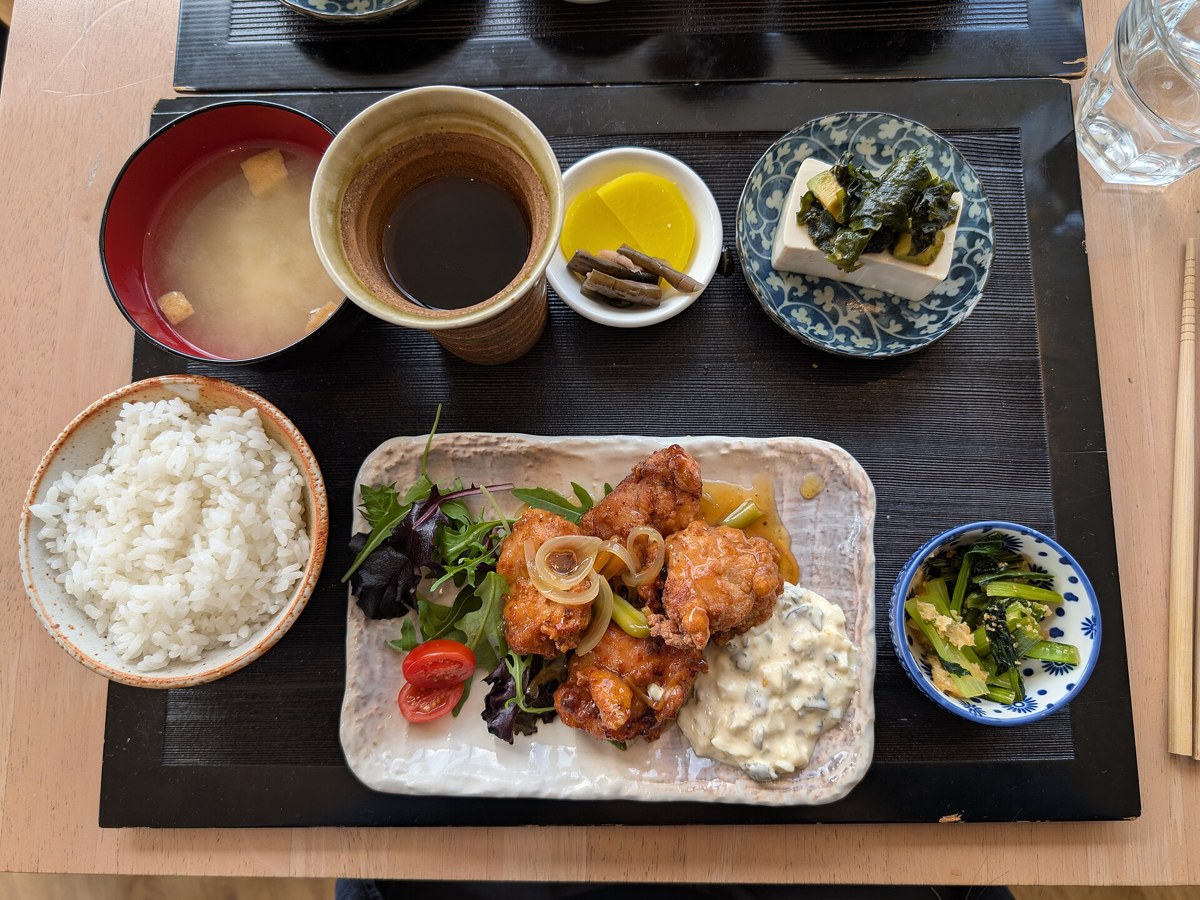
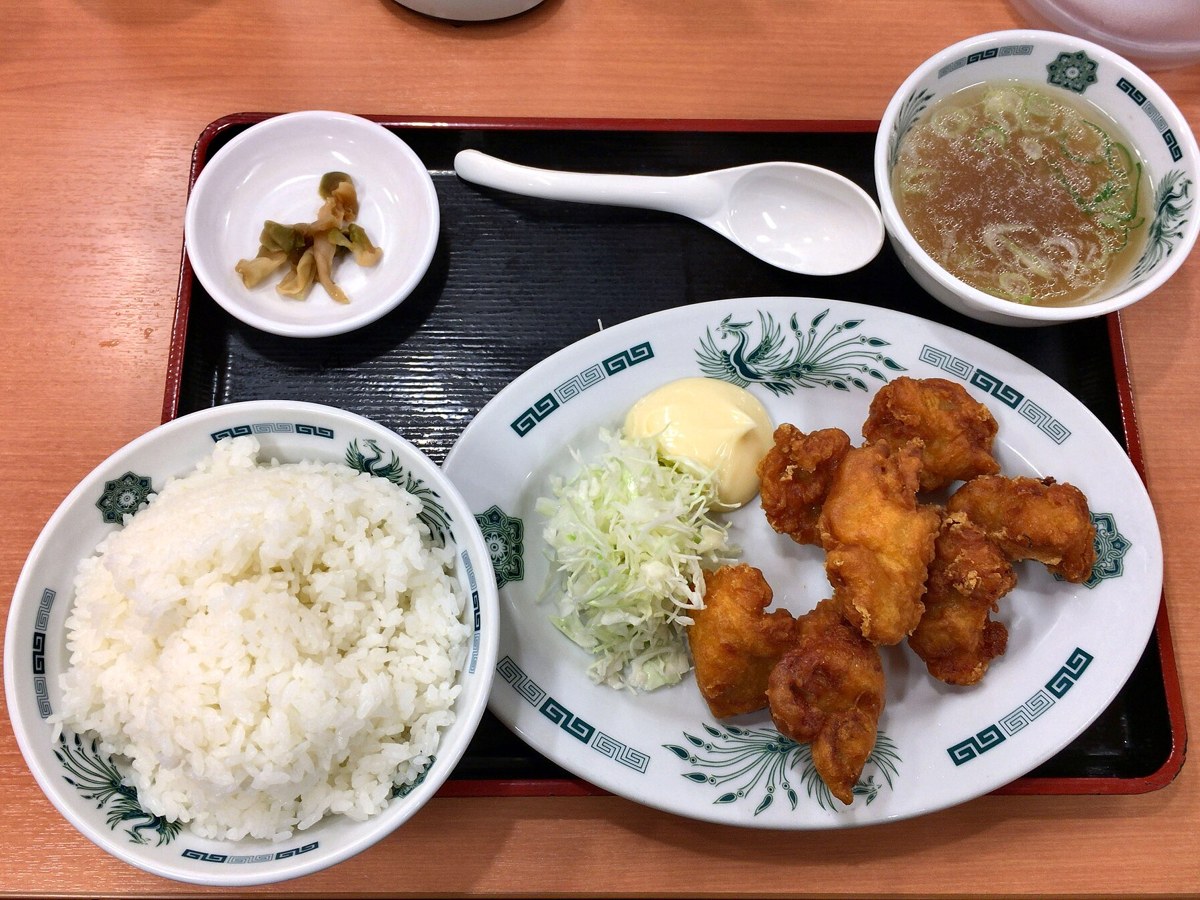
Two lineages, one city, both from the 1960s
In mid-1960s Nobeoka the dish forked, and both branches still serve. Naochan, founded in 1964, keeps the original style — sweet vinegar only, no tartar — under a sign that reads 'the original chicken nanban'; its previous owner is credited in the checked accounts with starting the vinegar lineage. Ogura, whose founder Kai Yoshimitsu began selling his version in 1965, added the tartar sauce; Ogura's own account credits the founder's brother with developing it.
Japan at large knows the Ogura form — tartar is now the default image of chicken nanban nationwide. Nobeoka knows both, and the comparison is the local sport: vinegar-only for the purist's clean sweet-sour bite, tartar for the richer, mayonnaise-bound version that conquered the country. Neither house disputes the other's existence; the prefecture eats both.
Practical details: what the original costs
At Ogura's checked Segashira listing, the chicken nanban is ¥1,050. At Naochan in Nobeoka, the original is ¥950 on its own, or ¥1,200 as a set with rice and miso soup in the checked guide listing. Ogura's main-store listings in Miyazaki City run ¥1,100-1,300 — capital-city prices for a Nobeoka dish, and still a working lunch.
Expect queues at Naochan around noon and no reservations; it is a narrow, focused menu in the original style. Ogura runs multiple stores across Miyazaki City and Nobeoka — note the checked listing's care point that the Nobeoka Ogura is a noren-wake relative, separately run. Either way, order the house's own version first; the lineage is the flavour.
The prefecture dish test
Many dishes in this collection belong to a shop. Chicken nanban passed the harder test: it escaped. When a ministry register lists a dish for an entire prefecture, and two rival inventors in one small city both still thrive sixty years on, the dish has stopped being a product and become a place's cooking — the strongest form of regional edition there is.
It also corrects a lazy assumption. Japan's famous version (tartar) is the second version. Miyazaki keeps the first one hot and vinegared in Nobeoka, an hour from the capital, exactly where a staff meal became a signature.
Scope: what 'limited' means here
The edition is Miyazaki's original: chicken nanban as created in Nobeoka and registered as the prefecture's local dish. Imitations nationwide are acknowledged cheerfully — they are the dish's success, not this page's subject. The two origin lineages are presented as the checked sources give them, side by side.
Sources — checked 9 November 2026
- Takumi Meguri (MAFF local-cuisine based): Chicken Nanban
- Food in Japan: Chicken Nanban — Miyazaki fried chicken with sweet vinegar and tartar sauce
- Deep Exp: Ogura Chicken Namban Restaurant Segashira Store
- Open Travel Guide: Naochan (Ganso Chicken Nanban), Nobeoka
Original prose and official links only; no source text or maker media reproduced. Photos are credited Creative Commons works, not product photographs.
Editorial review 2026-11-09