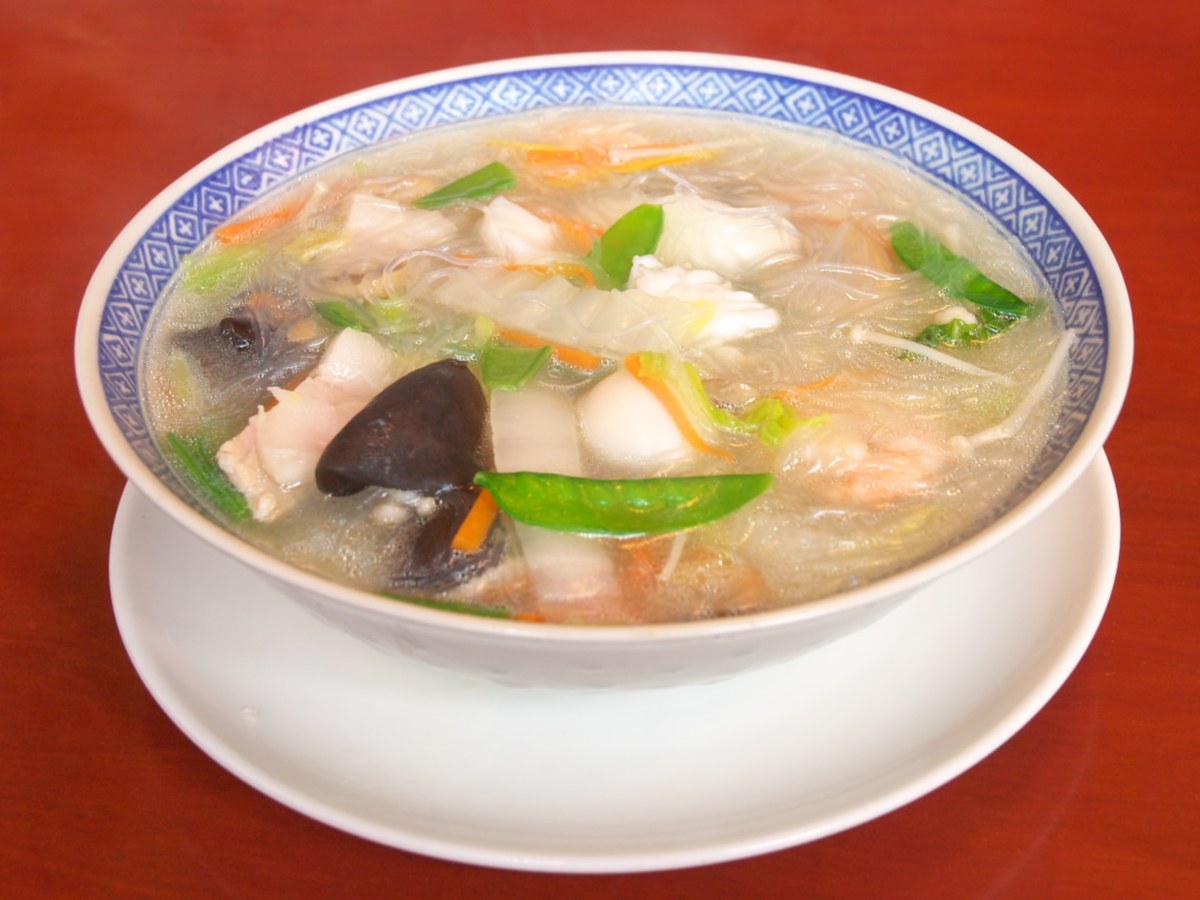
Taipien is the gentlest bowl in the noodle atlas: glass vermicelli — never wheat — drifting in a pale chicken-and-pork-bone soup with cabbage, wood-ear mushrooms, shrimp, squid and pork, and a fried boiled egg riding on top. It came from Fujian, in China, with the immigrants who settled in Kumamoto from the late Meiji years, and Kumamoto did what it does with imports: it kept the bowl for a century until the import became the local specialty. The restaurant at the centre of the story, Kourantei, was founded in 1934, calls its own taipien 'one of the houses said to be the originator', and still seasons the soup with sea salt from Fujian — the dish's passport, renewed in every bowl.
Vermicelli, not noodles — the fixed point
Everything in taipien can vary except the strand. Kourantei's own description is precise: the vermicelli is made of 100% mung-bean starch; vegetables, seafood and meat are stir-fried hard over strong heat; the soup that finishes them is chicken-frame and pork bone; and the seasoning is sea salt from Fujian Province. Wheat-noodle cousins crowd this corner of Japan — Nagasaki champon above all — but a taipien on wheat noodles is not a variation, it is a different dish wearing the name.
The result is the lightest of the regional noodle soups: the Kumamoto guides describe a bowl built on plenty of vegetables, with the fried boiled egg as the key element on top. Where champon is milky and forceful, taipien is clear and calm — comfort food in the exact sense, the bowl a city orders when it wants feeding without weight.
From Fujian to Anseimachi
The migration record, carried by the Kumamoto food guides, puts the dish's arrival with Chinese immigrants in the late Meiji period: a Fujian home soup, adapted over decades into a Kumamoto staple. Kourantei's own site frames the geography the same way — Kyushu's west coast as the first contact point for cultures arriving from Eurasia — and gives the house its date and founder: the Chinese restaurant Kourantei was founded in Kumamoto in 1934 by Ye Kikuka, burned with the city in the Second World War, and rebuilt in the ruins on the founder's spirit of cheering the city and its children.
The head shop stands at 5-26 Anseimachi in Kumamoto's Chuo Ward, in the Shimotori arcade district, open 11:00–21:00 on the house's listing, and the guides regard it as the originator of taipien while the house itself, more carefully, claims to be one of the houses said to be so. Both phrasings are carried in this article, because the difference between them is exactly where the documentation ends.
The 1934 house today
Kourantei today is a small group: the Shimotori head shop, the Kamitori Pavilion branch, and an official online shop — the house has grown the way the dish did, by staying in the neighbourhood. Its news pages show the bowl still working: for the Kamitori Pavilion's holiday opening on 3 November 2026, the two menus the house announced were the holiday buffet and the single taipien — the signature, offered on its own, at ¥1,080 tax included on the notice of 27 October 2026.
That notice is this article's price anchor, and it is worth saying why it matters: taipien prices elsewhere on the web drift through guide estimates and old menus, while the house's own dated notice prices the bowl itself, this autumn, in the founding restaurant. A single taipien at Kourantei: ¥1,080, tax included, from the source.
Eating it in Kumamoto
Eat it at Kourantei's Shimotori head shop — 5-26 Anseimachi, Chuo Ward, a short walk from the castle side of the arcades — and order the taipien alone before you order anything else: ¥1,080 tax included on the house's notice of 27 October 2026. The Kamitori Pavilion branch is the second seat of the same bowl. Lunch in the arcade district around the house runs about ¥1,200–2,000 on the current Kumamoto guide, so taipien sits at the gentle end of the city's prices as well as its flavours.
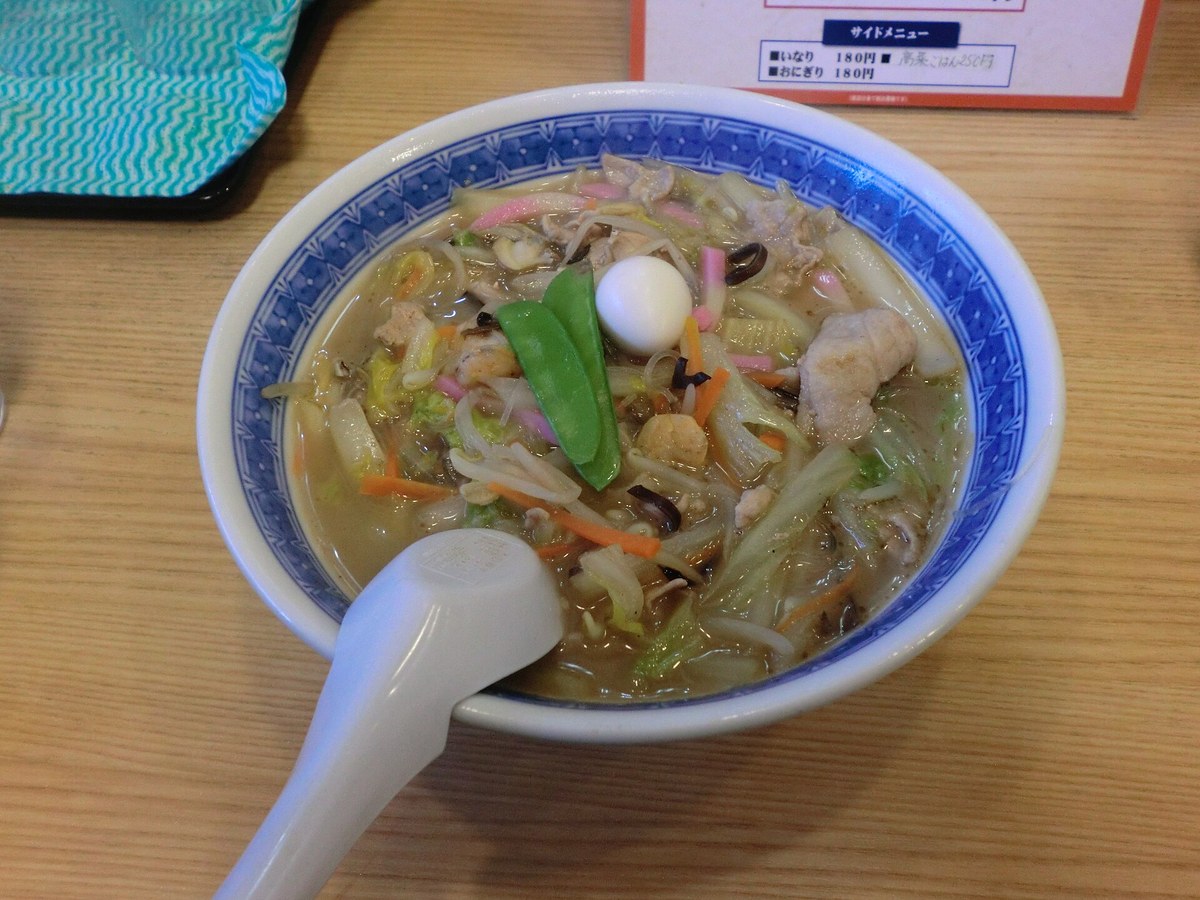
For the traveller in a hurry, the bowl also appears at Kumamoto Station (the second photograph shows a station serving), but the head shop is the story: ninety years in one neighbourhood, a Fujian salt still crossing the sea, and a soup that tastes like the city decided to be kind. Order it when the day has been long. That is what it is for.
Sources — checked 13 November 2026
- Kourantei (official site) — the house, its taipien and its history (checked 13 November 2026)
- Kourantei (official site) — notice of the Kamitori Pavilion holiday opening, 3 November 2026 (published 27 October 2026)
- Japan Activity — 11 Best Kumamoto Foods (guide refreshed 2026; checked 13 November 2026)
Original prose and official links only; no source text or maker media reproduced. Photos are credited Creative Commons works, not product photographs.
Editorial review 2026-11-13