Every tonkotsu city in Kyushu signs its bowl differently. Hakata signs with thin noodles and refills. Kumamoto signs in black: a spoon of mayu, garlic oil roasted until it turns the colour of ink, swirling over a broth deliberately milder than its neighbours'. Under it, straight noodles twice as thick as Hakata's; over it, crunchy roasted garlic chips. It is the gentlest tonkotsu in Kyushu and the most fragrant — the bowl that proves mildness and character are not opposites.
Mayu: the black signature
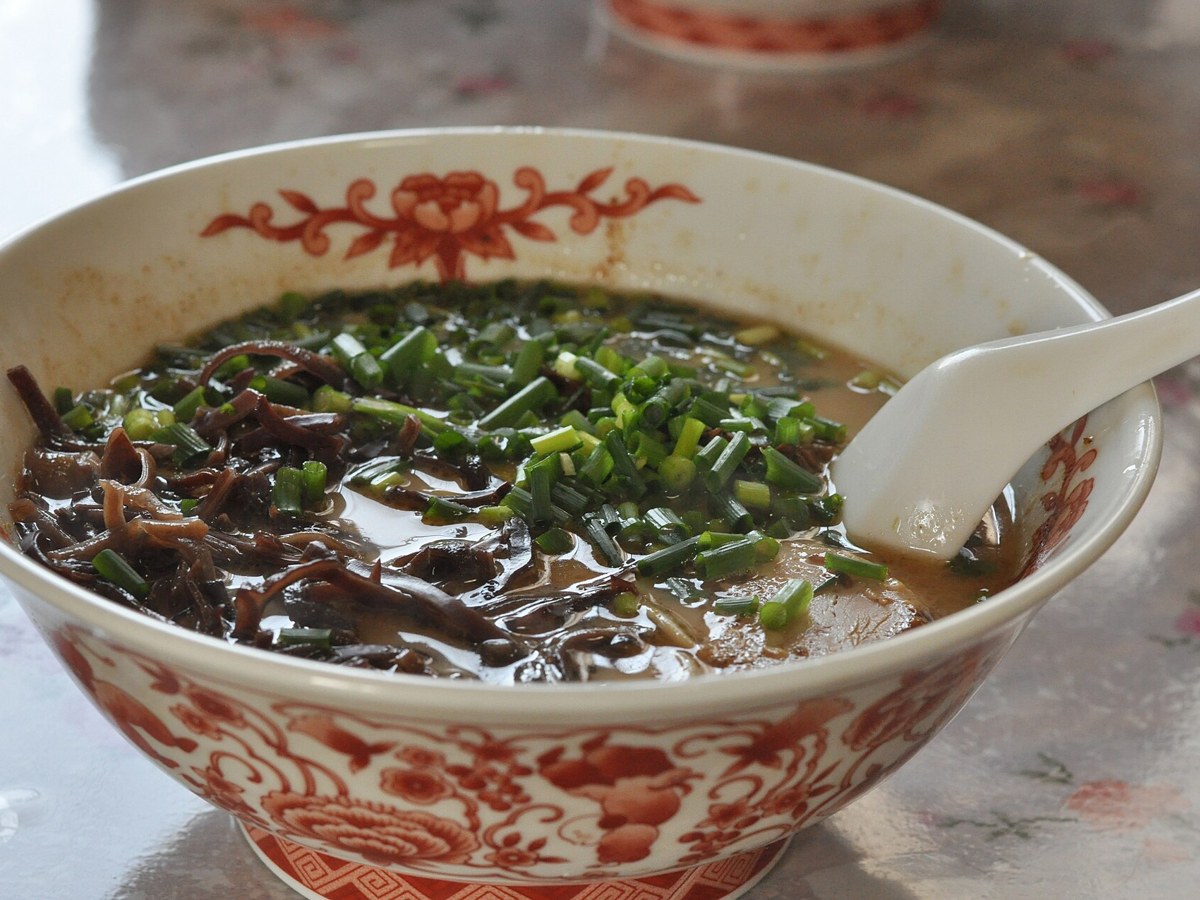
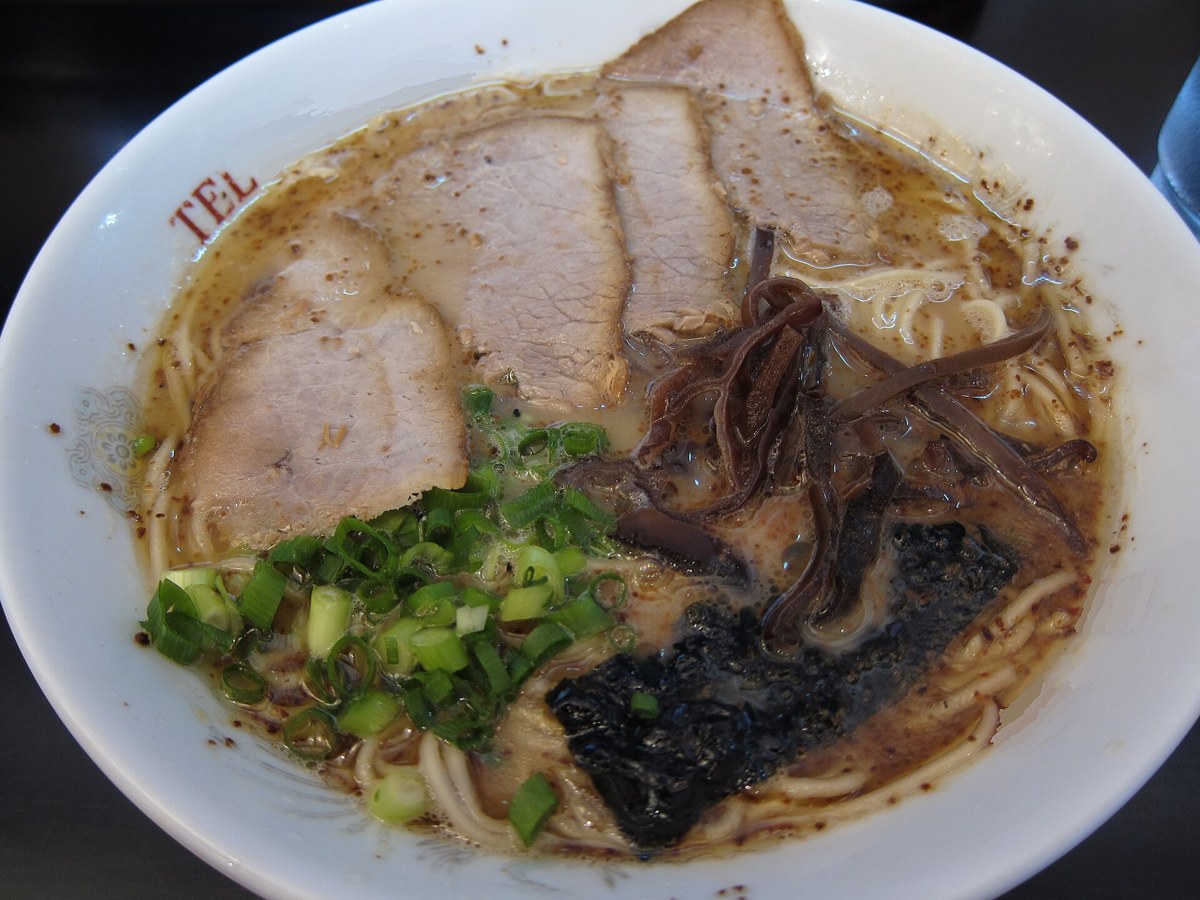
The checked guide defines the bowl from the top down. Kumamoto's cooks simmer pork bones and chicken bones together, so the tonkotsu broth comes out creamier, rounder and milder than a pure pork-bone version — and many shops finish the broth the same day, keeping it fresh and controlling the porky smell. Onto that pale soup go the two signatures: roasted garlic chips, and mayu, a black garlic oil made by slowly cooking crushed garlic in oil until it turns black, adding the nutty, smoky note the guide calls the style's clearest marker. Kikurage wood-ear mushrooms appear in nearly every bowl, and the noodles are medium-thick, straight and chewy.
Mayu's origin, on the guide's account, was practical before it was poetic: cooks found that slowly roasting garlic in oil softened the strong pork smell that some diners disliked, and Kumamoto's shops embraced the idea early and completely — today nearly every shop in the city uses some form of mayu or roasted garlic chips, and Keika, one of the city's landmark houses, claims to have been the first to serve fragrant mayu with its soup. The comparison with Hakata is the guide's own table: Kumamoto blends chicken into the pork, thickens the noodle, finishes with garlic — and largely declines the kaedama refill, serving a fuller first portion instead.
Kurume to Tamana to Kumamoto, 1952-1968
The lineage is Kyushu's tonkotsu family tree, and both checked accounts tell it the same way. Food historians point to Kurume, in Fukuoka Prefecture, as tonkotsu's origin; when a Kurume shop's style reached Tamana City — the origin account dates the move of the shop Sankyu to Tamana to 1952 — word spread south and Kumamoto's young chefs went to taste it. Three of them carried it home and founded the city's ramen age: on the origin account, Shoyoken opened in 1953 as the original Kumamoto ramen, Komurasaki followed in 1954, and Ajisen — later the global chain — in 1968.
Komurasaki is the thread a visitor can still follow: the specialist guide calls it one of the oldest Kumamoto ramen shops in the city, opened in 1954, still serving a thick yet light soup in the Kamitori centre — and still pricing its best-selling King Ramen at around ¥700. A style born among working-class diners in the 1950s, carried by three named shops within sixteen years, and codified by one black oil: Kumamoto ramen's history is unusually well-lit for a bowl of noodles.
What the home city charges
The checked guide's price line keeps the working-food promise: a bowl of Kumamoto ramen typically costs about ¥800-1,100 in the city, with the 1954 house Komurasaki's King Ramen at around ¥700 as the value landmark. And the portion logic explains the number — where Hakata's small first bowl assumes a ¥100-200 kaedama refill, Kumamoto serves the meal whole the first time: the guide notes most traditional shops do not offer kaedama at all, tending to serve a larger initial portion instead.
Kumamoto's standing stories are a steamed sweet-potato dumpling, mustard-stuffed lotus root and the basashi for which the prefecture is famous. Kumamoto ramen is its fourth — its first ramen — and it completes this collection's Kyushu ramen map: Kurume's origin fire to the north in Hakata's thin-noodle refill bowl, and now Kumamoto's black-oil bowl between them, milder than both and older in its shops than either city's fame suggests.
Eating the mild bowl properly
Order the house standard first, before the loaded versions tempt you: the form's argument is the contrast between the pale, mild broth and the black oil swirled over it, and the first spoonful should be broth and mayu together, so the smoky garlic meets the chicken-softened pork before the noodles arrive. Notice the kikurage — the wood-ear crunch is in nearly every bowl and is the texture the thick straight noodles are set against. Garlic lovers should know the chips are not garnish here; they are half the signature.
Eat it in the centre, where the 1950s shops still stand: Komurasaki in Kamitori for history at ¥700, Keika for the strongest mayu on the guide's account, Kokutei by the station for the lightest broth. Then make the comparison the whole Kyushu map invites — north to Hakata for the thin-noodle refill ritual, and taste how one island's pork-bone soup became three cities' three different answers.
Sources — checked 11 November 2026
- Food in Japan: Kumamoto Ramen — History, Mayu, Recipe, Best Shops (checked specialist guide)
- Twinspeak Eat Go: Ramen 341 — The Origin of Kumamoto Garlic Oil Ramen (checked origin account)
Original prose and official links only; no source text or maker media reproduced. Photos are credited Creative Commons works, not product photographs.
Editorial review 2026-11-11