Kobe has two food stories. One is the wagyu the world flies in for. The other is this: yakisoba noodles chopped fine on a screaming-hot griddle and fried together with rice, sauced dark and sweet, for about a thousand yen. Sobameshi was born in Nagata, Kobe's factory ward, in the 1950s — lunchbox rice meeting noodles on the okonomiyaki grills — and it never left the neighbourhood that invented it. Add bokkake, the beef tendon and konnyaku simmered sweet and spicy, ask for the dobe sauce they keep hidden under the counter, and you have the plate Nagata actually eats.
Noodles and rice, chopped together on the griddle
Sobameshi combines finely chopped yakisoba noodles with fried rice, cooked together on a hot iron griddle and chopped further with the cook's metal spatulas as it fries (Japan Activity, updated 8 August 2026). The result is neither fried rice nor yakisoba but a third thing: every grain of rice carries a strand of noodle, and the whole plate takes the dark, sweet-savoury gloss of the sauce. Its home ground is Shin-Nagata, in Kobe's Nagata Ward, where signs cluster around the station and the counters seat you shoulder to shoulder at the teppan.
Many shops add bokkake, Kobe's own topping of beef tendon and konnyaku simmered in a sweet and spicy broth, which melts its richness into the rice and noodles. Sauce is a hierarchy of its own: bara sauce, the everyday bottled Worcester-style sauce found on Nagata tables, is the standard pour, while dobe sauce — thicker and more concentrated, reportedly made from the sediment left over from bara production — is kept out of sight unless a customer asks for it by name.
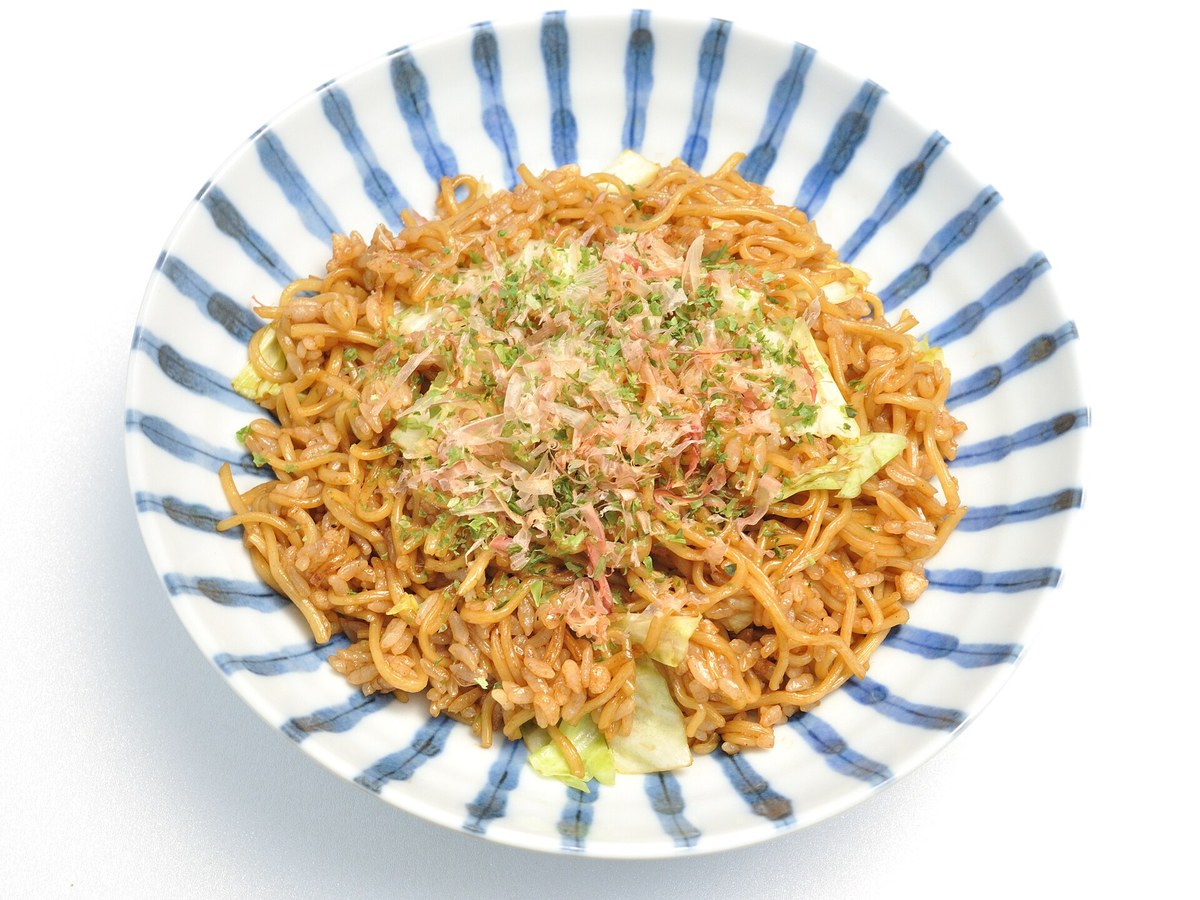
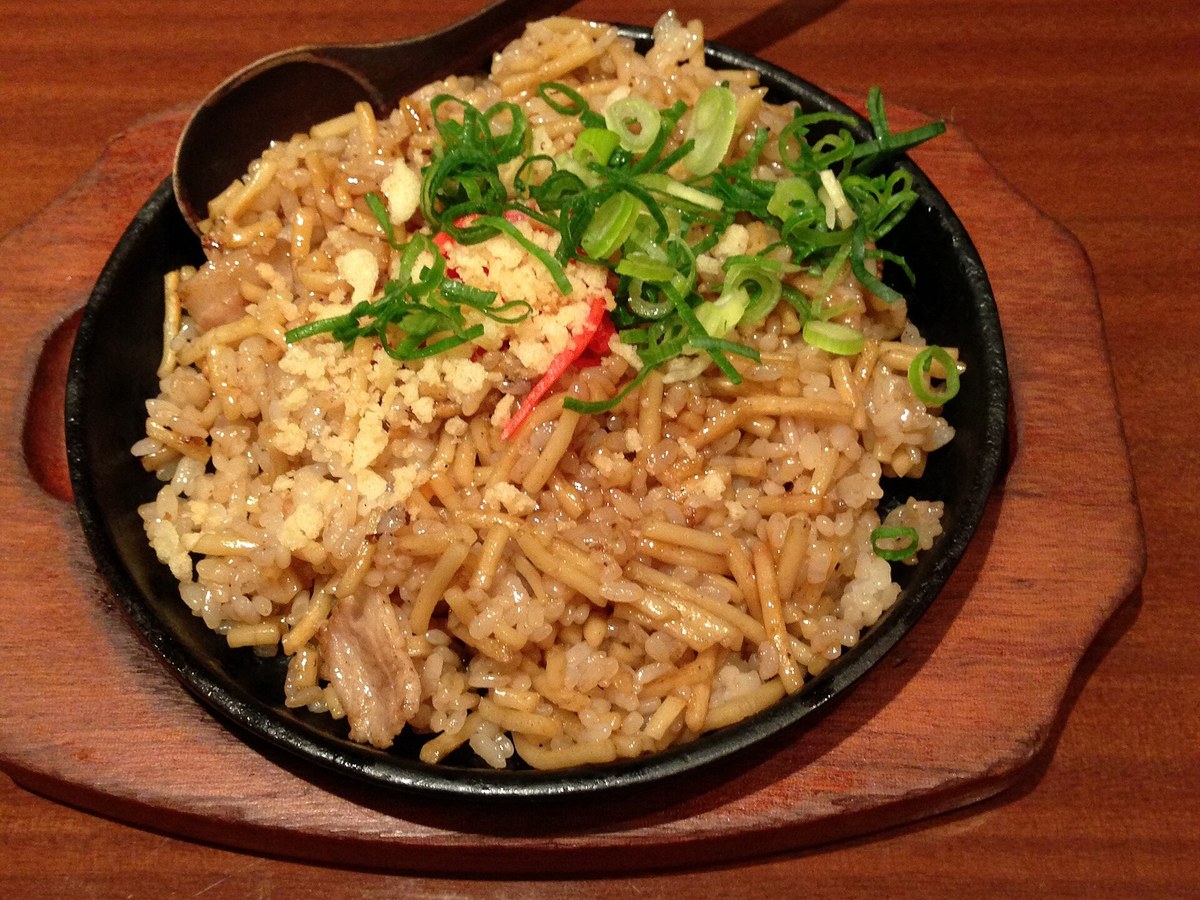
A factory lunch from 1957
Sobameshi's story traces back to 1957 in Nagata Ward, according to the commonly repeated accounts (Japan Activity). One version credits a customer at a shop believed to be Aomori: he brought cold rice from his lunch box and asked the cook to heat it up alongside a soba dish already on the griddle. A second version points to the women working in the neighbourhood factories, who brought rice from home and mixed it with noodles on the grills of the okonomiyaki restaurants during their lunch breaks — the Hyogo tourism account tells the same factory-women story with locally produced Worcester sauce.
Which shop was truly first is honestly not settled, and the guide says so. What is settled is the logic of the dish: rice stretches a small portion of noodles into a filling, affordable meal built from whatever is at hand, and that factory-floor economics is still the plate's identity today. Aomori, the shop most often named in the origin story, still serves sobameshi in Nagata now.
Where to eat it, with prices
A full plate of sobameshi runs from 800 to 1,200 yen across Nagata's counters (Japan Activity). Ikari, two minutes from Shin-Nagata Station, keeps its menu to four dishes — bokkake or pork, in sobameshi or plain yakisoba — with a listing budget of about 1,000 yen; a 2025 visit's double-topping plate of bokkake and pork came to 900 yen. Aomori remains the traditionalist's pick, and Nagata Tank Suji serves the dish closer to Sannomiya for travellers based in central Kobe.
The dish has also been standardised by a Kobe-born chain: Nagata Honjoken, Toridoll's bokkake-yakisoba specialist, makes its noodles in-store daily and lists its sobameshi — house noodles chopped on the iron plate and fried with rice and bokkake in a sweet-spicy sauce — at 1,045 yen including tax, with its bokkake yakisoba at 814 yen (Toridoll press release, 17 April 2026). Whichever counter you choose, order the local soft drink called Apple with it, and do not confuse bokkake with anything else at the counter.
Why sobameshi is Nagata-only in spirit
Noodle-rice stir-fries can be improvised anywhere, but sobameshi as a named dish — the fine chop, the shared teppan, the bara and dobe sauces, the bokkake topping — was codified in one ward of Kobe and is still densest there: a B-kyu gurume, B-class gourmet, that wears its factory-lunch origins as a badge rather than a limitation.
It is also Kobe's necessary counterweight. The same city that sells the world's most famous beef feeds itself, on an ordinary weekday, a thousand-yen plate of chopped noodles and rice invented so that lunchbox rice would not go cold. You have not eaten Kobe until you have eaten both.
Sources — checked 13 November 2026
- Japan Activity — Kobe Sobameshi and Local Dishes guide (published 4 August 2026, updated 8 August 2026)
- PR Times — Toridoll Japan press release on Nagata Honjoken (17 April 2026)
Checked 13 November 2026 (stored links re-fetched and judged per product): reserved where the page says so, with an editorial review note kept per product. Press, PR and travel use stays outside the grant.
Editorial review 2026-11-13