An island in the Seto Inland Sea once ran about 400 soy sauce breweries. Twenty-odd survive, crowded into one black-timbered district that smells of fermenting mash — Hishio no Sato, the home of soy sauce — and they still brew the way the island has for 400 years: in kioke, great cedar barrels whose wood is alive with each brewery's own microbes. Barrel-brewed soy sauce is about one percent of Japan's production. Over a third of it is made on this one small island.
Salt ran out, so the island brewed
Shodoshima's soy sauce grew out of salt. The island's medieval salt pans flourished first; when Edo-period overproduction elsewhere collapsed salt demand, producers turned in the latter half of the Edo period to the two industries salt feeds — somen noodles and soy sauce (Kagawa Prefecture official tourism). Position helped: an island on the Inland Sea shipping lanes could bring in soybeans and wheat and send barrels out.
The industry peaked around the turn of the twentieth century, when up to about 400 breweries operated on the island. About 20 remain in business today, and most of them stand together in Hishio no Sato — the "home of soy sauce" — a district of black-wood-panelled brewery buildings designated a Heritage of Industrial Modernization by the Ministry of Economy, Trade and Industry. Kagawa ranks fifth among Japan's soy sauce regions, and over half of the prefecture's soy sauce is produced on Shodoshima.
One percent, in cedar
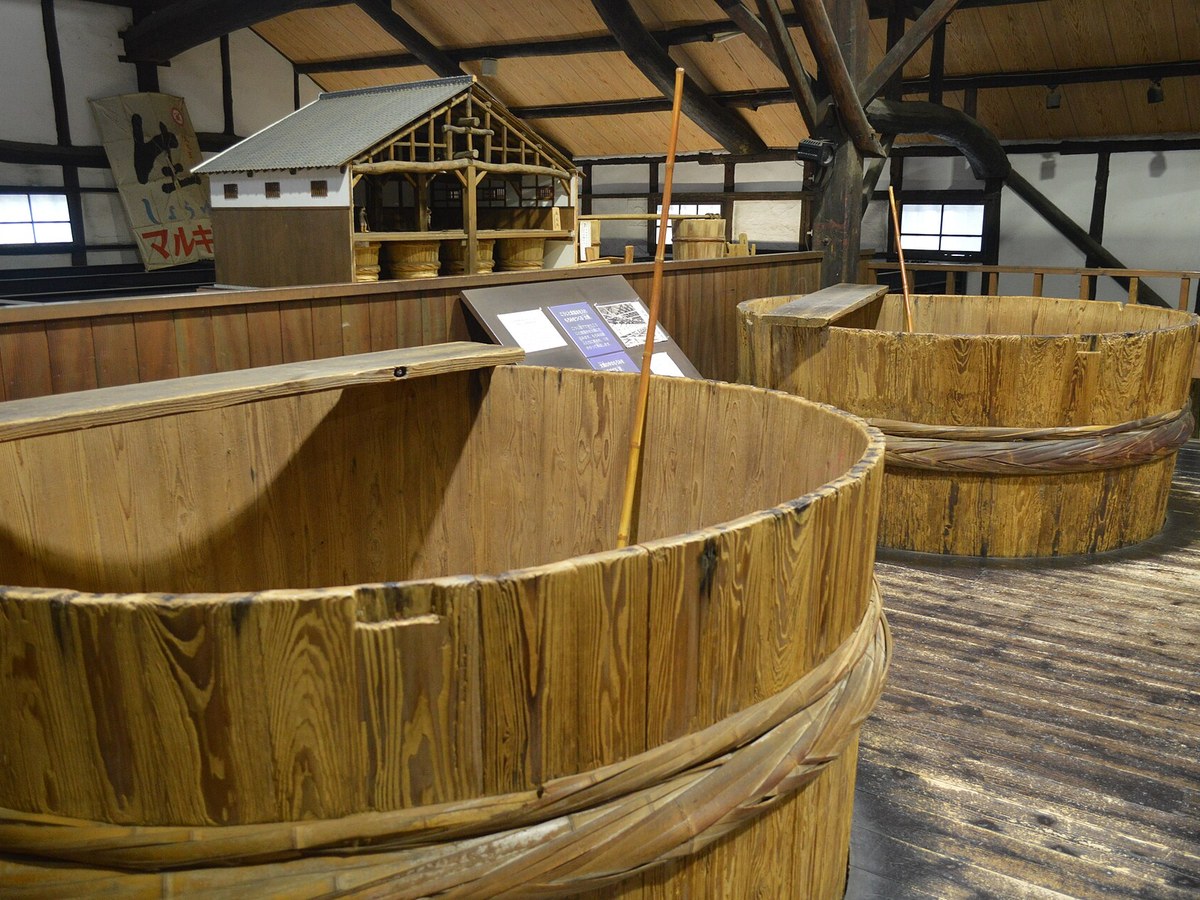
The distinguishing feature of Shodoshima soy sauce is the kioke: a great wooden barrel of cedar staves, bound with bamboo hoops, in which moromi — the fermenting mash of soybean, wheat, koji and brine — ages slowly for a year or more. The method has been passed down on the island for 400 years. Today only about 1% of Japan's soy sauce is brewed in kioke barrels, and over one third of that barrel-brewed share is produced on Shodoshima (Kagawa Prefecture official tourism).
The barrel is not a container but an ingredient. Yamaroku Shoyu, a brewery of about 150 years in the district, explains that the cedar surface hosts the microbes that lead the fermentation — a "living barrel" inside a "living storehouse", whose ecosystem, built over more than 100 years, is unique to each brewery. That, the brewery says, is why only that brewery can make its flavour. Shodoshima's warm, dry wind is presented as the ideal fermentation climate.
Marukin's museum and Yamaroku's barrels
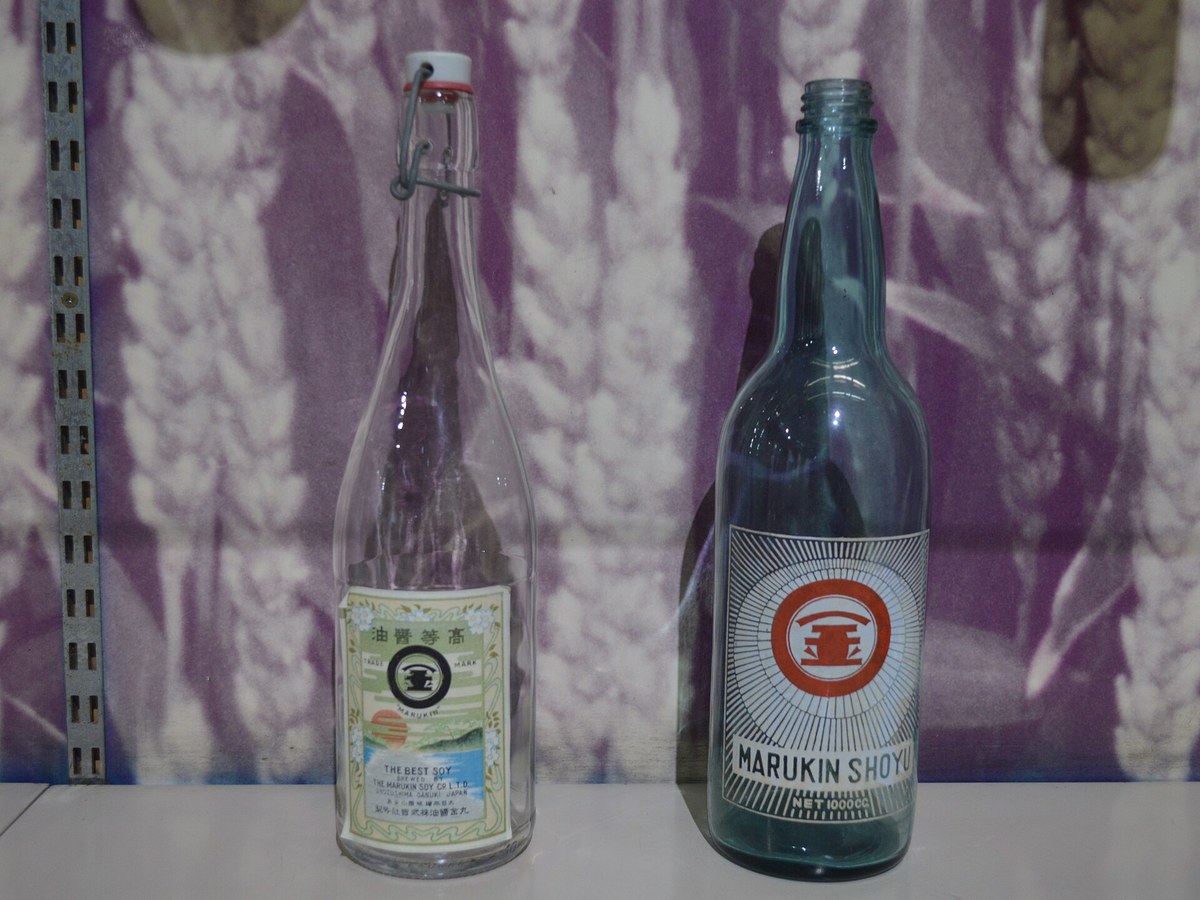
The working face of the district is Marukin. The Marukin Soy Sauce Memorial Museum, opened in 1987 for the company's 80th anniversary, occupies a factory built in the early Taisho era — a gassho-zukuri building registered as a National Tangible Cultural Property — and explains 400 years of production with the tools and panels of the Meiji-era trade. Admission is 500 yen for adults and 250 yen for primary-school children (official prices, revised April 2024); at 10:00 and 14:00 visitors can press real factory moromi through cloth on a hand press and taste the fresh pressing, and the shop sells museum-only products and a soy sauce soft serve made with kioke-brewed nama shoyu.
Yamaroku carries the island's argument to the world. In 2009 its president, Yasuo Yamamoto, ordered new barrels from the last remaining Osaka cooperage — its first order for soy sauce barrels since the Second World War — and, warned the cooper's craft could not continue, learned barrel-making himself and launched the Kioke Craftsmen Revival Project (The Japan Times, 2 March 2026). A consortium of 28 companies now promotes kioke shoyu abroad, aiming to double its domestic share to 2%. The bottles are small and keenly priced for the work inside them: Yamaroku's Kikujiro, a koikuchi brewed from Tanba black soybeans, and its re-brewed Tsurusho each list at 600 yen at the Isetan Mitsukoshi official online store.
Why Shodoshima soy sauce belongs to one island
Soy sauce is made all over Japan, and Kagawa itself has mainland breweries. The article documented here is defined by a chain that exists in one place only: an island district of surviving breweries, cedar kioke instead of steel, moromi aged a year or more in wood that carries each house's own microbes, and a 400-year line from the island's salt pans. Over a third of the nation's barrel-brewed soy sauce comes from this one district — no other address in Japan can make that claim.
It is also a tradition that nearly ended quietly. Barrels last over a century, so when brewers stopped ordering them, the coopers stopped too — until an island brewer decided the barrel itself was the heritage, and started teaching Japan to build them again every January on Shodoshima.
Sources — checked 13 November 2026
- Kagawa Prefecture (My Kagawa) — Soy Sauce Village, Hishio no Sato
- Marukin official site — Marukin Soy Sauce Memorial Museum
- Yamaroku Shoyu official site
- The Japan Times, Sustainable Japan — Art of barrel-brewed soy sauce revived for future generations (2 March 2026)
- Isetan Mitsukoshi official online store (MI Food Style) — Yamaroku Kikujiro and Tsurusho product records
Checked 13 November 2026 (stored links re-fetched and judged per product): reserved where the page says so, with an editorial review note kept per product. Press, PR and travel use stays outside the grant.
Editorial review 2026-11-13