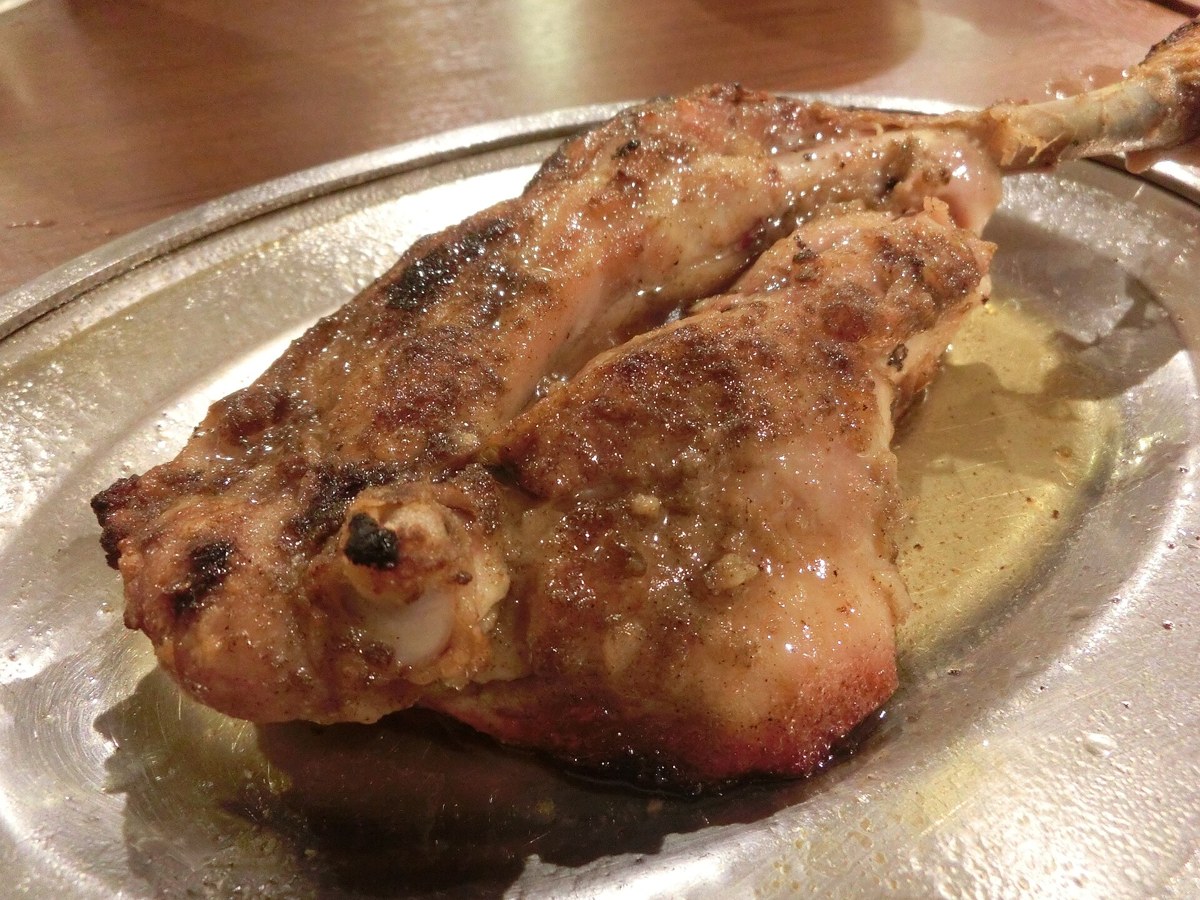
There is no polite way to eat it, and that is the design. Honetsukidori arrives as an entire chicken leg on the bone, skin crisped and crackling with salt, pepper and garlic, and you pick it up in your hand and bite. It was invented in Marugame in 1953, priced at eighty yen, trademarked in 1967, and it now stands — by the food-culture atlas's plain ranking — as Kagawa's specialty second only to Sanuki udon. It is the prefecture's third story, and its first meat.
1952: an okonomiyaki shop invents a chicken leg
The originator kept its own records, and the food-culture atlas quotes them. Ikkaku was founded in 1952 in Tori-cho, Marugame, as a small shop serving okonomiyaki and oden, in an era its history prices precisely — vegetable pancakes at five yen, meat-and-egg pancakes at thirty. The following year, 1953, the shop began selling honetsukidori at eighty yen apiece. Several accounts, the atlas adds, report that founder Kondo Sadaichi took the idea from a Hollywood film scene of someone biting into a bone-in piece of chicken; the atlas itself notes other theories, and this page records the film story as the reported account it is.
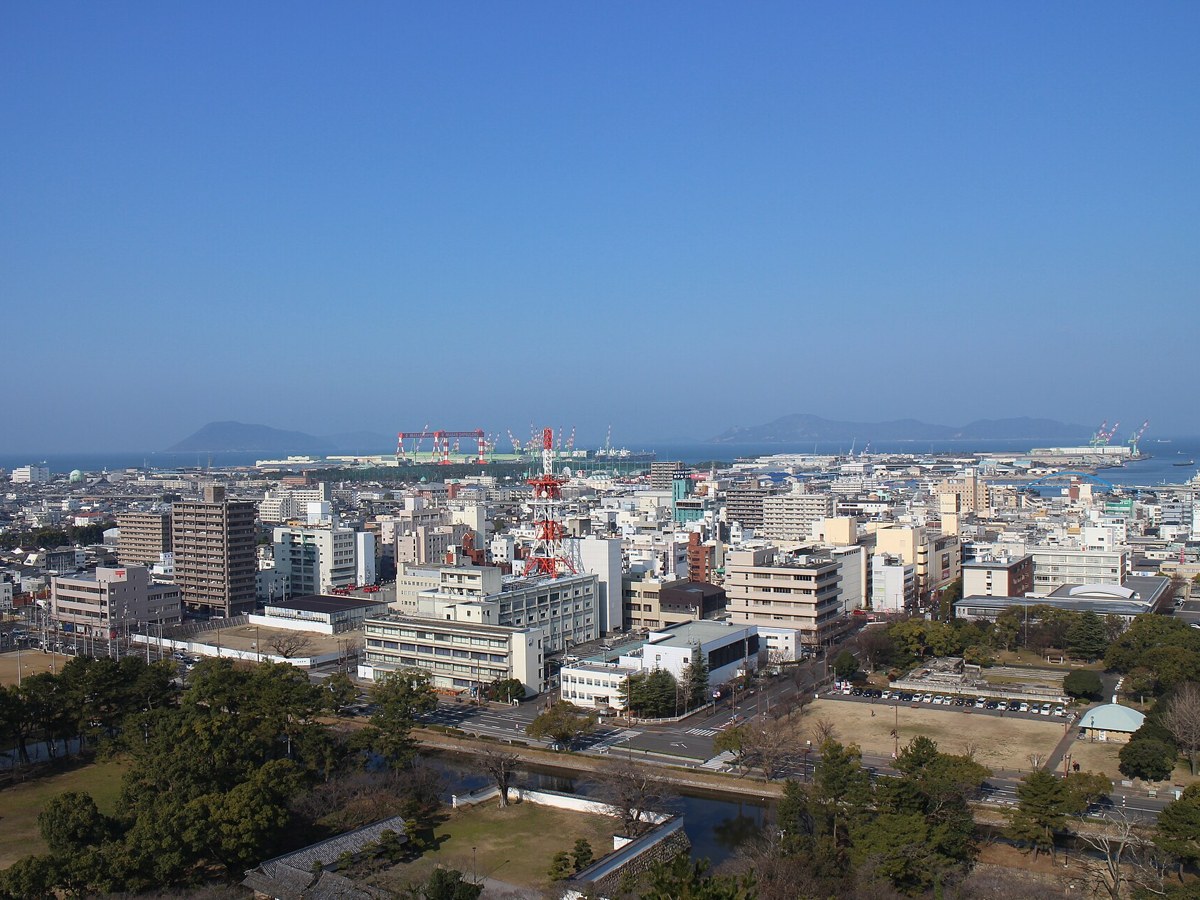
The dish outgrew the shop in an orderly way. In 1967 Ikkaku moved its main restaurant to Hama-machi in Marugame and registered Honetsukidori Ikkaku as a trademark — a chicken leg with a legal name, like Wakayama's ramen in this collection. Branches followed within Kagawa (Dokigawa in 1973, Takamatsu in 1988) and then beyond it, to Yokohama, Osaka and, in 2021, Hakata. But the form never changed, and the city adopted the dish as its own: Marugame produces a guidebook, the Honetsukidori Daihyakka — a chicken encyclopedia — and fields a tourism PR character, Tori Bugyo Honetsuki Juju, the Chicken Magistrate.
Oya or hina: the only decision
The menu asks one question, and the atlas explains both answers. Oyadori is the mature hen, a bird that has finished laying: its meat is firm, chewy and deeply flavoured, the connoisseur's bird, the one that fights back. Hinadori is the young chicken, about ninety days old: tender, juicy, and kind to first-timers. Both are whole bone-in thighs, seasoned with salt, pepper, garlic and the house's own hand, and roasted until the skin is crisp and fragrant — some shops marinate in herbs and olive oil, others finish with a soy glaze and chicken fat, but the leg itself is constant.
The plate teaches its own technique. The leg comes with cabbage, and the cabbage's second job is recorded in the atlas as the classic move: dip it in the chicken fat that collects on the plate. Torimeshi, chicken rice, stands alongside at many shops. This is izakaya food, built for beer and for hands, and it is eaten freshly roasted at the counter rather than cooked at home — though Ikkaku sells it by mail order, and honetsukidori sets ride home across Japan as return gifts for Marugame City's furusato-nozei hometown-tax donations.
What a leg costs
The two birds are priced a coin apart. At Ikkaku's Dokigawa branch the menu, as read in current listings, sets the oyadori at ¥1,129 and the hinadori at ¥1,001; at the Takamatsu branch a hinadori was read at ¥1,090 in the autumn of 2025. Reckon a leg, a cabbage plate and a drink as a complete and inexpensive night, and order one of each bird if there are two of you — the comparison is the entertainment, and regulars divide into oya and hina parties as loyally as ramen cities divide into lineages.
Kagawa's standing stories in this collection are the noodle and the olive oil; honetsukidori completes the prefecture's table with the dish its own capital city of Marugame promotes with a guidebook and a mascot. Seventy years after the eighty-yen debut, the instructions remain the shortest in this collection: pick it up, and bite.
Kagawa's shelf, completed by hand
Kagawa's standing two are eaten with chopsticks and restraint — the udon slurped in minutes, the olive oil poured in drops. Honetsukidori is the prefecture letting go: a whole leg, both hands, chicken fat on the cabbage, beer on the table. That the same small prefecture holds both registers is exactly why the atlas ranks this dish second only to the noodle — together they are the whole local character, discipline and appetite in one county.
First-timers should take the hinadori; the oyadori's chew is an acquired loyalty, and the house will happily sell you the mature bird on your second visit, when you have become the kind of regular Marugame counts on.
Sources — checked 10 November 2026
- Takumi Meguri food-culture atlas: Honetsukidori (citing Ikkaku's company history)
- Crispy and Juicy! All About Honetsukidori, Kagawa's Bold Grilled Chicken (checked guide)
Original prose and official links only; no source text or maker media reproduced. Photos are credited Creative Commons works, not product photographs.
Editorial review 2026-11-10