Raw shirasu is the most perishable luxury on the Shonan coast: sardine fry so fresh they are still translucent, landed in the morning at Enoshima and eaten at lunch over rice — but only when the calendar and the catch agree. Kanagawa closes the fishery every year from 1 January to 10 March, and on rough days the boats simply do not go out. The bowl in this story exists inside a legal season and a morning’s weather, which is exactly why Enoshima queues for it.
A brand, a bay and a closed season
Shirasu is not a species but a stage of life: the fry of three sardines — katakuchi-iwashi, ma-iwashi and urume-iwashi — fished in Sagami Bay, with katakuchi predominating in recent years on the prefecture’s own fish guide. Kanagawa’s fisheries centre records what the coast built on them: “Shonan shirasu” is registered as a Kanagawa brand, and the Fujisawa crews who anchor this story — Hamano Suisan, Horikawa-ami, Shinsei-maru, Goro-hiki-ami — fish, process and sell their own catch, each boat its own flavour.
The season is law, not custom. The prefecture closes the shirasu fishery from 1 January to 10 March every year to protect young ayu, and Fujisawa City’s official produce page gives the local selling period as 11 March to 31 December, with peaks in April to June and August to October — spring shirasu riding the Kuroshio in, autumn shirasu raised in the bay itself. Outside those dates, no restaurant on the island has raw shirasu, whichever door you open.
Raw at lunch, or not at all
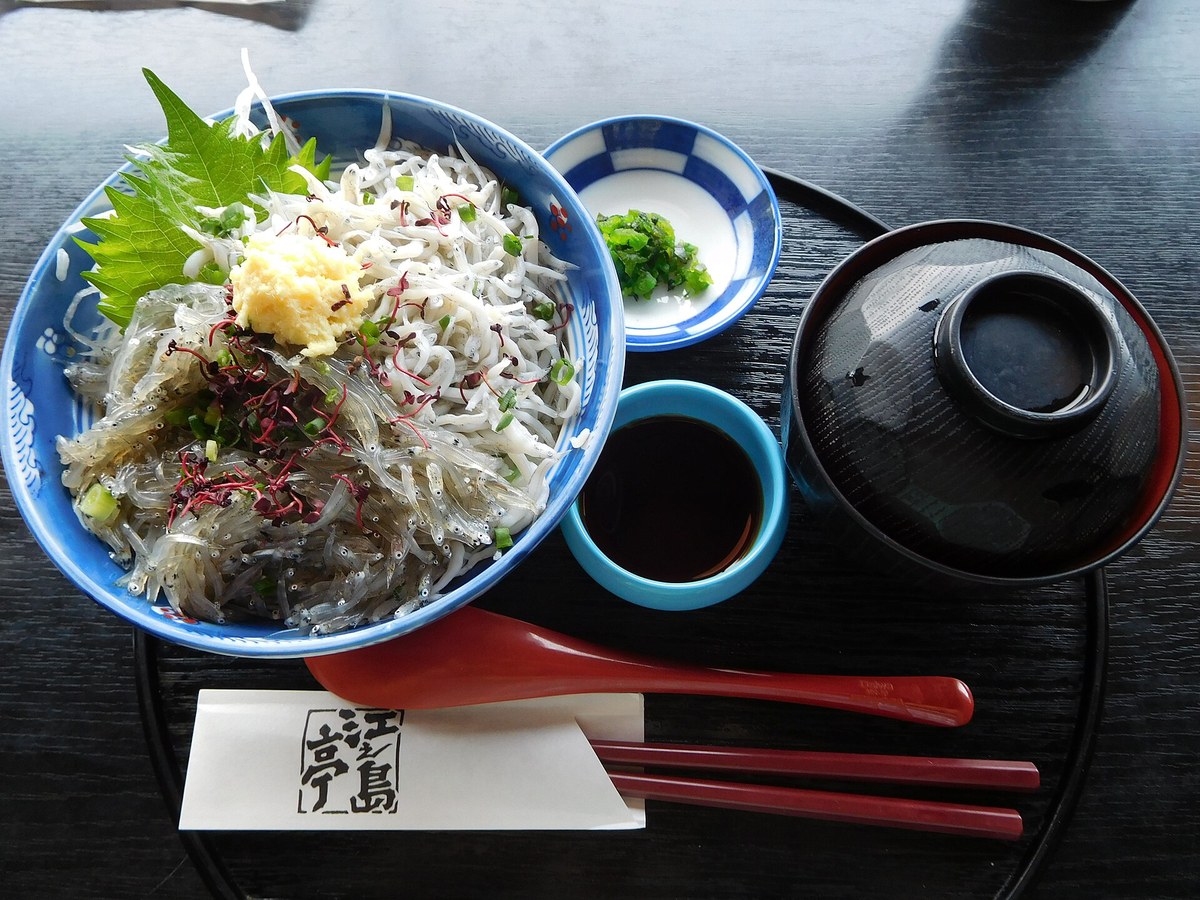
The raw bowl — nama shirasu-don — is a same-day food in the strictest sense. The fry are landed in the morning, kept cold and uncooked, and served translucent over rice with grated ginger and soy; bitterness is the tell of a fish that waited too long, and the good houses simply refuse to serve it on days when the catch or the quality fails. Rough seas cancel the dish entirely: no boats, no raw bowl, whatever the queue outside expects.
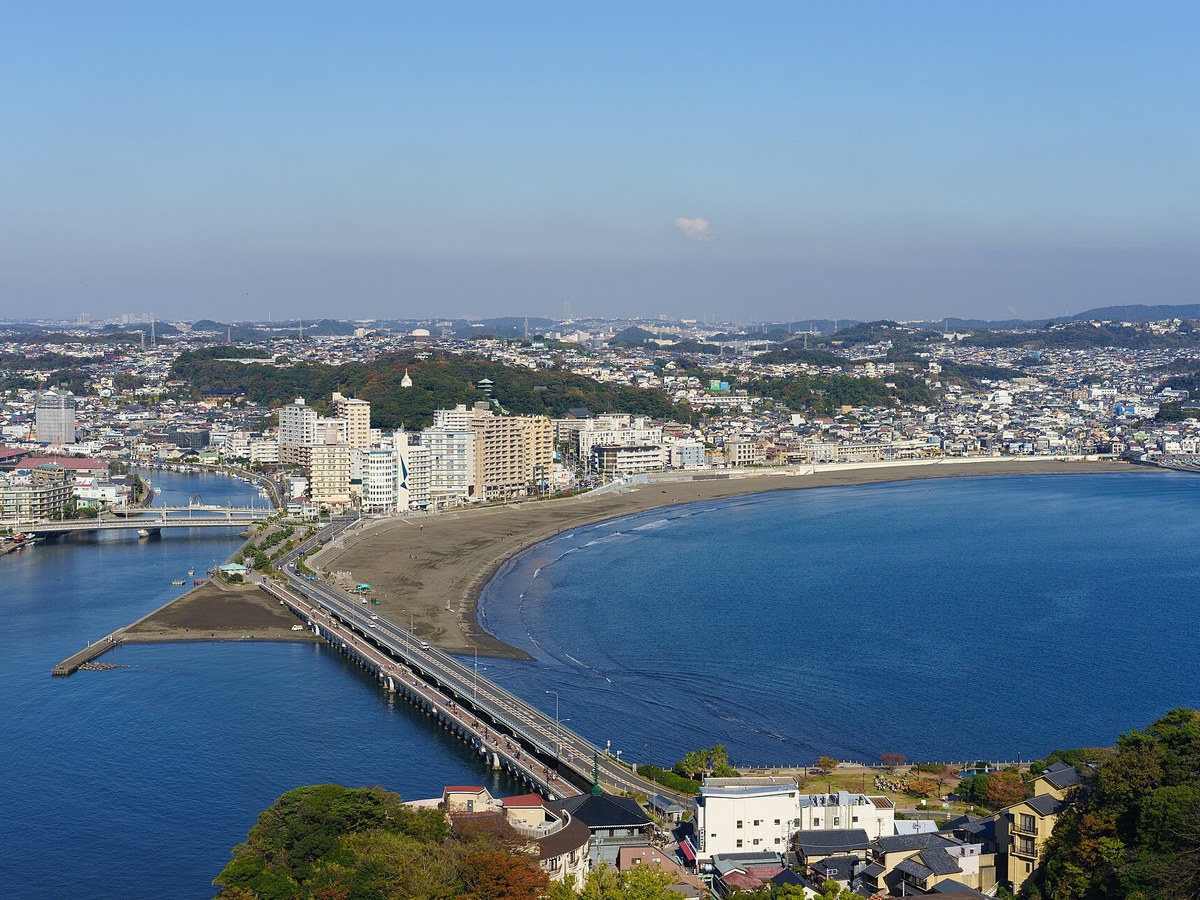
The boiled form is the dish’s other half and its insurance. Kamaage shirasu — fry salt-boiled in great kettles the moment they land — is fluffy, sweet and keeps the whole year, closed season included. Enoshima’s restaurants build the menu on the pair: the raw bowl, the boiled bowl, and the half-and-half nishoku bowl that lets a visitor taste the morning and the kettle side by side. This story’s first photograph is the raw form on its tray at an Enoshima house; the second is the island that lands it.
Enoshima, the island of the bowl
Enoshima is a small tidal island off Fujisawa, joined to the mainland by the Benten Bridge, carrying a shrine, a lighthouse and — along its approach and its lanes — the densest cluster of shirasu restaurants in Japan. The island’s wholesaler-restaurants, Tobiccho first among them, grew from the trade itself: shirasu wholesalers who opened restaurants to serve the catch at its freshest, in bowls famously oversized. The island is the dish’s theatre: you cross the bridge, read the morning’s landing board, and eat the bay you can see from your table.
Go early and go in season. The raw bowl is a lunch food tied to a morning landing; by afternoon on a busy holiday the honest shops have sold through or switched the menu to kamaage. The Fujisawa crews’ own direct shops sell the boiled and seasoned forms to take home — the raw fish’s fragility is precisely what does not travel, and what makes the island bowl an island bowl.
The Enoshima price list
The 2026 Enoshima–Kamakura comparison, checked against the shops’ official pages, prices the bowl plainly. At Tobiccho, the island’s best-known shirasu house, the raw shirasu bowl is 1,380 yen including tax, the boiled shirasu bowl 1,320 yen, and the half-and-half bowl 1,650 yen, each served with fresh-nori miso soup. Across the island’s priced shops the raw bowl runs 1,380 to 1,700 yen — Uomitei at 1,400, Kaisaku at 1,700 — a tight band for a dish whose supply is decided daily by the weather.
Budget for the queue, not just the bowl: the famous houses fill from opening on season weekends, and the morning landing decides whether the raw bowl exists at all. If it does not, take the half-and-half’s boiled half without disappointment — kamaage is not the consolation prize in Shonan. It is the form the coast eats all winter, while the bay is closed and the ayu are growing.
Sources — checked 14 November 2026
- Kanagawa Prefecture official site — Fish Guide: Shirasu
- Fujisawa City official site — Shirasu (Fujisawa produce guide)
- 2026 Enoshima–Kamakura shirasu-bowl comparison (checked against official shop pages, 1 November 2026)
Checked 14 November 2026 (stored links re-fetched and judged per product): reserved where the page says so, with an editorial review note kept per product. Press, PR and travel use stays outside the grant.
Editorial review 2026-11-14