Japanese curry rice was not imported; it was issued. In the Meiji era the Imperial Navy, losing sailors to beriberi and malnutrition, studied the British Navy's meals, took its curry stew, thickened it for rice and balanced it with salad and milk — and the dish that spread from the fleet into every Japanese home began here, in the naval port of Yokosuka. The city guards the original form jealously: a restaurant may call its plate Yokosuka Navy Curry only if the city certifies it, the curry must follow the recipe in the navy's 1908 cooking reference, and it is not complete — by rule — without the salad and the glass of milk beside it.
Certified, or it is not navy curry
The gate is stated in one line on the KONOMACHI record: which restaurants may call their dish Yokosuka Navy Curry is decided by certification — only a curry approved by the executive board of the business section of Curry no Machi Yokosuka can be sold under the name — and there are more than 40 certified restaurants. The name is a licence, not a description: any kitchen in Japan can simmer a naval-style curry, but the words Yokosuka Navy Curry on a menu mean a Yokosuka kitchen that passed the board.
The second rule is on the tray. The serving rules say a salad and milk must be served with it, because the curry is recreated from a recipe in the 1908 Navy Cooking Reference Book — the Kaigun Kappojutsu Sankosho, in the LIVE Japan record's full naming. A plate of curry and rice alone, however faithful the roux, is an unfinished set: the book's plate is curry, rice, salad, milk, a balanced ration designed for sailors, and the certification keeps the whole ration together.
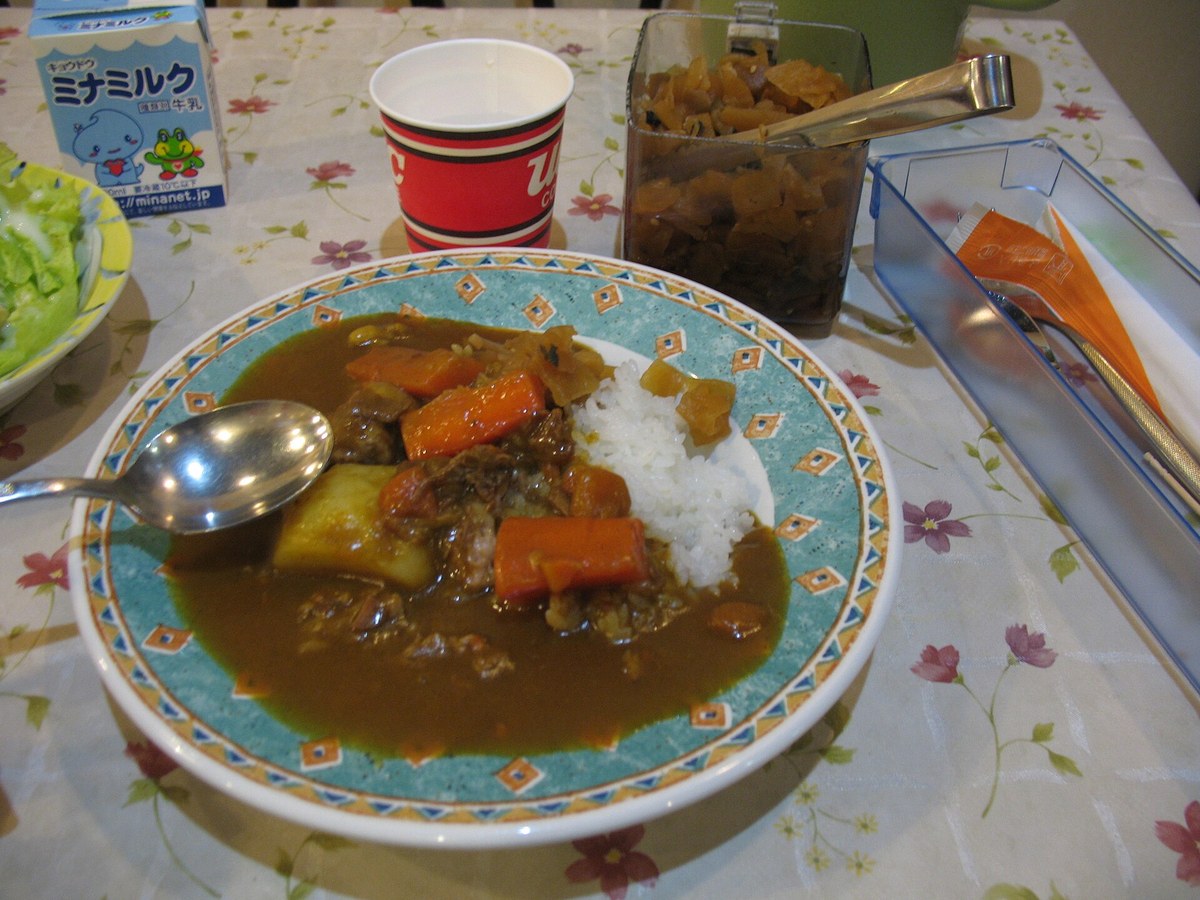
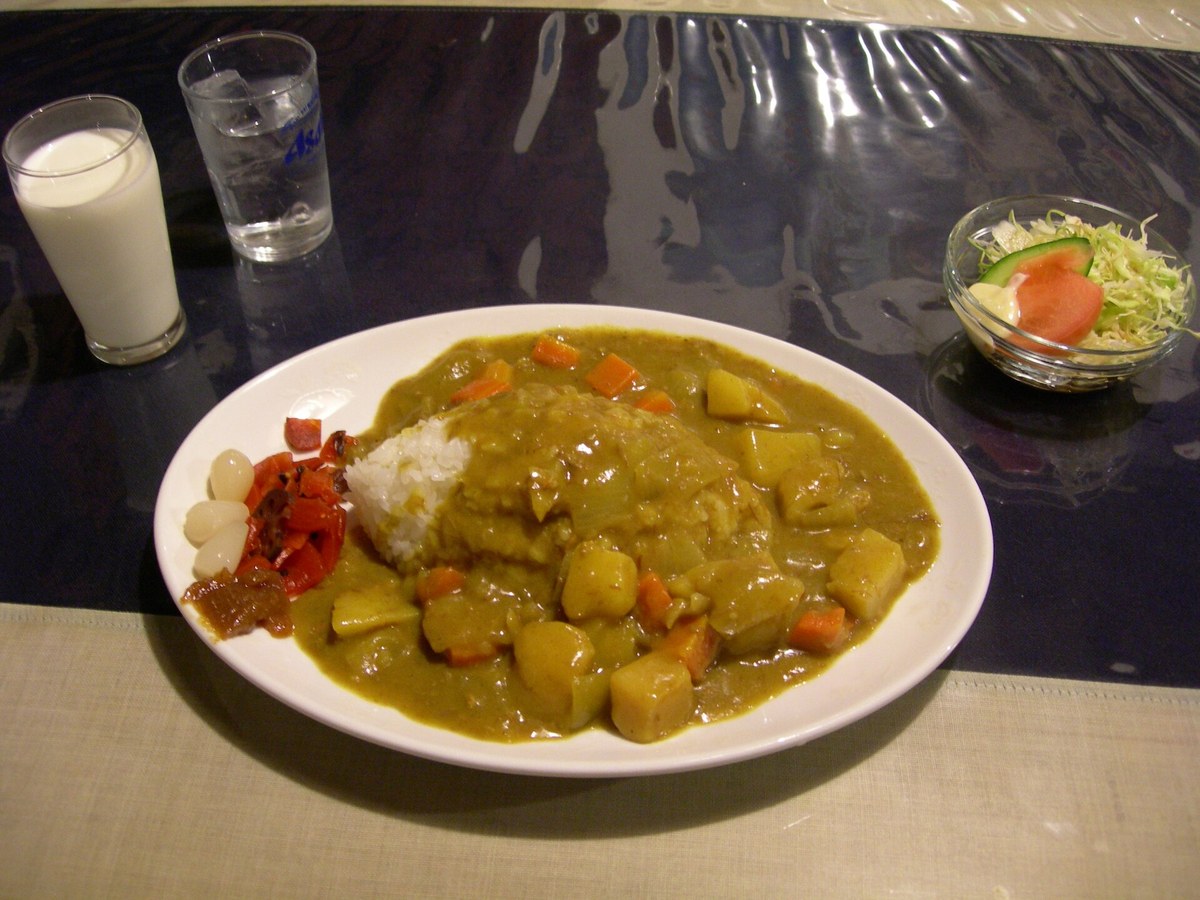
The Meiji wardroom invention
The LIVE Japan record gives the dish its history. Yokosuka developed around the navy; in the Meiji era malnutrition was severe and many sailors were falling sick, so the navy studied the British Navy's meal plans and focused on its curry stew — then made it thicker, adjusted it to sit with rice, and produced the style of Japanese curry now eaten in households nationwide. The reputation spread from the fleet to families, and sailors keep the tradition of eating curry every Friday to keep track of the days aboard ship.
The city formalised the claim late: in 1999, to revitalise the local economy, Yokosuka announced itself the Town of Curry, and the kaigun curry became its declared soul food. The flagship followed — the Yokosuka Kaigun Curry Honpo, built after the declaration as the concept store where you buy the goods downstairs and eat upstairs in a dining room fitted out like a ship, its kitchen dicing the garnish finely and separately, as the original cookbook instructed, to save water and fuel and cook fast.
The first plate and the forty plates
Every certified city has a first certificate, and Yokosuka's is Gyorantei. The KONOMACHI record calls it the first restaurant certified for Yokosuka Navy Curry, a small lunch-only house now priced at ¥1,300; the LIVE Japan record tells its story — the owner's aunt was tasked by the town council with replicating the naval recipe, the shop closed when its building aged, mourners gathered, and it reopened half a year later a short distance away, the recipe unchanged. The pioneer still fries nothing extra into it: the same way, without adding anything unnecessary.
Around it the certified roster covers the city's moods: Wood Island, going more than 40 years beside the U.S. base's back gate, whose owner taste-checks the flavours for the kaigun curry committee; the Honpo flagship by Yokosuka-Chuo Station; MIKASA CAFE at the Dobuita Street entrance, serving from 9:00; the Mercure hotel's 19th-floor bistro at the top of the price range; and Coral at the Kurihama ferry terminal at the bottom. The recipe is one; the rooms are forty variations on it.
Eating it in Yokosuka
Budget by the official guidebook. The KONOMACHI record, checked 1 November 2026, prices the certified plates from the official 2025 guidebook (tax included, as of May 2025) at ¥860 to ¥2,500 a plate: Coral ¥860, Yokosuka Beer ¥1,100, Sarushima Ocean's Kitchen ¥1,200, Gyorantei ¥1,300, Wood Island and Ducky Duck ¥1,580, MIKASA CAFE ¥1,600, the Honpo special — beef or chicken, with rice, milk, salad and condiments — ¥1,700, TSUNAMI ¥1,830, and the Mercure's plate with salad and milk ¥2,500. The LIVE Japan figures from 2019 (Honpo Special ¥1,300, Wood Island ¥1,380) show how the plates have risen since.
Take the certified set, not just the curry: the salad and milk are the signature, not sides. To carry the name home the official guidebook lists retort pouches — Yachiyo's Yokosuka Navy Curry at ¥470, Chomi Shoji's Navy Blue at ¥594 a serving, Saikaya's Kinsei Curry at ¥972 for two pouches — sold as souvenirs, while the certified plate itself stays in Yokosuka, where the board keeps it.
Sources — checked 13 November 2026
- KONOMACHI-note — Yokosuka Navy Curry: 12 Restaurants from ¥860 a Plate (checked with official pages 1 November 2026)
- LIVE Japan — Top 3 Shops for Yokosuka Curry: Japan's Fascination with Kaigun Curry (published 31 May 2019, updated 9 October 2020)
Original prose and official links only; no source text or maker media reproduced. Photos are credited Creative Commons works, not product photographs.
Editorial review 2026-11-13