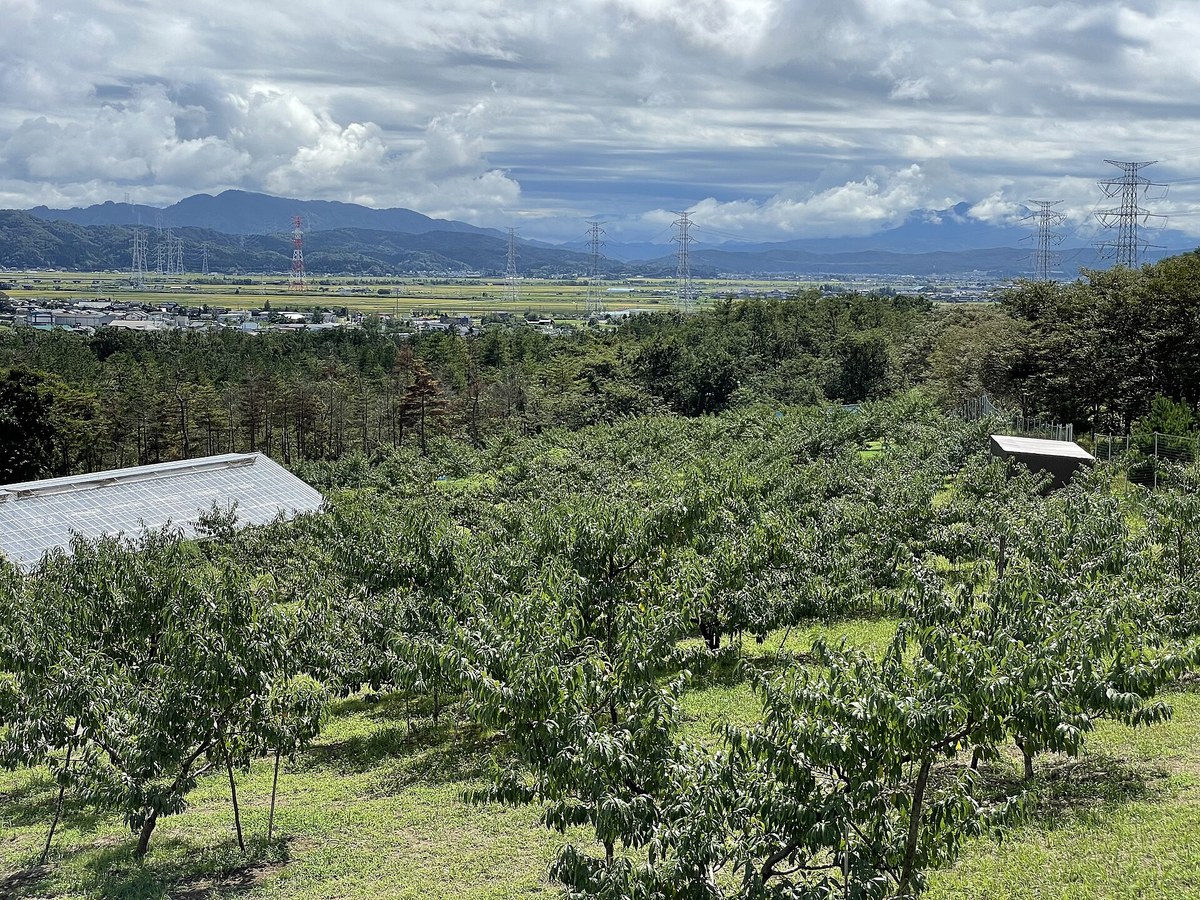
Okayama calls itself the Fruit Kingdom, and its throne is occupied by a peach that nobody bred. In 1932, in the Shimizu district of what is now Okayama City, a chance seedling appeared among the prefecture's Hakuto white peaches — softer, finer and sweeter than its parents, and so delicate that growing it well became a craft in itself. Ninety years on, Shimizu Hakuto covers 225 hectares, more ground than any other single peach variety in Japan, and its season — a few weeks from late July — is the summit of the summer gift calendar.
A chance seedling, a prefecture's throne
The Ministry of Agriculture's story of the variety gives the origin plainly: peach growing in Okayama began with Tianjin and Shanghai honey peaches brought in 1875; the local researcher Jugoro Okubo created the Hakuto white peach in 1899 from Shanghai honey peach seedlings; and the Shimizu Hakuto — 'considered the highest-quality white peach grown in Okayama' — was a chance discovery in 1932. The variety survey narrows the spot: the Shimizu district of Haga, in Okayama City.
No register entry protects the name, and this article claims none. What holds the peach to Okayama is the combination the records document: the cultivar's birthplace, the prefecture's concentration of the planting — 225 hectares in 2022, the largest area of any single peach variety in Japan — and the regional brand 'Okayama Hakuto', under which the prefecture's bag-grown white peaches are sold.
White because it never sees the sun
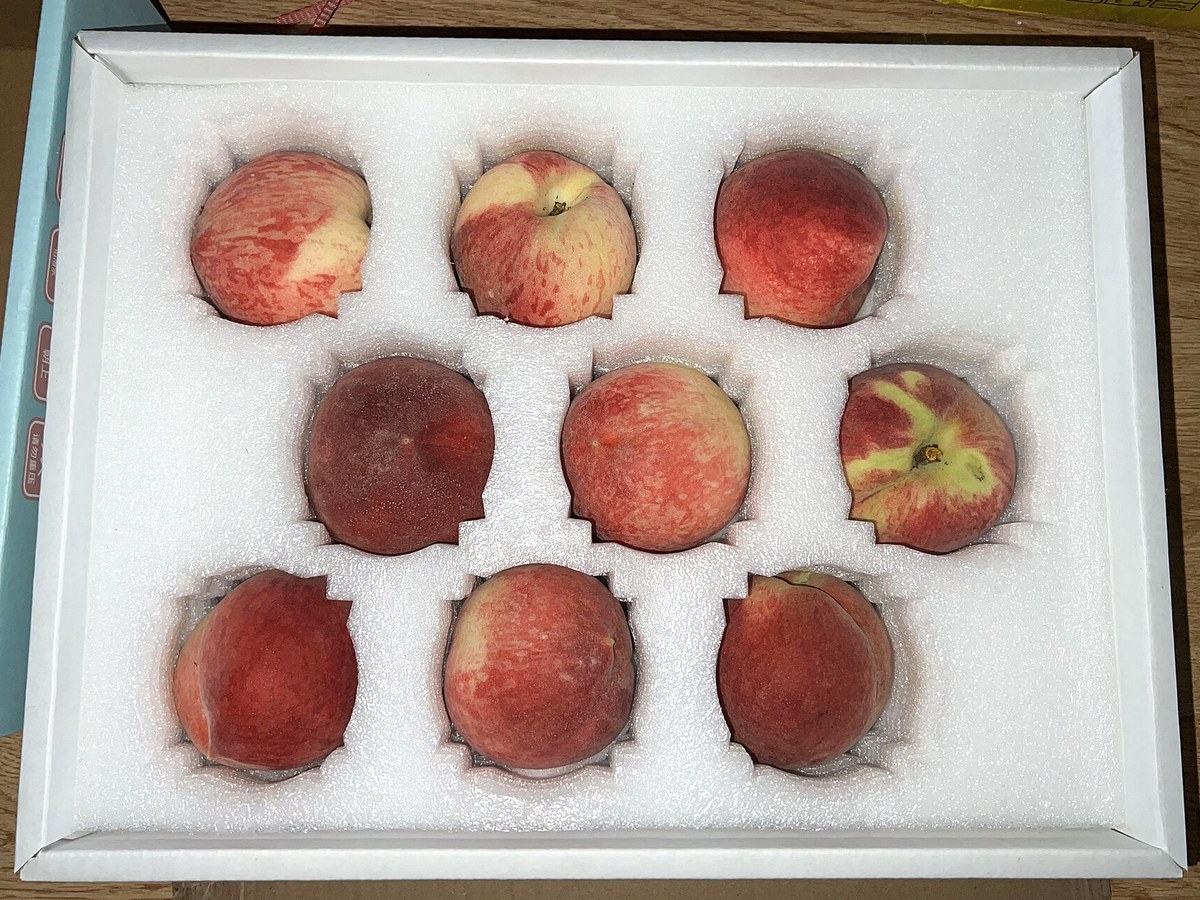
The whiteness is made, not born. Okayama's white peaches are bag-grown: every fruit is covered by hand with its own paper bag, so it ripens without direct sunlight and keeps the pale, blushing skin that gives the hakuto — 'white peach' — its name. The prefecture's tourism record credits the same bag cultivation for the whiteness, and notes Okayama holds Japan's highest production of Shimizu white peaches.
The handwork is also the risk. Shimizu Hakuto is described in the ministry's story as an especially delicate, difficult variety — thin-skinned, easily bruised, and graded strictly: the fruit is divided into ranks by sweetness and appearance, Royal above King above Ace. A variety that must be bagged fruit by fruit and still bruises is a variety only a committed prefecture keeps at 225 hectares.
Two weeks in high summer
Each Okayama variety's harvest lasts about two weeks, and Shimizu Hakuto's falls from late July into early August — precisely on ochugen, the mid-summer gift season, which the ministry's story names as the variety's moment. The grading ladder reaches its famous top rung here: the story records that top Shimizu Hakuto has at times sold for as much as ¥30,000 for a box of five fruit.
That figure is the legend price, not the shelf price, and the survey keeps both: JA direct-sale gift boxes of Okayama white peaches in season run roughly ¥4,000–¥12,000 in the JA Okayama flagship shop's record. Between the two numbers is the whole economy of the fruit — a graded gift peach whose best boxes are auction theatre and whose ordinary boxes are simply the finest white peaches most buyers will ever eat.
Buying Shimizu Hakuto
Buy in the window: late July to early August, from Okayama growers, JA direct-sale shops and the prefecture's gift catalogues, choosing the grade to the purpose — Royal and King for gifts that must impress, Ace for eating without ceremony. The name to look for is Shimizu Hakuto with an Okayama origin, or the 'Okayama Hakuto' brand for the prefecture's bag-grown white peaches generally.
Handle the fruit as the bags promise: it is picked near-ripe, bruises at a thumb's pressure, and wants eating within days, at room temperature, peeled — the flesh under the pale skin is white, melting and intensely fragrant. A 'white peach' with no prefecture and no variety named is the category without the seedling: the 1932 accident is the product.
Sources — checked 12 November 2026
- MAFF (Google Arts & Culture) — Why the Shimizu Hakuto Peach is the Queen of the Fruit Kingdom
- Okayama Prefecture tourism — white peaches (Okayama Kanko)
- Fruit Journey — white peach survey (information checked 2026-11-03)
Original prose and official links only; no source text or maker media reproduced. Photos are credited Creative Commons works, not product photographs.
Editorial review 2026-11-12