Jeans are American. Washed jeans — soft, faded, worn-in from the day you buy them — are, on Okayama's own account, Kojima's invention. This textile district of Kurashiki took stiff imported denim in 1965, washed it into something a Japanese body wanted to wear, and never stopped: today its shopping street is hung with jeans like festival flags.
A textile town meets a stiff import
Kojima, in the south of Kurashiki City, has been a textile town since the Meiji era, on the prefecture tourism authority's account — weaving was one of its historic 'three whites', alongside salt and fishing, and the district was known as a town of school uniforms, with the cutting and sewing skill that uniform work teaches. When jeans arrived from America they arrived wrong for the market: unwashed, stiff, cut for other bodies. Kojima's makers' answer, in 1965, was to wash them — the prefecture guide records Kojima as the town that produced the world's first 'second-hand processed jeans', new jeans washed and processed to a worn character, developed to suit Japanese body types and tastes.
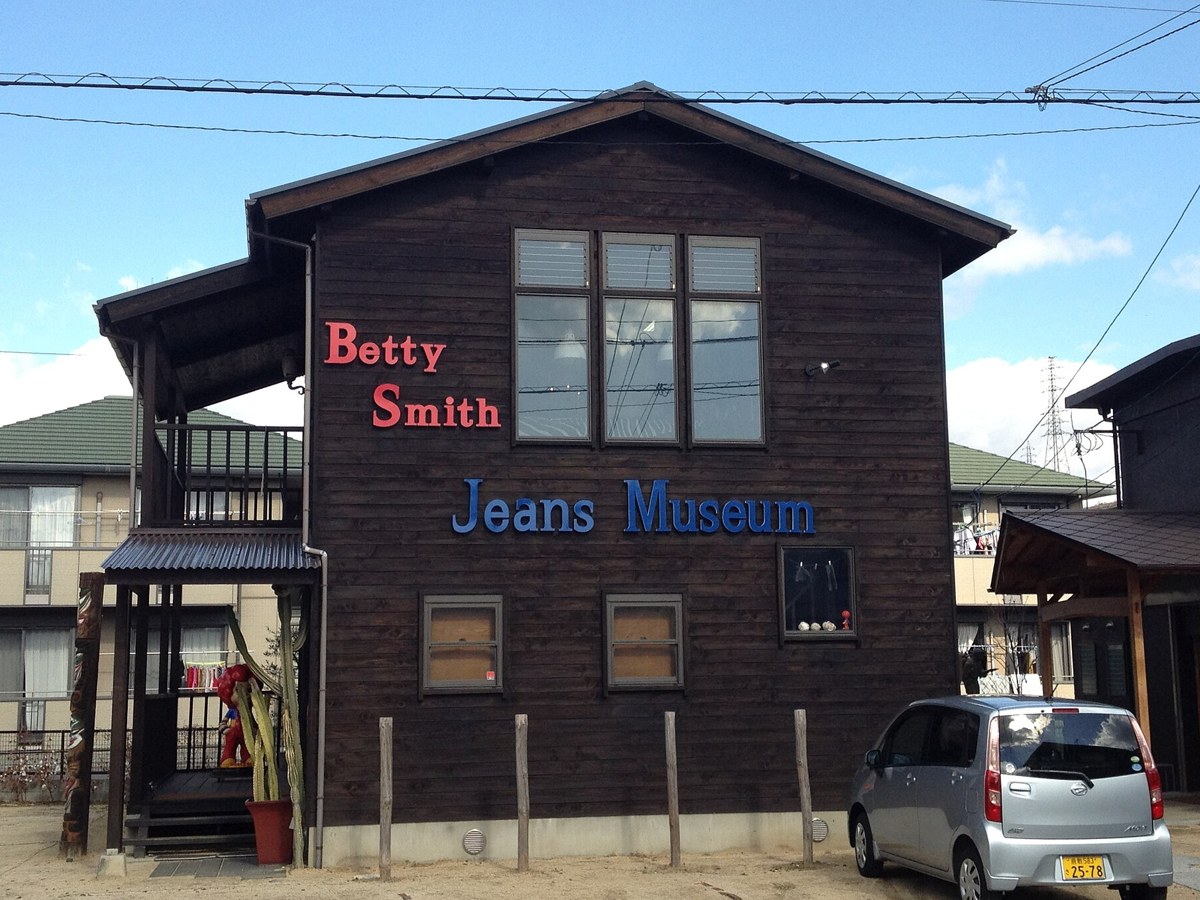
The local guide tells the companion half: the first domestically produced jeans were made in Kojima in 1965, and the brands followed one after another — Betty Smith, founded in 1970, is named there as one of three long-established houses established in Kojima in that first wave. The district that had sewn a nation's school uniforms became, in a decade, the place Japanese jeans come from.
Four hundred metres of indigo
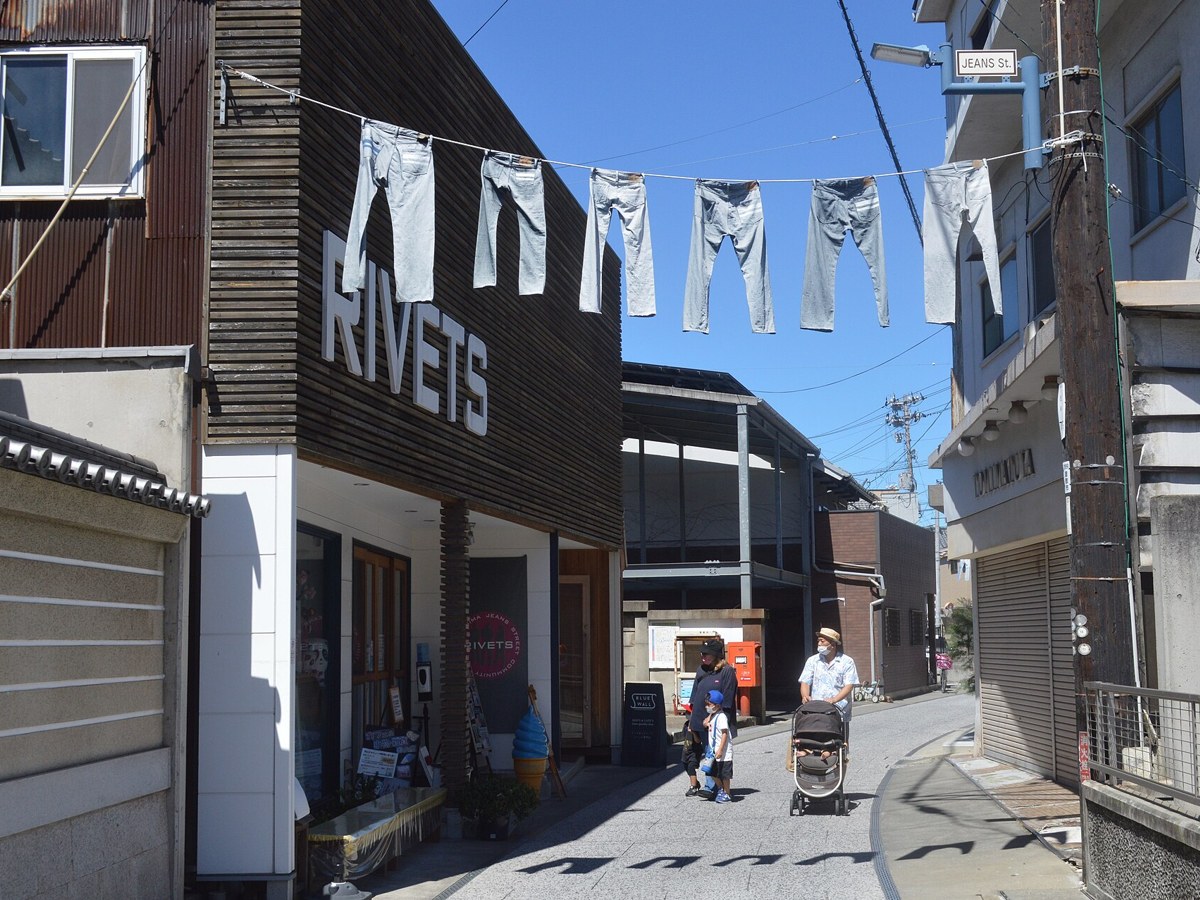
Kojima Jeans Street runs about 400 metres through the Ajino shopping arcade, from the former Nozaki family residence — a salt merchant's mansion of the Edo period — to Ajino Dai-ni Park. It exists because the makers made it: as the arcade emptied, local jeans manufacturers and the Kojima Chamber of Commerce drew jeans shops into the vacant stores, until the street became what the prefecture guide calls the mecca of domestically made jeans. The Asahi counts about forty jeans manufacturers and stores, denim cafes among them, drawing about 100,000 visitors a year.
The theming is total, and it starts before the street: JR Kojima Station greets you with denim-patterned vending machines and decorations. On the street, jeans hang overhead like laundry from another planet; capsule machines dispense denim goods (¥500 a turn at the Big John main store); and the RIVETS shop sells the street's own sweet — an indigo soft serve, coloured and dusted with indigo leaf, salted after Kojima's salt tradition, sold only at Kojima Jeans Street for ¥450.
Make a pair, or just a pen case
The deepest way in is at the Betty Smith Jeans Museum & Village, a museum run by a Kojima jeans manufacturer, with century-old replicas and period sewing machines on display. Its original-jeans experience takes one hour and starts at ¥8,800 tax included: you choose your size from the base jeans, pick the front buttons and six rivets from twenty-four types, hammer them in yourself with the two-stage lever press, and choose a leather patch from about fifty designs for the staff to sew on. You leave wearing the only pair in the world with that combination — because you specified it.
The smaller bench is in Betty's Store inside the museum: riveting your own denim goods, at ¥1,100 tax included for a pen case, ¥1,650 for a pouch, ¥2,200 for a pouch with pocket or a tote bag, on the prefecture guide's readings. And the finished article itself: Kojima jeans are an investment good, running on the Asahi's account from about ¥33,000 a pair to ¥200,000 or more for top craftsmen's work — the price of a district that cuts, sews, dyes and finishes within a few streets.
Okayama's shelf, given a garment
Set Kojima beside Okayama's standing stories and the prefecture completes a wardrobe of making: Bizen's unglazed porcelain, fired from local clay; Kurashiki's masking-tape factory, a paper town's second act; a dango of folktale. Jeans are the fourth craft and the first garment — the one Okayama exports on people's legs.
Come on a clear day, when the street's overhead jeans are all flying, and start at the station end. By the time you reach the Nozaki residence you will have passed the whole argument: a town that decided the world's most democratic garment would be made, washed, mended and celebrated in one 400-metre street — and then simply kept doing it for sixty years.
Sources — checked 10 November 2026
- Okayama Prefecture Official Tourism Guide: Kojima Jeans Street (prefecture's own tourism site)
- MATCHA Locally: original jeans making at Betty Smith, Kojima (official local guide)
- The Asahi Shimbun: Kojima, with its proud Jeans Street (checked newspaper account)
Original prose and official links only; no source text or maker media reproduced. Photos are credited Creative Commons works, not product photographs.
Editorial review 2026-11-10