In Tochigi City, yakisoba comes with potato in it — bite-size chunks of steamed potato, or a whole imo-fry, stir-fried into the noodles as a matter of course. Locals raised on it famously do not learn this is unusual until they leave: the dish even argues about itself in a television drama, between a Tochigi heroine and a Tokyo hero.
Potato in the noodles, as a matter of course
The construction is simple and total: Chinese noodles stir-fried in sauce, with potato worked in as a standard ingredient — boiled potato cut bite-size, or, in the classical form, an imo-fry, the skewered fried potato that Tochigi’s dagashiya sweet shops also sell. The modern mainstream is steamed potato; the research society in Tochigi City calls the imo-fry version "classical jagaimo-iri yakisoba" and the steamed version plain jagaimo-iri. Potato size varies by shop, and with it how the sauce clings.
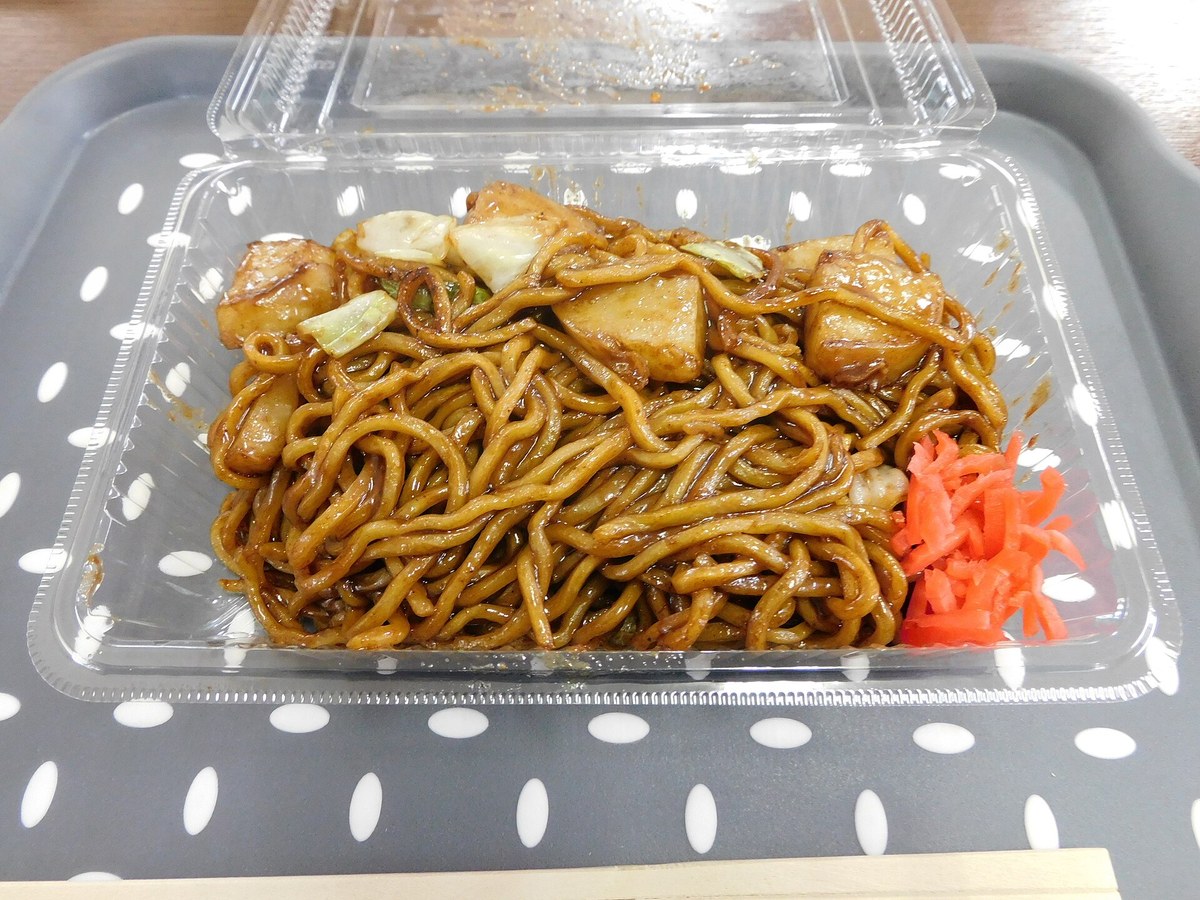
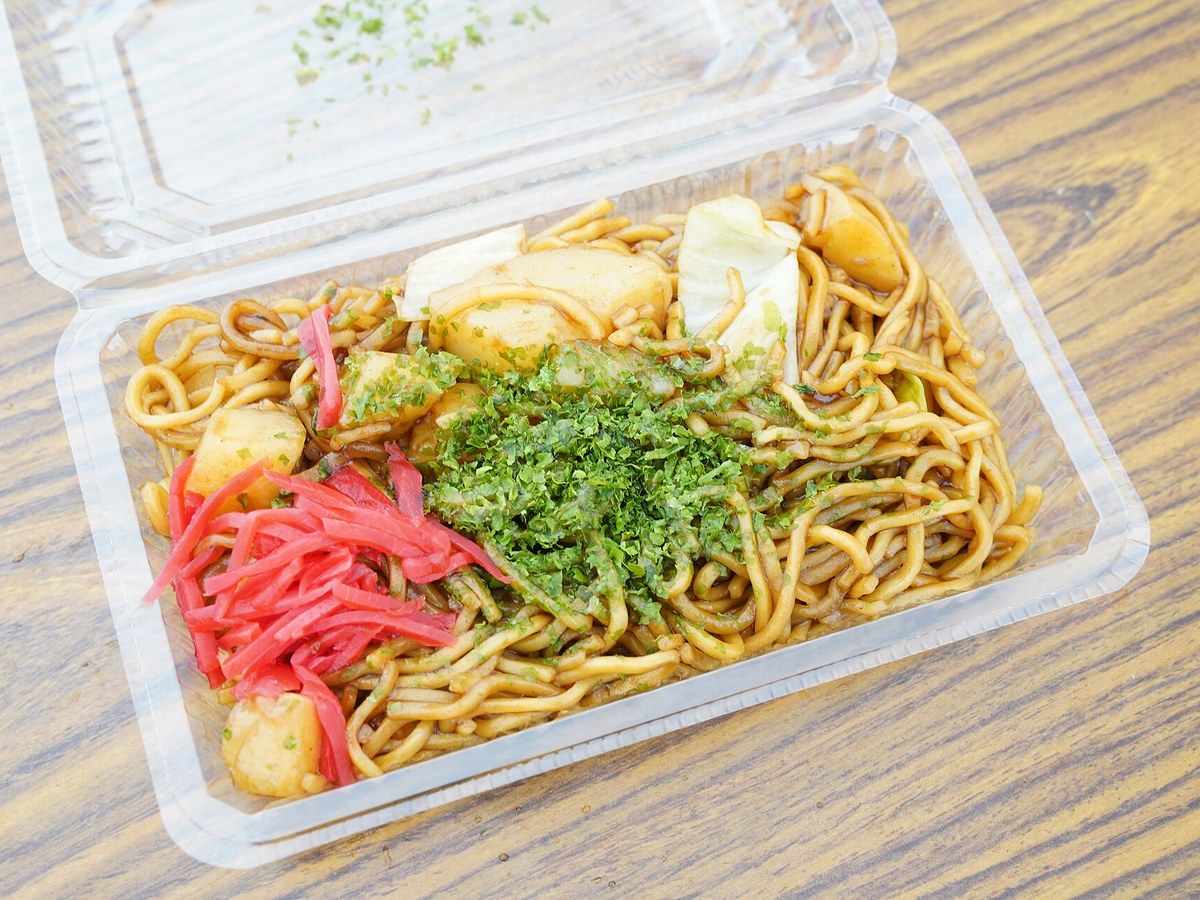
Tochigi City’s noodles are a signature of their own: nido-bukashi, steamed twice, long-steamed until they carry a fragrance and chew of their own — and a brown colour they have before they ever meet the pan, though many shops now help the colour along. The hidden seasoning is nikudashi, a stock drawn from minced meat, devised in the stall-and-dagashiya era when fresh meat could not be kept: a whisper of meat in a meatless bowl. Our two photographs are Ashikaga servings of the Ryomo potato-iri form — one shop’s serving packed to go, and the Tomiya kitchen car’s tray — the same idea in its neighbouring accent.
A postwar bowl, and an argument about why
The dominant account puts the birth after the Pacific War, from the mid-1950s, as imported wheat flour spread and yakisoba with it: the potato locals had eaten since before the war simply became the noodle’s standard partner. A Taisho-era existence is also claimed. The familiar story — potato as a bulking agent in the food-shortage years — is disputed by the Kura-no-machi Tochigi research society’s own digging: the president of noodle maker Nakazawa Seimen, they record, went around preaching that potato in yakisoba is delicious in order to sell his noodles, and dagashiya that already fried imo found one ingredient could serve both pans.
The bowl’s natural habitat was the yatai stall and the dagashiya, and the school run: shops near schools in Tochigi City are still called the pupils’ go-to, and children still gather after class for yakisoba and monja. Before it was a speciality it was also the closing dish in izakaya and snack bars.
From dagashiya food to a named speciality
The naming was deliberate town-making. Abe Keiji, a Tochigi City son who learned in Tokyo that nobody else puts potato in yakisoba, came home and began organising around 1992; some shopkeepers resisted — the dish carried the smell of the poor years — but on 4 October 2003 thirty shops formed the Jagaimo-iri Tochigi Yakisoba association and served five hundred free portions in front of the Yamaguruma hall the next day. The present research society, founded in April 2016, counts twelve shops and five supporting firms, noodle makers among them.
The dish has since been packaged by others: Lawson sold it as a bread roll, the "Tochigi yakisoba roll", across Kanto in 2008, and Yamazaki put it in a Lunch Pack in 2011. Its most famous scene is fictional: in the drama Long Vacation, the heroine from Tochigi City argues with the hero over whether potato belongs in yakisoba at all — the city’s own joke being that its people never notice the question exists.
Eating it, and the Ashikaga accent
Across the Ryomo district — Ashikaga in Tochigi and Kiryu in Gunma — the same idea is eaten as potato-iri yakisoba, and the record is explicit that its roots differ from Tochigi City’s: no double-steamed noodles on the Ashikaga side. The measured plate this run is Ashikaga’s: at Yakisoba Marutomi in Yamashita-cho, the regular potato-iri yakisoba is ¥250 on the Gurunavi record — medium-thick noodles, a house-blended sauce and the shop’s secret soup, at a price that explains the dish’s everyday standing.
Order it where the potato is an ingredient, not a topping: chunks through the noodles, sauce on both. In Tochigi City, ask which form the shop keeps — steamed potato, or the classical imo-fry — because the city itself keeps the distinction.
Sources — checked 15 November 2026
- Jagaimo-iri yakisoba — encyclopedia record (the Tochigi City form, the double-steamed noodle, the disputed bulking story, the Ashikaga difference)
- Yakisoba Marutomi, Ashikaga — Gurunavi record carried on NAVITIME (the ¥250 regular potato-iri yakisoba)
Checked 15 November 2026 (stored links re-fetched and judged per product): reserved where the page says so, with an editorial review note kept per product. Press, PR and travel use stays outside the grant.
Editorial review 2026-11-15