Onomichi ramen is a clear soup that behaves like a rich one. The broth is a dark, clean soy-sauce soup built on chicken, pork bone and the small fish of the Seto Inland Sea — and floating on it, in place of oil, are rough minced pearls of pork back fat, seabura, which melt as you eat and keep turning the clear soup creamy. Underneath are flat noodles, hirauchi, the shape a Taiwan-born stall keeper named Zhu Ajun paired with that soup in 1947 and taught a port town to call its own.
1947: a stall in a shipbuilding town
The Onomichi Tourism Association’s account, given to the Government of Japan’s Highlighting Japan magazine, gives the dish about ninety years in the city: in the 1930s Onomichi’s ramen was a cloudy beef-and-pork-bone soup, eaten in a shipyard town where workers from the continent also swung hammers. After the war the yards declined and chuka-soba stalls took their place along the streets — and about 1947 one of them, Shukaen, founded as a stall by Zhu Ajun, combined a soy-sauce soup carrying stir-fried pork back fat with the house’s own flat noodles. It was a sensation, the association records, and the taste spread from Shukaen to the city’s other shops until it was simply Onomichi’s ramen.
Shukaen itself closed in June 2019 after more than seventy years, and its founder’s family reopened the taste in 2020 as Chuka Soba Shu, a few streets away — the lineage is a family matter in Onomichi, guarded like one. The second root is industrial: in the 1990s a local delicacy maker’s souvenir Onomichi ramen sold two million meals in a single year, and the name — and the flat-noodle, back-fat form — went nationwide on the strength of a gift box.
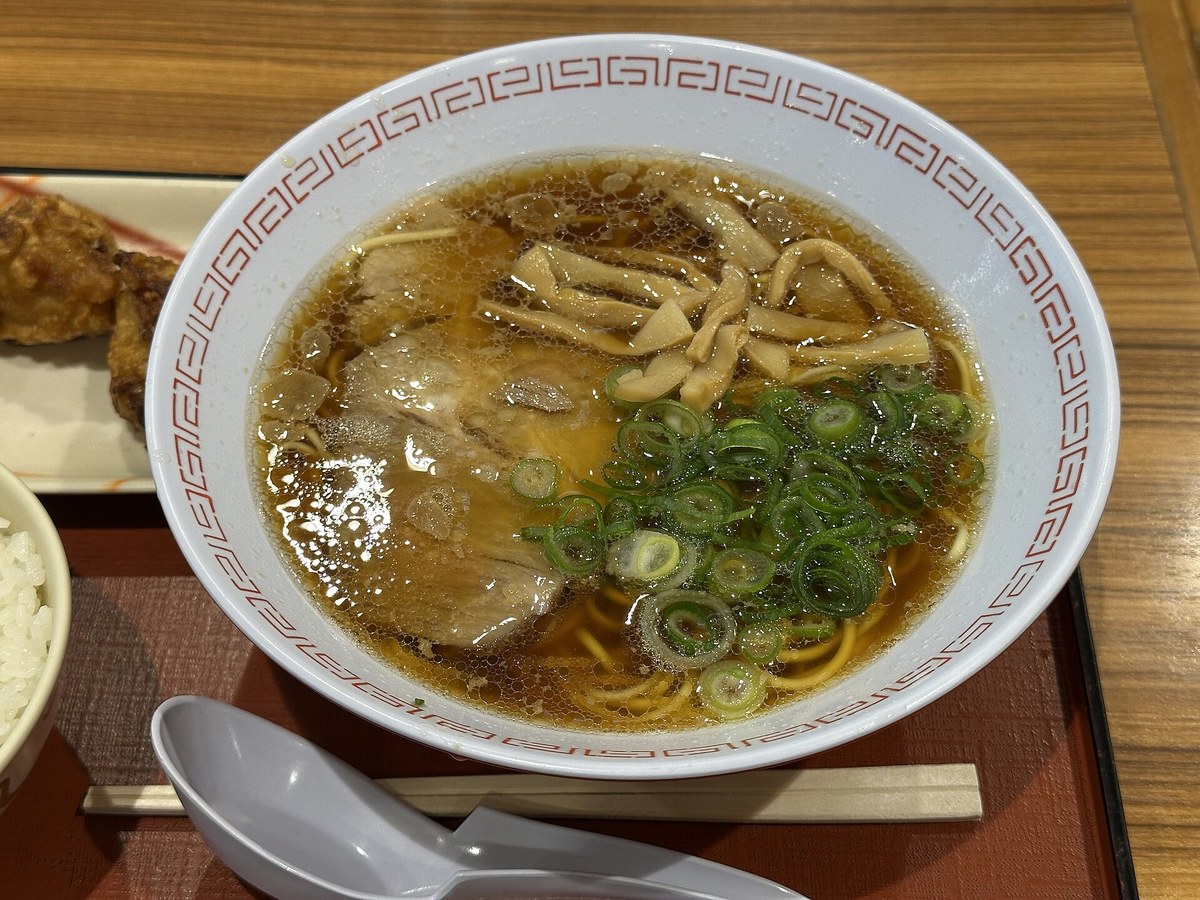
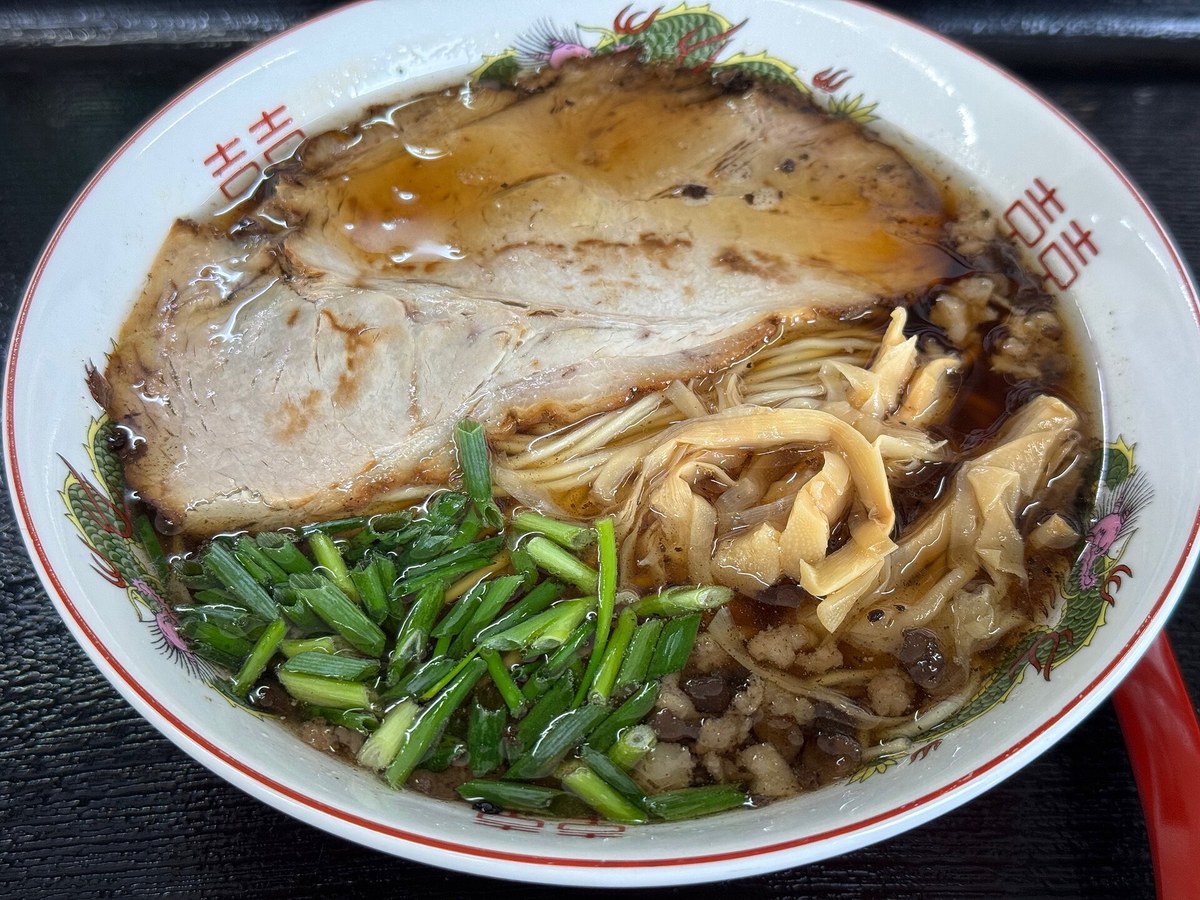
Clear soup, floating fat, flat noodles
The tourism association’s definition of the current form is exact: a soup of seafood dashi with plenty of pork back fat floated on it; noodles mostly medium-thin and flat; toppings the orthodox negi, chashu and menma. The craft is in the contrast. The soup itself is a clear soy chintan — chicken and pork bone under small-fish dashi from the shallow, plankton-rich Seto Inland Sea, small tai and sardines doing quiet work — and the seabura is not grease but a second ingredient, minced coarse so it melts in pearls rather than slicking the surface.
This story’s two photographs are the form twice over: a dark soy bowl with the back fat minced through it, menma and negi over flat noodles; and a close bowl under a full chashu slice, chives bright, the broth carrying its fat the same way. Shops guard their own balance — some push the fish forward, some the fat — but a bowl without the floating seabura and the flat noodle is not the dish the association describes.
Eating it in Onomichi
Onomichi portions run small by ramen standards, and the tourism association turns the fact into advice: the bowls are sized so a visitor can eat at two shops and compare. The famous houses queue from opening — Maruboshi, the small-fish-dashi specialist, and Senryo, in business since 1985, among them — and the local rhythm is a bowl, a walk along the temple hills or the shopping street, and then the argument about a second bowl somewhere else.
Order the standard bowl first, always: toppings and variants are how shops show off, but the dish is the triangle of clear soup, back fat and flat noodle, and it is clearest unadorned. The souvenir raw-noodle sets — the form that made the dish famous in the 1990s — are the honest takeaway: matured flat noodles and a chicken, pork-bone and small-fish soup, six meals to a box.
What a bowl costs
Onomichi has kept its ramen at working prices. At Senryo, founded in 1985, the shop-sign menu photographed in October 2026 prices the standard Onomichi ramen at 880 yen, with the ramen-and-fried-rice set at 1,300 yen; at Maruboshi the standard bowl is 850 yen including tax on the 2026 readings compiled from the shop’s official listings. The home set on JRE Mall — six meals of matured flat raw noodles with the soy soup — is 3,380 yen including tax, shipping included.
Budget for two bowls, not one: the association’s own suggestion, and the only way the town’s argument — fish-forward or fat-forward, this shop or that one — becomes yours. The queue is part of the price at the famous doors; go at opening, or go late, and let the hills take the time between bowls.
Sources — checked 14 November 2026
- Highlighting Japan (Government of Japan), November 2024 — Onomichi Ramen (Onomichi Tourism Association account)
- Kuishinbo Senryo, Onomichi (founded 1985) — shop-sign menu, photographed October 2026
- JRE Mall (Japan Post products) — Onomichi Ramen, six meals
Checked 14 November 2026 (stored links re-fetched and judged per product): reserved where the page says so, with an editorial review note kept per product. Press, PR and travel use stays outside the grant.
Editorial review 2026-11-14