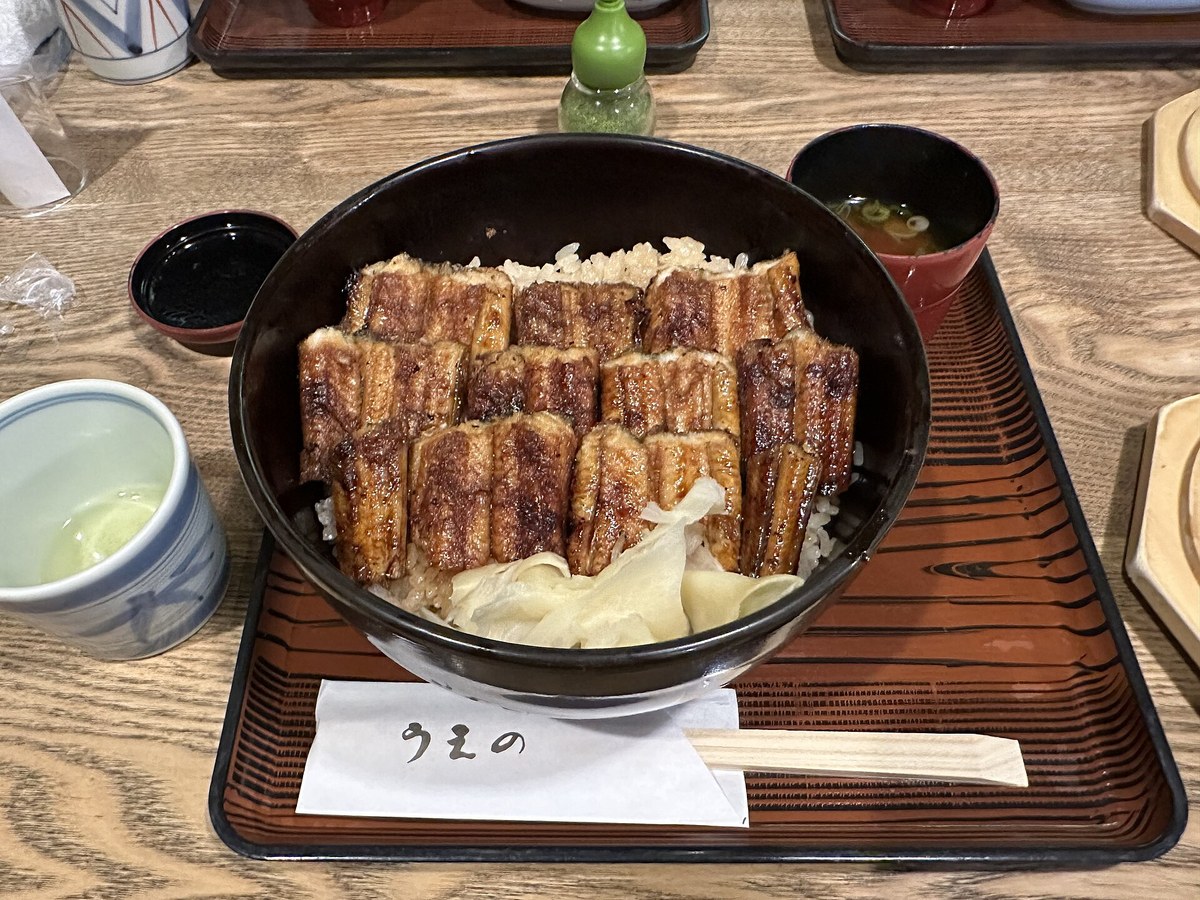
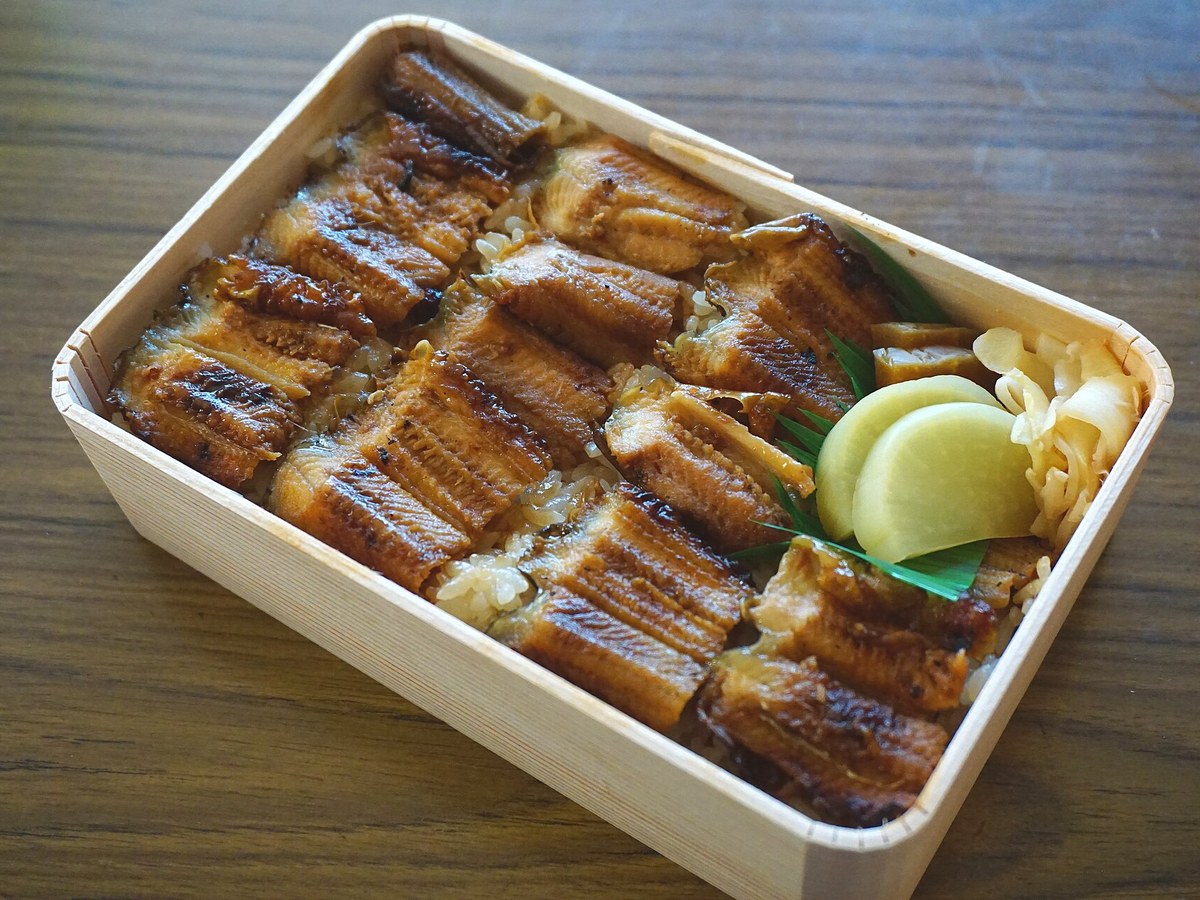
The difference between anago meshi and an ordinary eel bowl is underneath the eel. An anago don lays grilled conger on plain white rice; anago meshi cooks the rice itself in a stock made from the eel's bones, heads and kelp, seasoned with soy sauce, so the bowl tastes of the fish before the first piece of eel is touched. Over it goes the eel, grilled kabayaki-style and brushed with a sweet soy glaze — lighter, leaner and more delicate than freshwater unagi. The dish was born as a station lunchbox at Miyajimaguchi, the mainland ferry port for Miyajima, in 1901, and the shop that started it still stands about a minute from the station, stopping both its counters when the day's eel sells out.
The rice is cooked in the eel
The Food in Japan record states the method as a sequence, and the sequence is the signature. Cooks make stock from conger eel bones, heads and kelp; the rice is cooked in that stock with soy sauce; only then is the grilled eel laid on top, its sweet-savory glaze tying eel and rice together. The record's comparison is exact: anago don uses plain rice and tastes milder for it, while anago meshi carries the deeper flavour all the way down. Even the rice alone, it notes, tastes rich.
The fish itself does the other half of the distinction. Anago is saltwater conger, taken in the calm, shallow Seto Inland Sea around Miyajima, where oyster rafts draw the plankton and small fish the eels feed on. Against unagi — freshwater, fatty, bold — anago is light, soft and clean, and often cheaper. That lightness is why the glaze can speak louder here than it does on an unagi bowl: the dish is built on delicacy, then seasoned.
1901: a rice merchant invents the ekiben
The dated origin is unusually tidy. In 1901, on the Food in Japan record, Ueno Tanikichi began selling anago meshi near today's Miyajimaguchi Station. Ueno was a rice merchant who also ran a tea shop by the station; as steamship and rail travel brought more visitors through the port for Miyajima, he turned his existing conger eel bowls into a portable lunchbox. The timing was perfect, the record says, and the ekiben spread fast.
The Miyajima food record adds the traveller's correction that a century of guidebooks still gets wrong: anago-meshi belongs to Miyajimaguchi, on the mainland ferry side, not to the island itself. Ueno sits about a minute from the station there, and the recommended order of a Miyajima day is eel first, ferry second — eat it where it was invented, then cross. The island has its own houses (Wada, Inachu, Fujitaya) and they are in this article too, but the dish's home address is the port.
Ueno today: two counters, one rule
The original house still runs the dish in its two original forms. From Ueno's own price lists, on the record checked 5 October 2026: the bento runs small ¥2,430, regular ¥2,700, large ¥3,240; in the dining room the same ladder is ¥2,700, ¥3,000 and ¥3,600, tax included — with the honest footnote that the shop has posted a price revision for dining-room and take-out items other than the bento, so the bowl may now cost a little more. The Food in Japan record gives the working hours: meals 10:00–19:00, bento 9:00–19:00, open daily, at 1-5-11 Miyajimaguchi, Hatsukaichi City.
The house rule matters more than the prices: both counters stop when they sell out. An advance order reserves a bento but does not shorten the queue — walk-ins and pre-orders join the same line, the shop states, so you are guaranteeing the food, not saving time — and the dining room takes no reservations at all. If Ueno has gone, the record offers the fallbacks: a second Ueno inside Hiroshima Mitsukoshi, and Ajiroya selling anago-meshi at Hiroshima Station.
Eating it at the ferry port
Budget ¥2,700 for Ueno's regular bento or ¥3,000 for the regular bowl in the dining room, from the house's own lists as checked on 5 October 2026, and arrive early — the Food in Japan record puts a standard bowl across the area at ¥2,000 to ¥2,800, with Fujitaya on the island at around ¥2,500, and warns that popular places fill fast and sell out by early afternoon on busy days. The bento is the form with the history: it was designed for the train and the ferry, and the stock-cooked rice, the record notes, keeps its flavour as it cools.
Eat it all year. The dish is not seasonal the way Miyajima's oysters are: the record rates summer's light eel and the colder months' firmer flesh as the two peaks, and the Miyajima guide calls the eel the one thing on the island circuit that is good in every month. Plan the day around the sell-out, not the season: anago-meshi first, at Miyajimaguchi, and the shrine after.
Sources — checked 13 November 2026
- Food in Japan — Anago Meshi: Hiroshima's Conger Eel Rice from Miyajima (updated 12 November 2026)
- Things to Do Hiroshima — Miyajima Food: Anago-meshi, Oysters, Momiji Manju (updated October 2026; sources checked 5 October 2026)
Original prose and official links only; no source text or maker media reproduced. Photos are credited Creative Commons works, not product photographs.
Editorial review 2026-11-13