Oiri is Kagawa’s wedding sweet: mochi-rice balls a centimetre across, puffed into hollow pastel shells that vanish on the tongue, poured into red-and-white boxes with their own flattened twins, the koban cakes. A bride’s district has given them away for centuries; in this century the same balls crown soft-serve cones all over the prefecture.
A shell of coloured air
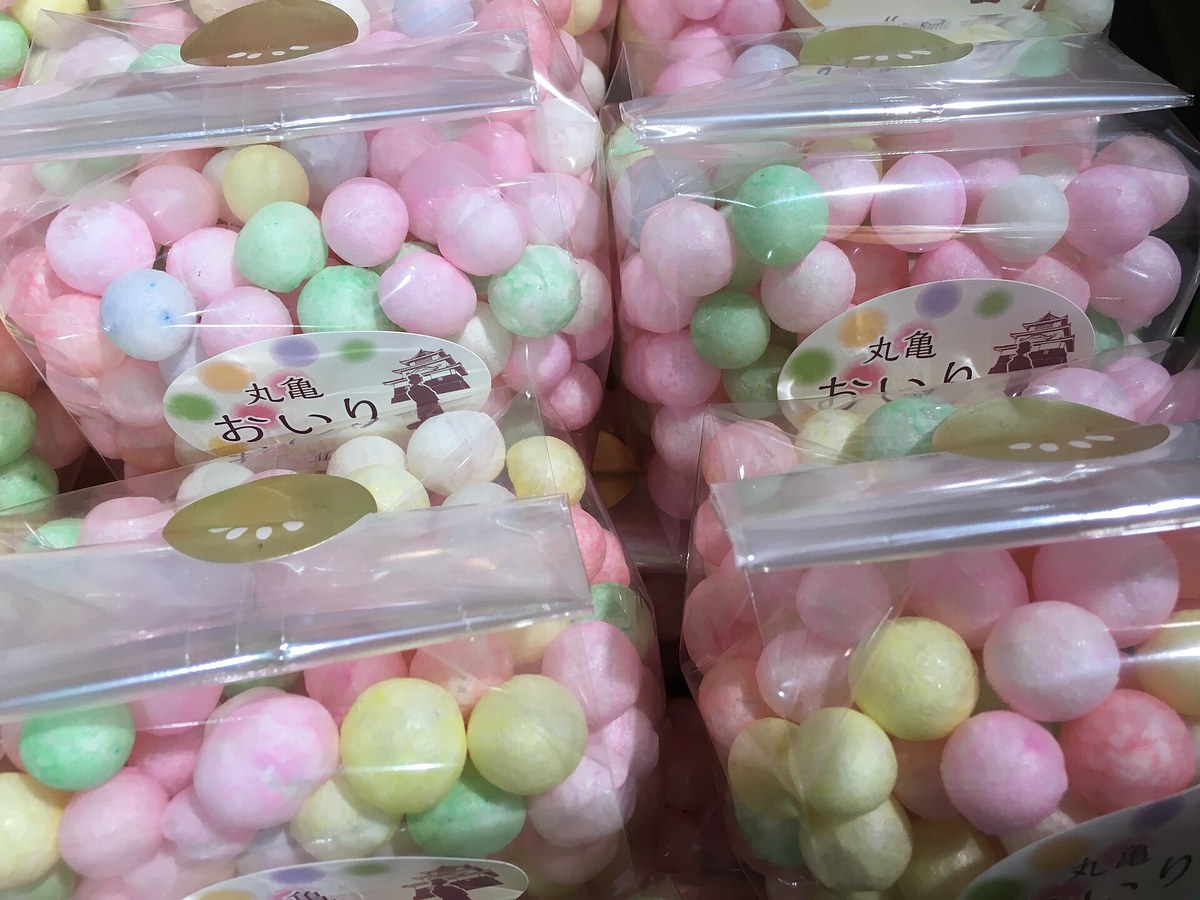
An oiri is about a centimetre across: a ball of mochi rice worked into a thin shell, hollow inside, that melts the moment it meets the tongue. The encyclopedia record gives the colours as the point — pink, green, white, sky blue, purple, orange, a pastel rainbow — and the flavour as a gentler cousin of hina-arare, the doll-festival sweet, with the sweetness held back.
Our first photograph is the sweet as it is sold: clear bags of the balls under a Marugame oiri label. Nothing about the bag prepares you for the texture, which is the whole invention — a sweet that is mostly structure, a crisp nothing that tastes faintly of rice and sugar and celebration.
The bride’s gift, and its flat twin
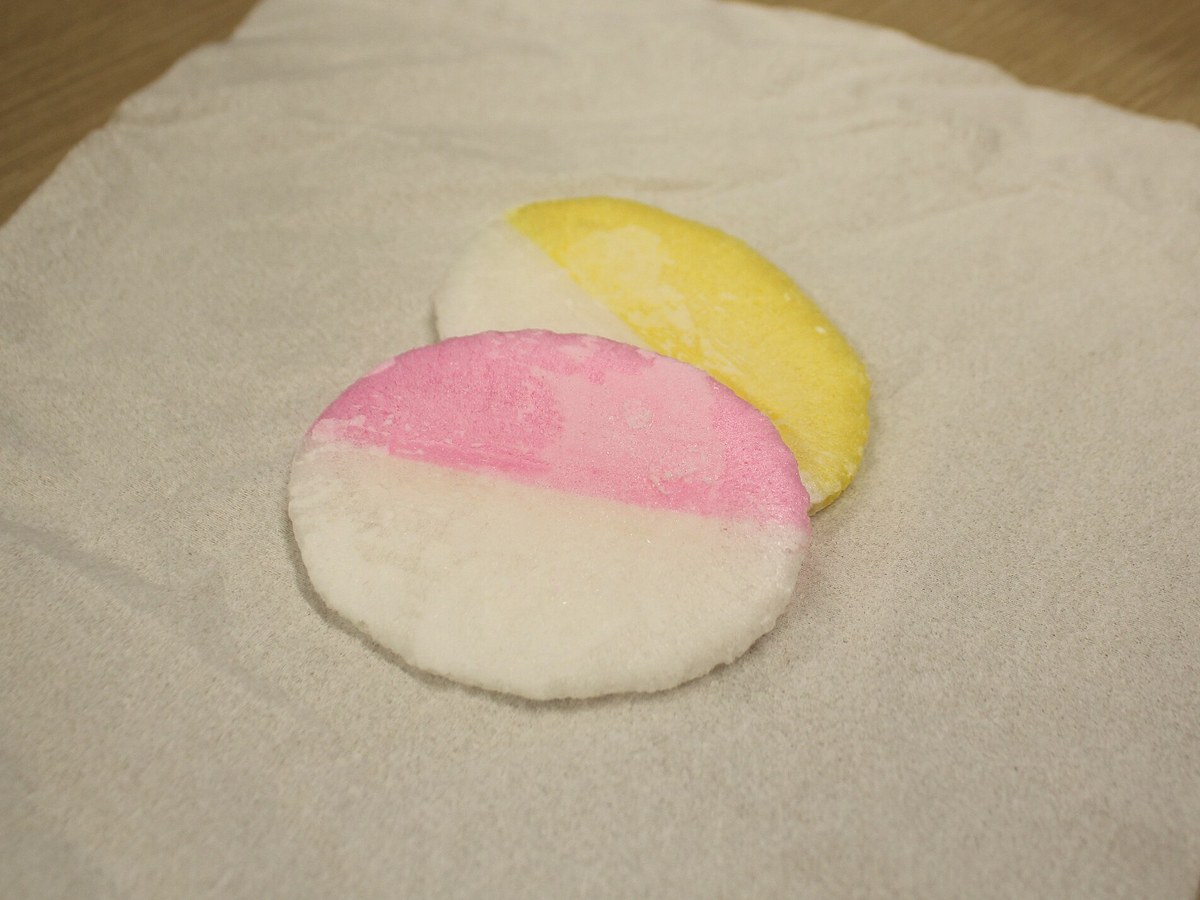
Oiri belongs to weddings. In Kagawa it is a reception favour and a greeting gift carried to the neighbours of the house a bride has married into — and it rarely travels alone. The record describes the companion precisely: several flat oval cakes, about eight by four centimetres, called koban-gashi, which are simply oiri flattened, in the same colours and the same taste, laid in the same red-and-white presentation box. Our second photograph is that twin — the oiri-koban itself.
The custom’s home ground is Kagawa’s centre-west — the Marugame and Mitoyo country — reaching into Ehime east of Saijo, where the sweet is also called oiri-mame and packed the same way, bags inside a red-and-white box. The maker tradition retold by the Mitoyo house Yamashita Oiri Honpo carries the origin back to 1587, when castle-town farmers presented five-colour roasted rice sweets at an Ikoma wedding below Marugame Castle; this page carries that as the house’s tradition, not as a dated record.
A specialist house in Mitoyo
Oiri is made by general sweetshops across its district, but it also has a specialist: Yamashita Oiri Honpo of Takase, Mitoyo, an oiri-only house whose founding the retail record dates to the late Edo period. When the department-store sweet guide ranked the famous sweets of the Kinki, Chugoku and Shikoku regions, Yamashita’s oiri took first place — the research record read for this page notes the pastel balls, the melting texture, and shoppers calling it eating sweetened air.
The house’s keeping quality is part of the gift logic: the balls hold for two to three months at room temperature, long enough for a wedding sweet to do its slow social work through a neighbourhood.
On soft-serve now, in the box forever
The modern oiri sighting is a cone: soft-serve crowned with the pastel balls — oiri soft — a style that caught fire along the Kotohira shrine approach and in Kagawa cafés and is now the sweet’s postcard. Buy it that way to eat on the spot; buy it boxed to understand it.
The measured price: Yamashita Oiri Honpo’s oiri is ¥465 at Mitsukoshi Isetan’s Kayuan online store, on the research record of the ranking read for this page; the maker’s small bags run around ¥300–400 on the house-guide records. Either way it is priced as what it is — a small, exact piece of celebration engineering.
Sources — checked 14 November 2026
- Oiri — encyclopedia record (the pastel arare, the wedding gift, the koban twin)
- Yamashita Oiri Honpo — Isetan Kayuan ranking research and house records (the ¥465 price, the Mitoyo specialist)
Checked 14 November 2026 (stored links re-fetched and judged per product): reserved where the page says so, with an editorial review note kept per product. Press, PR and travel use stays outside the grant.
Editorial review 2026-11-14