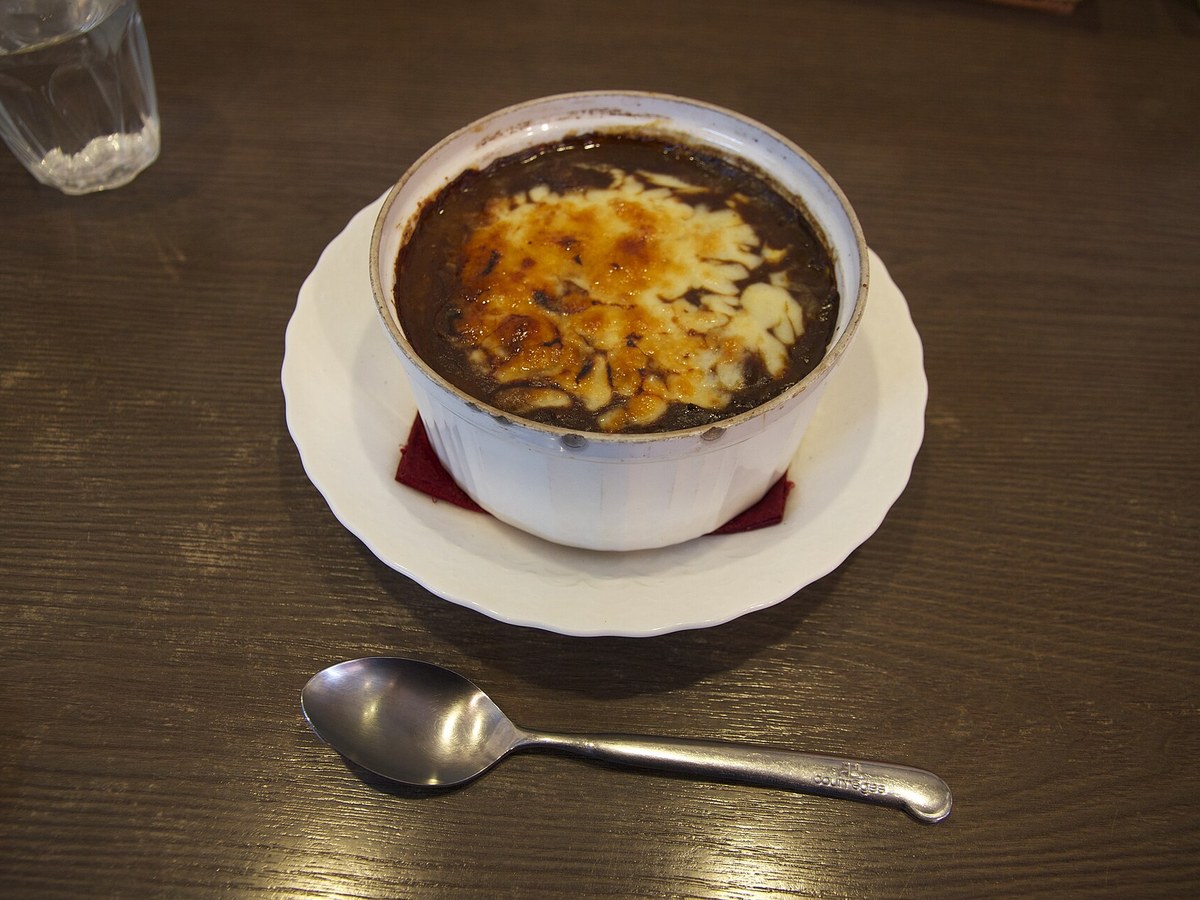
Mojiko’s signature dish was a staff meal that refused to stay in the kitchen: leftover curry, poured over rice in an earthenware pot, topped with cheese and baked until it browned like a gratin. A 1950s port-town coffee shop put it on the menu, and the trading port that had taken to western food before anywhere else in Kyushu made it a hometown dish — thirty shops and counting.
A staff meal in an earthenware pot
The record’s account is precise about the accident. In the 1950s, at Yamada-ya — a shop in the Sakaemachi Gintengai arcade of Mojiko, in what is now Kitakyushu’s Moji ward — leftover curry was poured into an earthenware pot, set over rice and baked in the oven, gratin- and doria-style. It came out fragrant beyond expectation, was served to regulars, and earned its place on the menu.
The port explains why it caught. Mojiko had been an international trading port since the Meiji years, western food arrived early and stayed, and the “haikara” dishes the port invented were easy enough to cross into home kitchens — yaki curry became a dish Mojiko families cooked, not only one its shops sold. Yamada-ya itself has closed; the dish outlived its birthplace.
Two conditions, thirty variations
There is no fixed definition, and the record says so — but the local working rule has two conditions: curry with cheese over it, and baked. The orthodox plate adds a raw egg to break under the cheese; beyond that, every shop is a variation: white rice, butter rice or dry-curry rice beneath; beef or seafood roux; and toppings that reach for the strait itself, fugu and octopus among them.
That looseness is the dish’s engine. With only the baking fixed, a port town of curry houses could each claim the dish honestly, and the eater’s game in Mojiko is comparison — no two shops’ yaki curry is the same dish wearing one name, and the town has organised itself around exactly that.
A club, a map and a trademark
In March 2007 the serving shops founded the Mojiko Yaki Curry Club to promote the dish and the district together; the club registered its logo as a trademark, runs events and stamp rallies, and certifies the retort versions that carry the dish home — Marufuji’s, Curry Honpo’s and the Mojiko Hotel’s among them.
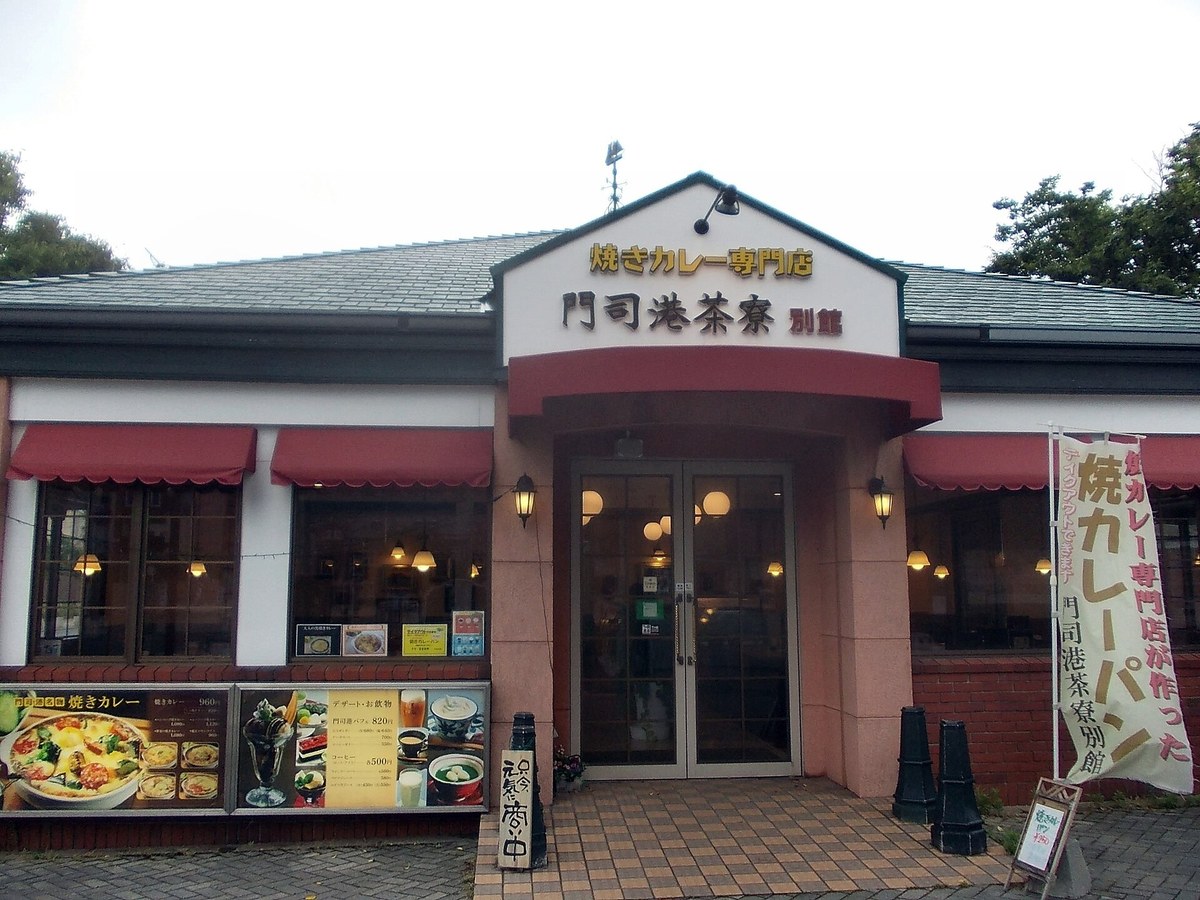
The gourmet association’s baked-curry map — republished in a 2025 edition — plots the field: thirty-plus shops in and around the Mojiko Retro district, each with its plate and price printed. A local dish with its own cartography is a dish a town has decided to be known by.
Eating it above the strait
Eat it where the ships pass: the Retro district’s curry houses serve the plate within sight of the Kanmon strait. On the association map read for this story, Mitsubachi Curry’s Mojiko head shop lists its spicy yaki curry from ¥800; a September 2026 visit record prices Bear Fruits’ orthodox plate — the one a famous regular named as the dish she would choose for her last day — at ¥1,210.
Order it unhurried. The dish is baked to order and arrives bubbling at the cheese’s edge; the spoon goes through crust, egg and roux in that order. Retort pouches are the certified souvenir, but the reference form is the hot cocotte in the port where leftover curry first met an oven.
Sources — checked 14 November 2026
- Yaki curry — encyclopedia record (Yamada-ya origin, the two conditions, the club)
- Mojiko gourmet association — Baked Curry Map (2025-04 edition)
- Bear Fruits, Mojiko — visit record (September 2026)
Checked 14 November 2026 (stored links re-fetched and judged per product): reserved where the page says so, with an editorial review note kept per product. Press, PR and travel use stays outside the grant.
Editorial review 2026-11-14