Motsunabe is Hakata’s beautiful argument that nothing edible should be wasted. Into a shallow pot goes beef offal — the small intestine above all, pearly and rich — under a drift of cabbage and a green roof of garlic chives, in a broth of soy sauce or miso with garlic and chilli. It was a postwar improvisation of a hungry port city; it became, in the 1990s, a national boom; and it ends, always, the Hakata way, with champon noodles tipped into the broth the motsu made.
Offal, chives and a shallow aluminium pot
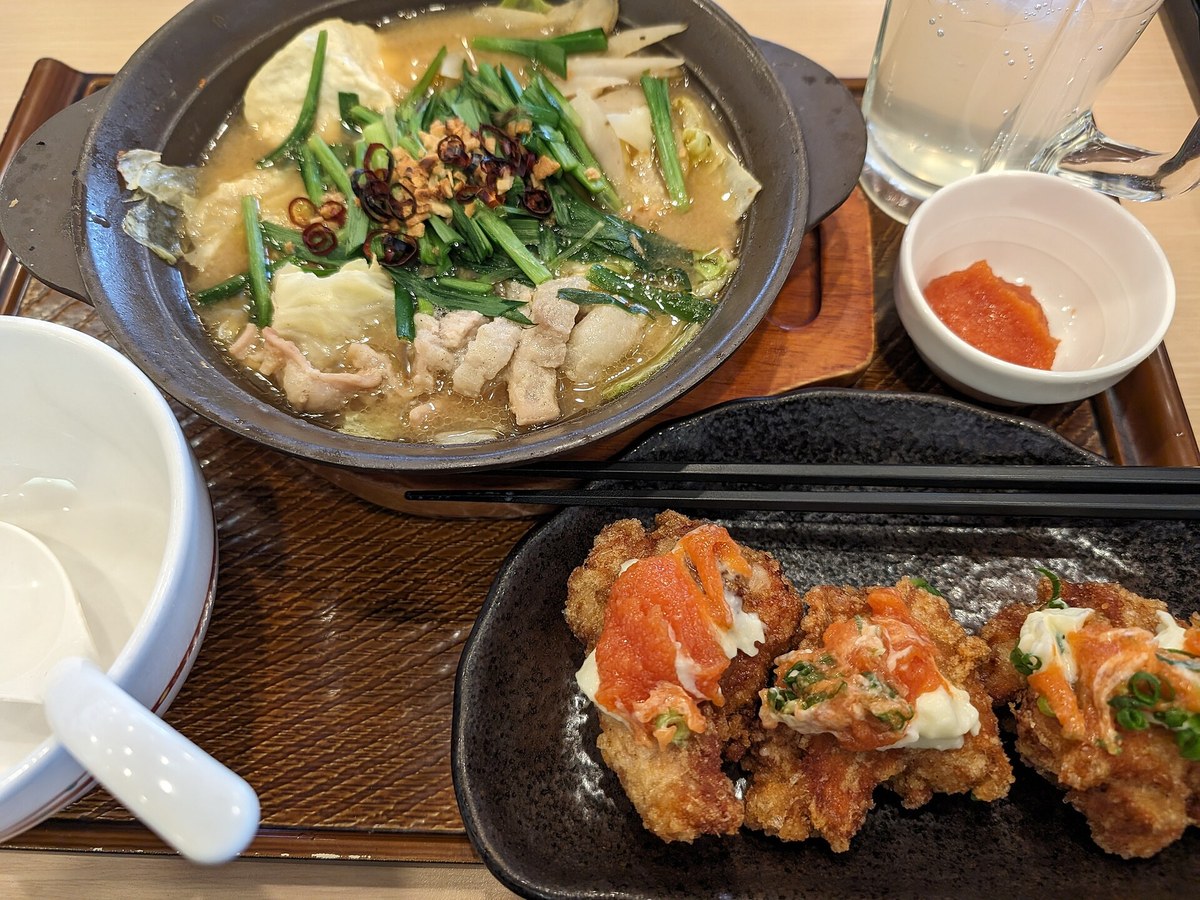
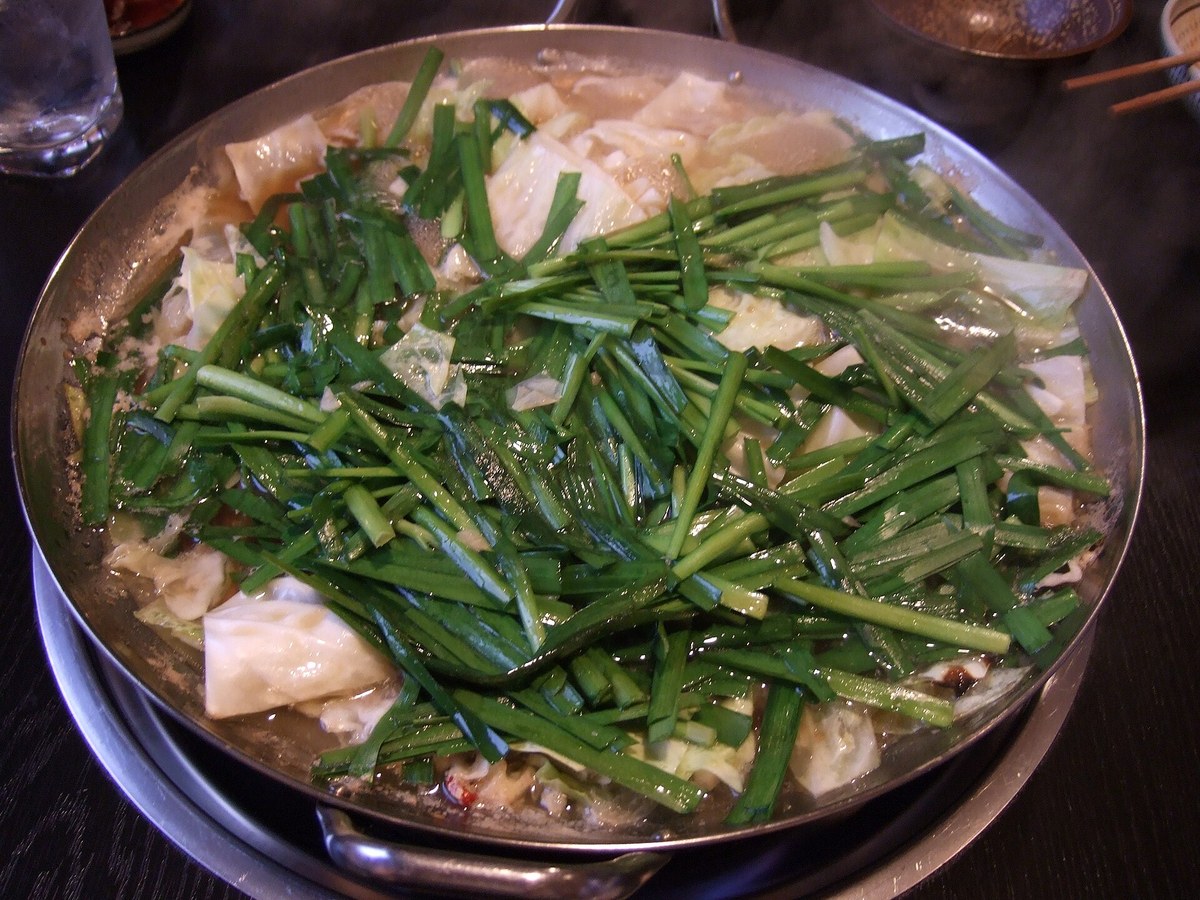
Fukuoka City’s own food-culture record gives the dish its founding scene in a single sentence: in postwar Hakata, a soy-sauce dish of motsu and nira cooked in an aluminium pot spread through the city. The pot is shallow and wide, the motsu — beef offal, the small intestine prized for its sweet fat — is simmered with cabbage that wilts into the broth, and the top is covered with nira, garlic chives, in a green layer that is both ingredient and lid. Garlic and red chilli give the broth its punch; sesame scatters over.
From that soy-sauce original, the city record notes, the variations multiplied: miso became the second classic, salt a third, and every house now guards its own broth. What does not vary is the architecture — motsu below, cabbage through the middle, nira on top — or the ending, when champon noodles go into the enriched broth and the pot is scraped clean with intent.
A postwar pot becomes a boom
Motsu was cheap protein in a poor era, and Hakata — a merchant and port city with a strong offal-eating culture — knew what to do with it. The dish grew up in the city’s small restaurants after the war, fed by the same chicken-and-offal food culture the Fukuoka domain had encouraged since the Edo period, when the domain promoted poultry-keeping against famine and spent hens entered the city’s cooking. Motsunabe’s shops stayed a Hakata institution for decades before the city exported them.
The export, when it came, was explosive. In the 1990s Hakata’s motsunabe houses opened in Tokyo and the other great cities, the dish became a national boom, and motsunabe settled into the short national list of place-name pots — the one that means Fukuoka the way sukiyaki cannot mean anywhere. The boom faded; the pot stayed, in Hakata above all, where the founding houses still draw queues in winter.
Soy or miso: choosing your broth
The two canonical broths divide the city politely. Soy-sauce motsunabe is the original — clear, sharp, garlic-forward, the version the city record describes in the aluminium pot. Miso motsunabe is the richer modern classic: white miso deepened with katsuo umami, chilli heat and garlic, the style of the set in this story’s price record from Kama City, and of Ittou, the Imaizumi house founded in 2007 whose original blended miso is its signature. Salt and even tomato and curry variants exist; Hakata traditionalists order soy or miso and let visitors experiment.
Technique at the table is fixed, though. The pot arrives assembled and is cooked at the table; you eat as the cabbage surrenders, fishing the motsu out before it toughens, and you do not skip the finish. The champon noodles — thicker and springier than ramen noodles — drink the broth that an hour of motsu, cabbage and nira has made, and the last bowl is widely held to be the best thing in the pot.
Sets, donations and what it costs
Motsunabe travels frozen and boxed, and Fukuoka’s hometown-tax shelves carry the famous end of it. The Ittou set — eight servings of domestic Kuroge Wagyu motsu, four in the house miso and four in soy, from the restaurant founded in Imaizumi in 2007 — is a 30,000 yen donation return gift through Shingu Town on the JAL hometown-tax store; the listing certifies motsunabe itself as the recognised regional resource. At the everyday end, Kama City’s two-serving Hakata miso motsunabe set, made in Fukuoka by Kimura Shokuhin and shelf-stable for about six months, is a 9,000 yen donation, in stock.
In Hakata itself, the restaurant pot for two with the champon finish is the standard order at the founding houses — book in winter, when the whole city is eating it. Buy sets by the motsu: beef small intestine from domestic cattle is the ingredient the price is paying for, and the listings that name it are the ones to trust.
Sources — checked 13 November 2026
- Fukuoka City official site — Fukuoka’s Regional Dishes (motsunabe)
- JAL hometown-tax store — Motsunabe Ittou eight-serving set (Shingu Town)
- JAL hometown-tax store — Hakata miso motsunabe, two servings (Kama City)
Checked 13 November 2026 (stored links re-fetched and judged per product): reserved where the page says so, with an editorial review note kept per product. Press, PR and travel use stays outside the grant.
Editorial review 2026-11-13