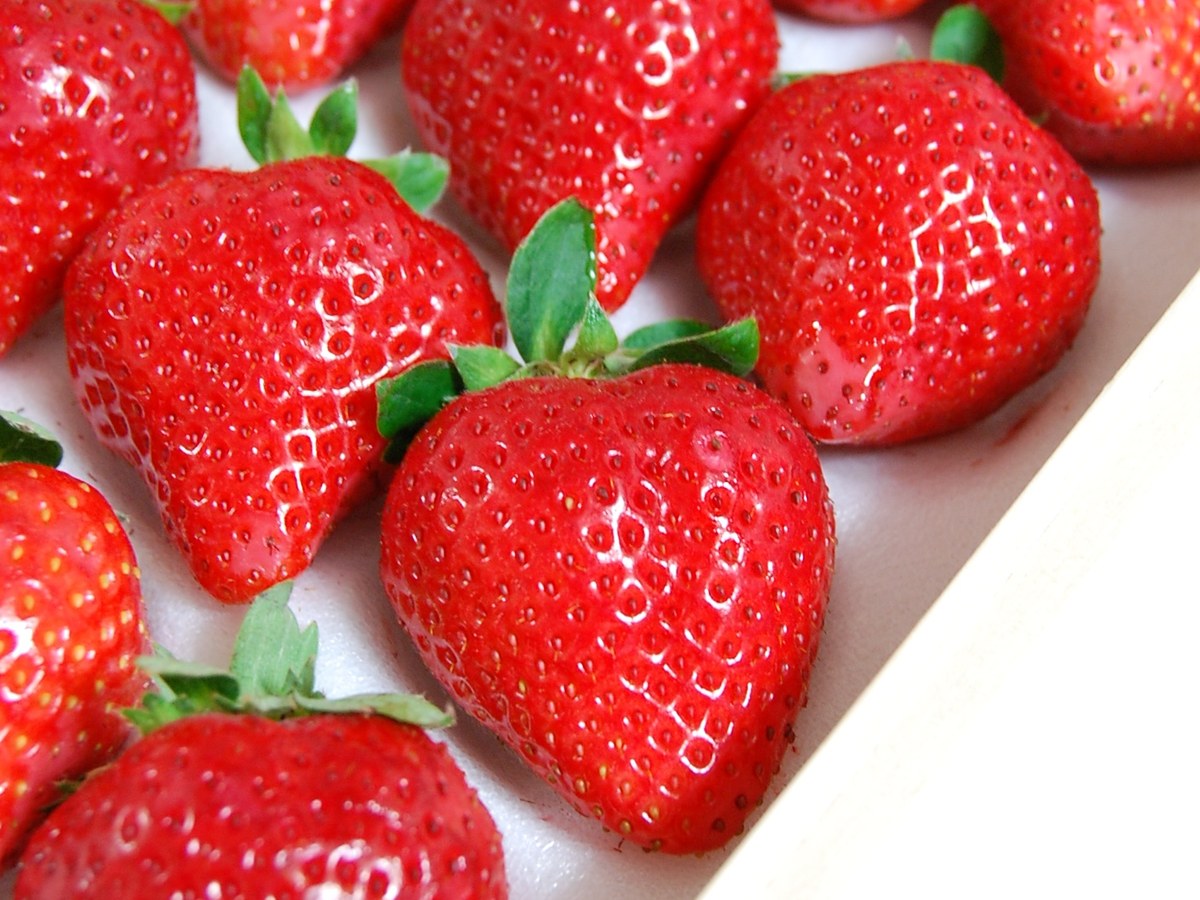
Most fruit names are poetry. Amaou's is a specification. When Fukuoka's Agricultural Research Center finished six years of breeding and put the name to a public contest in 2003, the winner was an acronym of promises: A for akai (red), MA for marui (round), O for okii (big), U for umai (delicious). The berry has been keeping those promises ever since — over 20 grams on average, red all the way through, sweeter than 11 degrees Brix — and by rule it keeps them in exactly one prefecture.
One prefecture, by trademark
Amaou is the brand name of a single cultivar, Fukuoka S6, and the controls around it are printed in the records. It is a registered trademark; its cultivation is exclusive to Fukuoka Prefecture; seedlings move under a contract between the prefectural government and JA Zen-Noh Fukuren, which distributes them to Fukuoka farmers and supervises growing under strict standards. The picking guide confirms the consequence on the ground: Amaou is grown only in Fukuoka, so the only place to pick it is a Fukuoka farm.
Since January 2025 that fence has stood on a new post. The breeder's right that once restricted growing by law expired, and cultivation outside Fukuoka became legally possible — so the prefecture and Zen-Noh moved the protection into the trademark itself: to sell under the Amaou name, producers now sign pledges restricting their cultivation to Fukuoka, with overseas trademark filings and online monitoring behind it. The name, not the plant, is now the wall.
Six years to beat Toyonoka
The breeding story is a prefecture setting its own homework. In 1996 Fukuoka's main strawberry was Toyonoka — delicious, but often pale and smaller than ideal. The prefectural research center set out to create Japan's ultimate strawberry and crossed 'Kurume 53' with '92-46', then spent six years raising and selecting from countless seedlings. The survivor, Fukuoka S6, had the size, the colour and the flavour on the brief; the public contest of 2003 gave it the name.
The fruit justifies the patience. Berries average over 20 grams and the largest exceed 50; the skin is a glossy deep red and the flesh is red through, firm but juicy, with sugar over 11 Brix — the picking guide's range for the variety runs to 15 — held in balance by a measured acidity. A 2005 study by the breeding center itself found January-harvested berries the sweetest and best-tasting of the season.
A January fruit
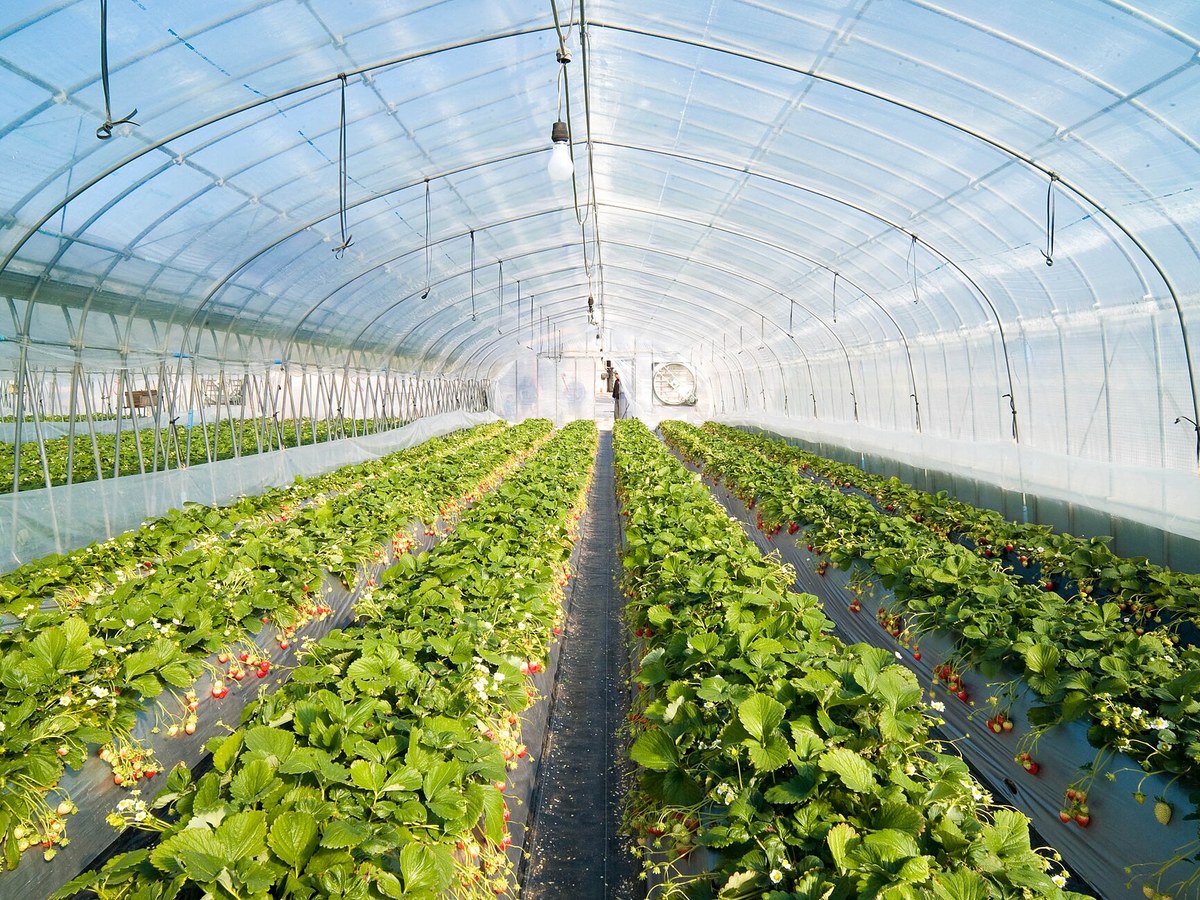
Amaou's season runs from mid-December to mid-May, and it is a winter fruit at heart. The center's research gives the calendar its shape: December berries are the firmest and most acidic; January's carry the highest sugar and the best taste scores; from February the acidity eases and the fruit softens; late in the season flavour varies more and prices fall in steps. Growers run the variety in greenhouses, spaced wide for sunlight, hand-harvested and sorted by size.
That calendar is why the gift trade wants Amaou at New Year and why the picking farms guard their January weekends. It is also why the variety is famously demanding — the records call it prone to disease and in need of careful management — a premium maintained by labour as much as by genetics.
Picking and buying Amaou
The most direct way to meet the fruit is on the plant, and picking is a Fukuoka-only experience by definition. The 2026 farm prices stand at ¥2,500 for 60 minutes all-you-can-eat at Yame's Pu-san farm (flat adult price, 3 January to 6 May 2026) and ¥2,600 for ages 12 and up at Lion Kajitsuen in Chikuzen, with 90-minute farms at ¥2,000–3,000 — mostly reservation-first, and the January and February weekends fill early. Choose berries red right up to the green cap; a berry only 60% coloured measured less sugar in the center's study.
To buy rather than pick, look in season at department-store food halls and fruit shops across Japan — the berries travel, even though the plants may not — and expect gift-box pricing for the largest, reddest grades. Out of season, Fukuoka's confectioners keep the name working in Amaou sweets, but the fresh fruit itself keeps its December-to-May hours.
Sources — checked 12 November 2026
- Food in Japan — Amaou Strawberry: Japan's king of fruits (checked 12 November 2026)
- Fruit Journey — Amaou strawberry picking in Japan: season, prices and farms (information checked 3 November 2026)
- FreshPlaza, reporting The Japan Times — Japan protects Amaou strawberry brand after rights expire (checked 12 November 2026)
Original prose and official links only; no source text or maker media reproduced. Photos are credited Creative Commons works, not product photographs.
Editorial review 2026-11-12