Japan judges its wagyu the way it judges its athletes: every five years, at a national championship everyone calls the Wagyu Olympics. One prefecture's beef has won the Prime Minister's Award at that championship four times in a row. Miyazaki beef is not the oldest brand on this shelf, nor the most famous abroad — it is simply the one the judges kept choosing, built by the tightest breeding system in the country and rebuilt, once, from near-total ruin.
Four rules, one name
The checked guide sets out the certification as four practical rules, drawn from the Miyazaki Wagyu Council and the national GI specification. Breed: the animal must be a Japanese Black, one of Japan's four native wagyu breeds. Origin: it must be born in Miyazaki and raised there for the longest part of its life. Bloodline: its sire must be a Miyazaki prefectural bull or another bull designated for cattle improvement — a rule in force since April 2017. Grade: the carcass must earn a meat quality grade of 4 or 5 from the Japan Meat Grading Association. The council manages the brand's standards and certification, and Japan protects the name as Geographical Indication No. 55, registered on 15 December 2017.
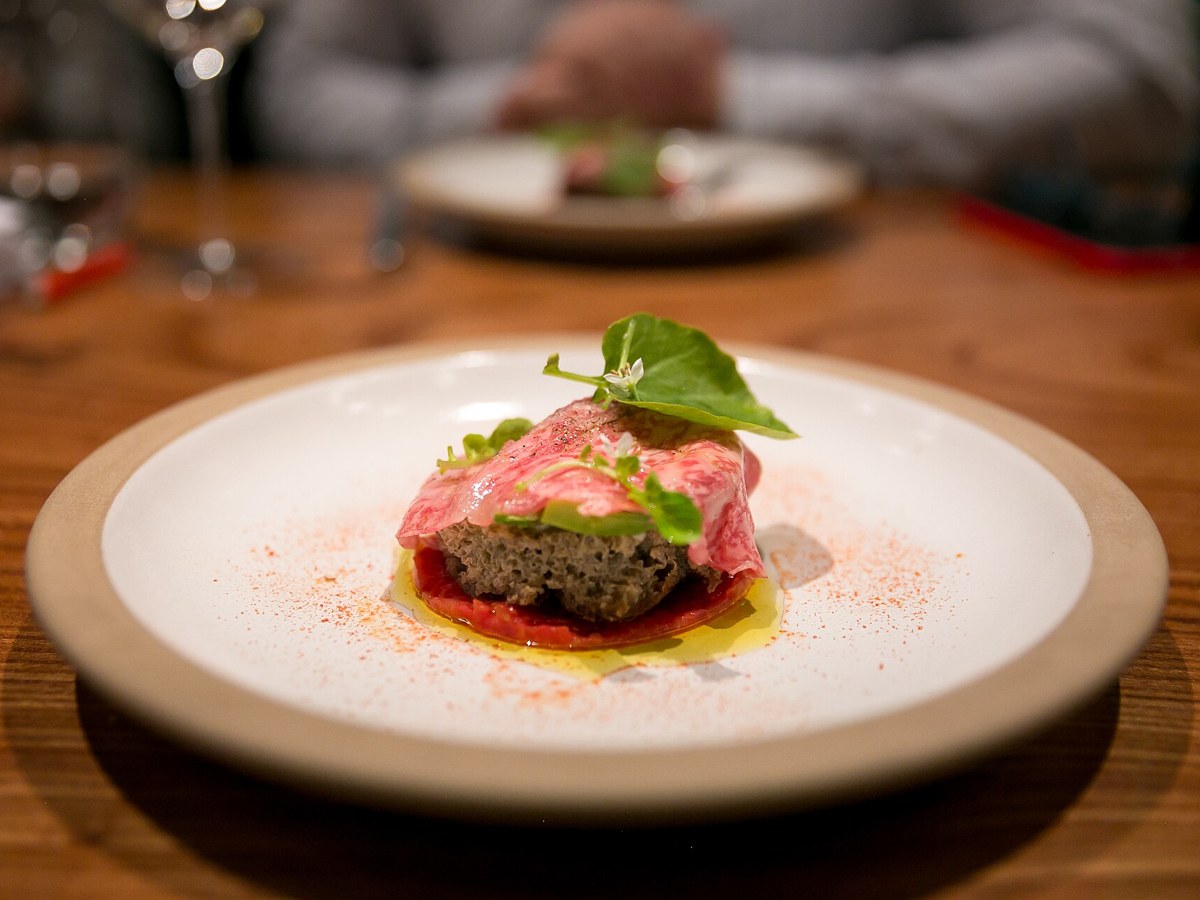
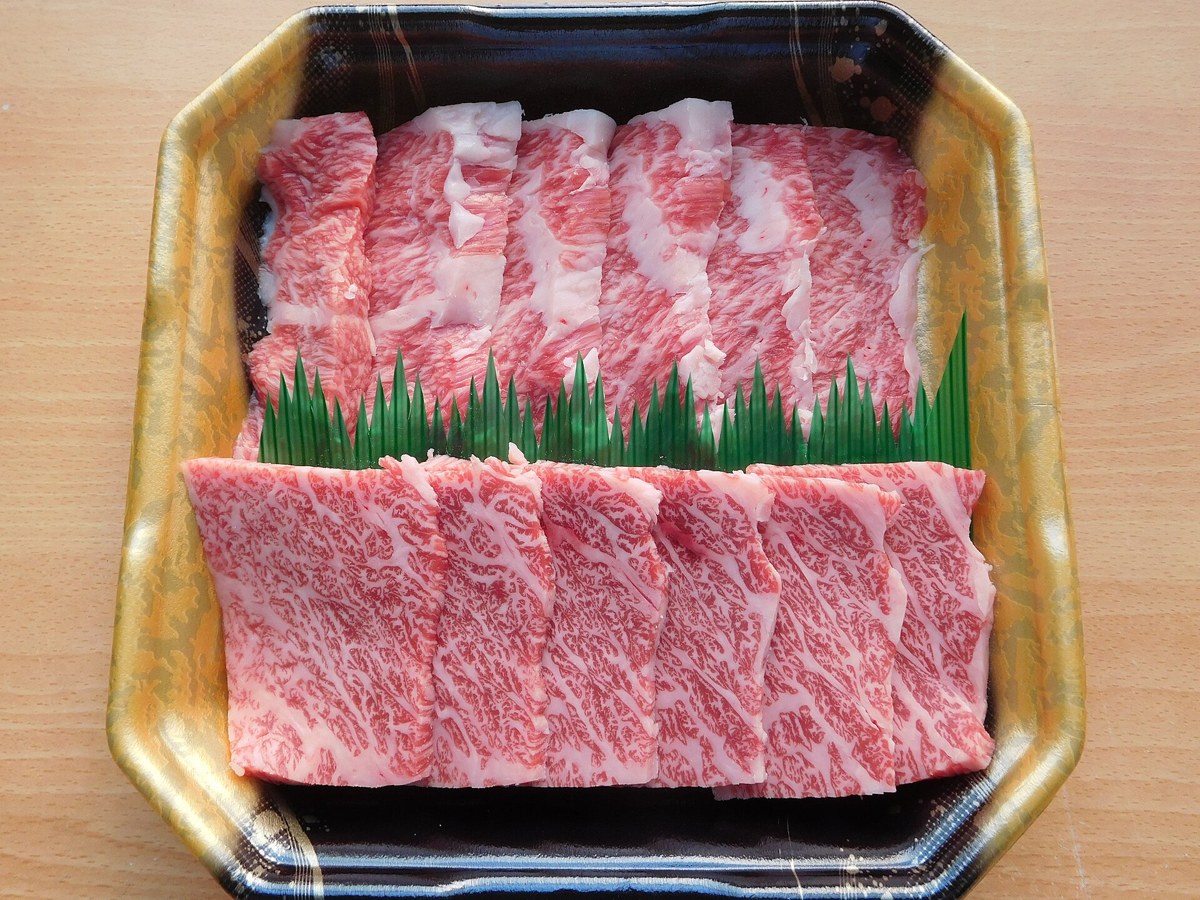
The GI description fixes the eating in three phrases: fine marbling, a gentle sweetness that spreads in the mouth, and a rich aroma. The marbling runs in thin streaks through the lean rather than sitting in thick bands, which keeps the texture soft, especially in the loin cuts. Names need care, the guide warns: Miyazaki beef — Miyazaki gyu — is the certified brand, and the GI register lists 'Miyazaki Wagyu' as its English name, but broader commercial labels such as 'Miyazaki wagyu' in Japanese, or 'beef produced in Miyazaki', can cover cattle, including crossbreeds, that never met the rules. Look for the council's name and traceability.
The Miyazaki Method: one prefecture, one herd book
Miyazaki was mainly horse country before World War II; as horse farming declined, cattle numbers rose, and the prefecture moved from selling calves to other regions toward fattening its own and building a brand. The machinery came first: feeding standards for fattening cattle in 1959, an integrated system covering calves, fattening and processing by 1971, and in 1973 Japan's first unified management of prefectural breeding bulls — later called the Miyazaki Method. Under it the prefecture manages its breeding bulls in one programme rather than leaving each farm to choose alone, combining the Kedaka line, valued for physique, the Ito line, valued for balance, and the Tajima line, valued for meat quality and marbling.
The brand itself followed the system: in 1986 the prefecture, the JA groups and related bodies formed the Miyazaki Wagyu Council, and the brand launched the same year. Miyazaki's influence quietly exceeds its own label — about 40% of the calves born in the prefecture move to other regions, where they become the starting stock for other branded beef — and as of February 2025 the prefecture ranked third in Japan for total beef cattle and second for Japanese Black cattle.
Four Olympics — and the year of the outbreak
The championship record is the brand's public proof. At the National Wagyu Ability Exposition, held every five years, Miyazaki teams won the Prime Minister's Award at four consecutive expositions: in 2007 in Tottori, in both divisions; in 2012 in Nagasaki, in the breeding cattle division; in 2017 in Miyagi, in the beef cattle division — the same year the bloodline rule joined the standards and GI protection followed; and in 2022 in Kagoshima, in the beef cattle division again. No other brand's shelf in this collection carries a streak like it.
Between the second and third of those titles sits the catastrophe. In 2010 a foot-and-mouth disease outbreak cost the prefecture 297,808 livestock, and of its 55 breeding bulls only five survived. The recovery, the guide records, shortened bull testing, developed new sires, split the bulls between two sites to reduce risk, and strengthened farm biosecurity with a monthly disinfection day across the prefecture. That the two titles after 2010 were won by the rebuilt herd is the strongest evidence the Miyazaki Method works: the system, not a single bloodline, is the brand.
What the champion costs at home
In Miyazaki City, the checked guide reads the official menus of October 2026 and finds the champion priced like lunch as well as like ceremony. Miyazaki beef lunch sets start at ¥2,500; standard yakiniku courses run from ¥6,400 to ¥11,600 per person. At Hitotsuba Miyachiku, the teppanyaki house on the coast, the Miyazaki beef round steak course of 150 grams is ¥4,200, with steak courses running to ¥13,500; a lean shabu-shabu set of 150 grams is ¥3,980 per person. The grade literacy helps at the table: the quality number is the lowest of four scored factors — marbling, colour, firmness, fat — so grade 5 means marbling of BMS 8 to 12 and grade 4 means 5 to 7, while the letter in A5 is only the yield scale, which the brand rule does not even restrict.
Miyazaki's standing stories are a cheese manju, a fried chicken and a mango that ripens on the tree — Warabe's sweets, chicken nanban and the Egg of the Sun. Miyazaki beef is the prefecture's fourth and its first beef, and it completes a Kyushu wagyu shelf beside its western neighbour's brands: the prefecture that grows Japan's sunniest mango also grows, by the judges' repeated verdict, its finest cattle. Four Olympics in a row is not a slogan; it is a results table.
Sources — checked 11 November 2026
Original prose and official links only; no source text or maker media reproduced. Photos are credited Creative Commons works, not product photographs.
Editorial review 2026-11-11