Koya-dofu is tofu that survived a mountain winter: fresh tofu frozen, matured and dried into a pale sponge that keeps for months and drinks up seasoned broth when it is simmered back to life. The method was completed on Mount Koya, the Wakayama temple mountain, and spread across Japan as a pillar of shojin vegetarian cooking — which is why the Kansai name for the food is simply the mountain’s.
Tofu that survived the mountain winter
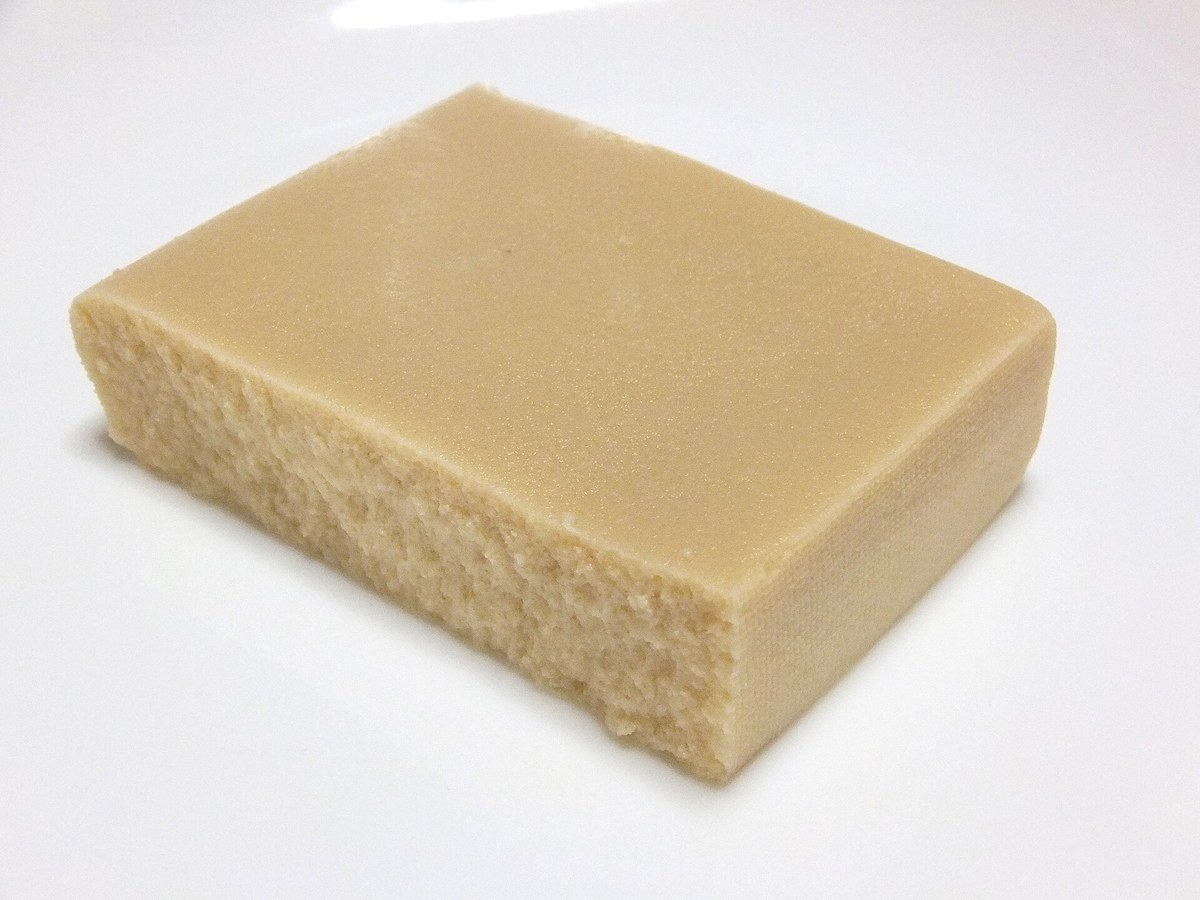
The block in our first photograph is the food itself: a beige, fine-pored sponge, light as cork, hard as a rusk. Koya-dofu is made by freezing fresh tofu, holding it while it matures, then drying it — a preserved food with the water taken out and the protein left behind. A standard piece of the leading maker’s product carries 8.5 grams of protein in 16.5 grams of dried tofu.
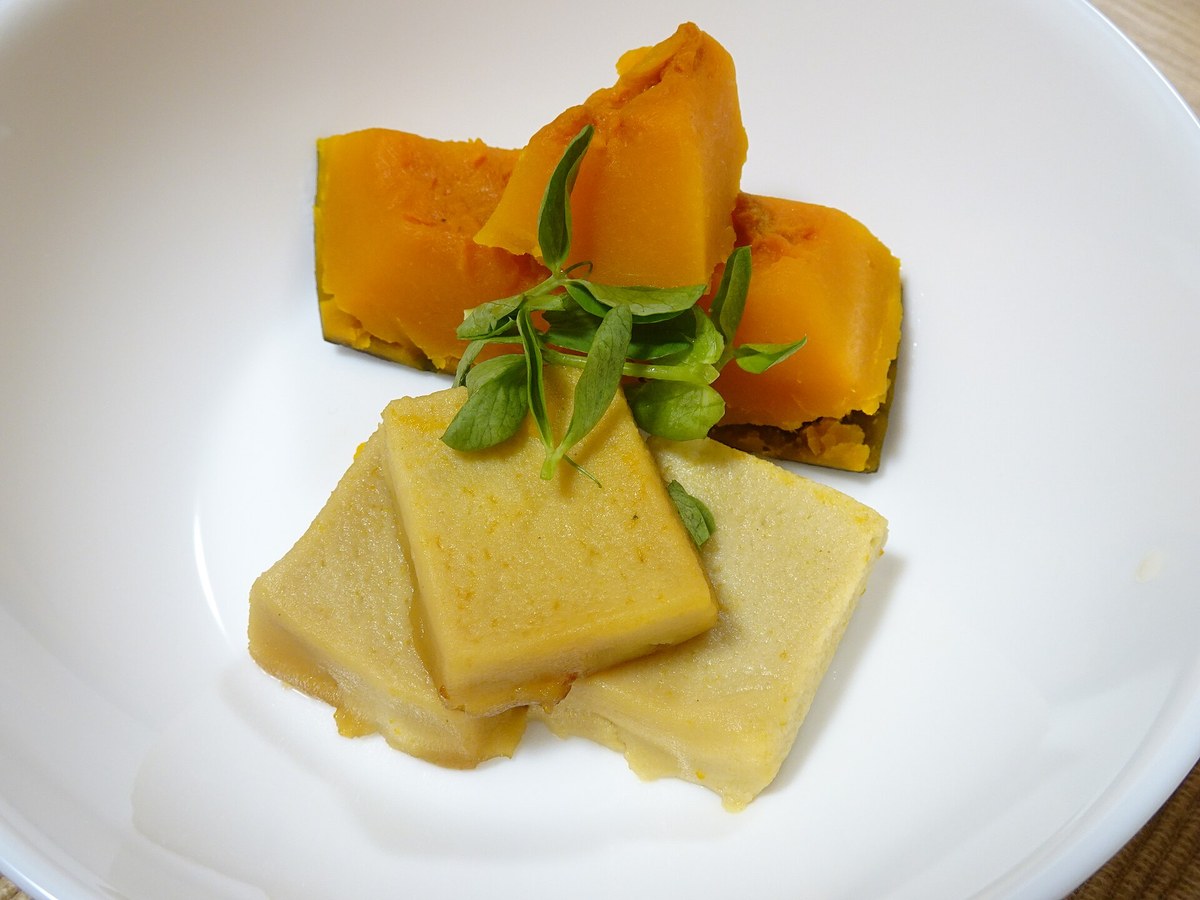
Nothing about it is eaten dry. Soaked back in water, the sponge softens; simmered in dashi it swells and holds the broth in its pores, so that a bite of koya-dofu is mostly a bite of the pot it was cooked in. Our second photograph is the classic destination — slices simmered with pumpkin, the fukume-ni style of gentle, sweet-savoury glazing that temple kitchens made its own.
Mokujiki Ogo and the souvenir name
Tradition hands the discovery to Mount Koya’s winter: tofu left in a monks’ lodging in the Kamakura period froze in the mountain cold, was cooked anyway rather than wasted, and turned out to have a texture worth keeping. The encyclopedia record credits the monk Mokujiki Ogo with completing the method on the mountain, from where it travelled Japan as an ingredient of shojin cooking — the vegetarian temple cuisine that needed protein without meat.
The name arrived later, by commerce. In the Edo period the dried tofu was prized as a souvenir of Mount Koya, and in an age when goods took the name of the place they were sold, the food became Koya-dofu — Mount Koya tofu. The name was originally a Kansai word; the same food in Tohoku and Shinshu went on being called shimi-dofu or kori-dofu, the frozen tofu of cold-country farmhouses.
One food, three names
History actually built the food twice. The record distinguishes a shimi-tofu line — farmhouse tofu frozen under the eaves in snow country — from a Koya-tofu line descending from the mountain’s method, and after the Second World War the industry federation unified the trade under a coined standard name, kori-dofu, which is also the name in the JAS standard. Koya-dofu survived as the everyday word across Kansai and in most supermarkets.
The federation keeps a day for it: 3 November has been Koya-dofu Day since 2020. And the food’s most famous modern chapter is a quiet irony this page states plainly below — the mountain that named it is no longer where most of it is made.
Back in the pot
Buy it anywhere — that is the honest position, and the price is a pantry price: the leading maker Asahimatsu’s official shop sells its Shin Asahi Tofu at ¥511 for ten pieces (165 g), tax included. What you are buying into is the name and the method, both of which belong to the mountain; on Mount Koya itself the food returns to its first context, simmered in the shojin meals of the temple lodgings where it began.
The limitation belongs in the open: by the encyclopedia’s industry account, more than ninety percent of modern production is in Nagano, where the farmhouse line industrialised. Wakayama’s claim on koya-dofu is origin, method and name — not current output — and this page makes the regional claim on exactly that basis.
Sources — checked 14 November 2026
- Koya-dofu — encyclopedia record (the Mount Koya method, the names, the production share)
- Asahimatsu official shop price, checked November 2026 — Metanoia price record
Checked 14 November 2026 (stored links re-fetched and judged per product): reserved where the page says so, with an editorial review note kept per product. Press, PR and travel use stays outside the grant.
Editorial review 2026-11-14