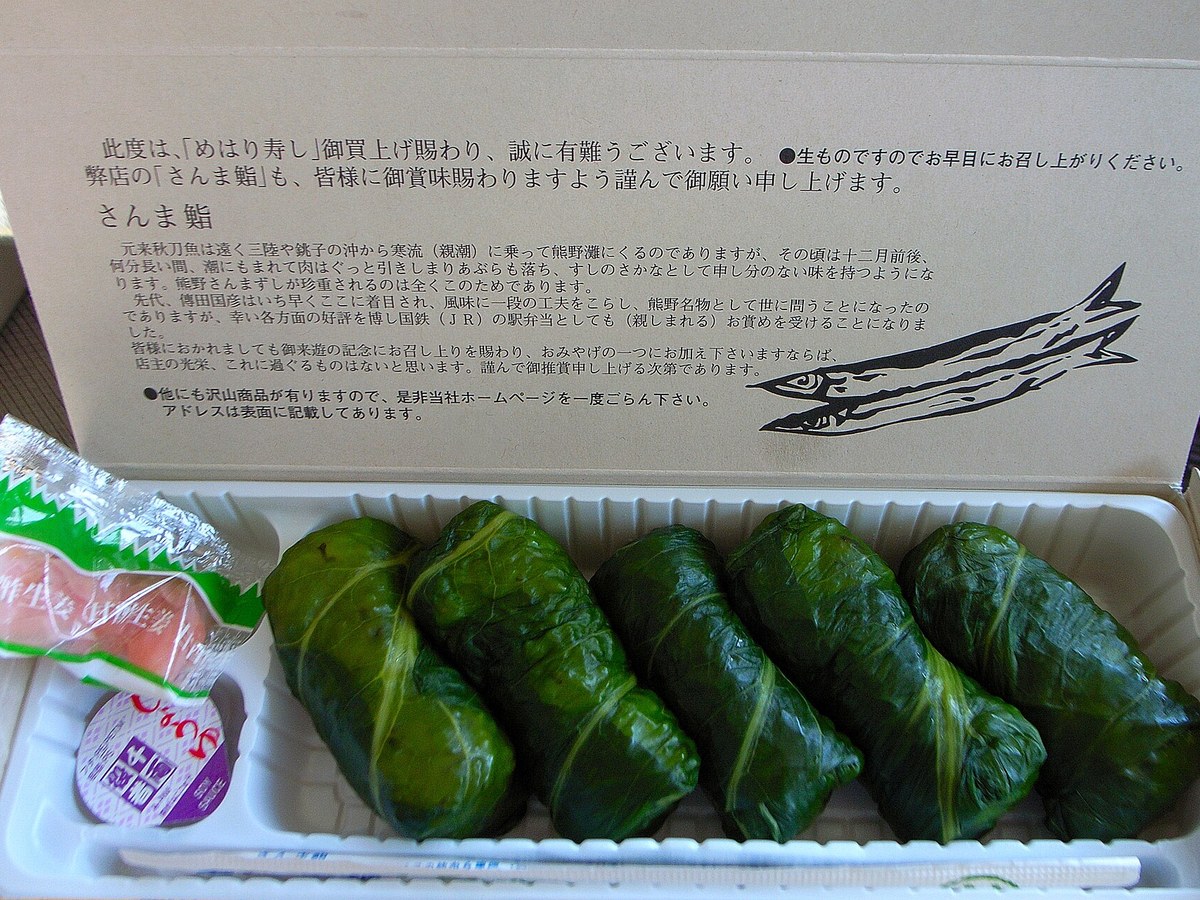
It is called sushi, contains no fish, and is eaten like a sandwich. Mehari-zushi is a ball of warm rice wrapped completely in a single pickled leaf of takana — Japanese mustard greens, salted down, squeezed, and marinated in mirin and soy until the leaf itself is the seasoning. It was the packed lunch of the Kumano mountains in Wakayama's deep south: loggers, field hands and fishermen carried it because the leaf held the rice together, kept without a fridge, and flavoured every bite. The name, on the most popular telling, is mehari — eyes wide open — because the balls were once made so big, and tasted so good, that your eyes opened wide to eat them.
A leaf that does three jobs
The construction is a small masterpiece of preservation. Takana grows big leaves; harvested, salted and pickled, the leaves keep for months — the Umami Information Center's Wakayama record describes them squeezed out and marinated with mirin and soy sauce, so the pickle carries umami of its own. Wrapped around a warm ball of rice, one leaf does the work of a container (nothing falls apart), a preservative (no refrigeration on a mountain path) and a sauce (the seasoning arrives from the outside in, bite by bite). The rice inside is the variable: soy sauce is the common flavouring, and houses ring the changes with vinegar or pickled plum.
At Sohonke Mehariya, the Shingu house that commercialized the dish in 1962, the form has two signatures of its own: chopped pickled takana stems are mixed into the rice itself, so the leaf's flavour is inside as well as out, and the rice passes through a secret soy-sauce-based sauce before wrapping. Nothing is made in advance: every ball is formed by hand with hot rice after the order is placed — the opposite of the station-bento logic the dish also lives by, and the house's stated pride.
Eyes wide open
The name keeps its theories modestly. The most popular, on the GOOD LUCK TRIP record, is surprise: mehari, eyes wide open, at the flavour and the size. The Umami record's version is physical — the balls were once so large that eating one made you open your mouth wide, and your eyes wide along with it. Both point at the same historical fact: these were working lunches, and a working lunch in the Kumano mountains was once the size of a softball, a meal in one hand for people burning a day's calories in the forest or on the water. Today's balls are smaller, formed for café plates and station boxes, but the leaf, the warmth and the hand-forming are unchanged.
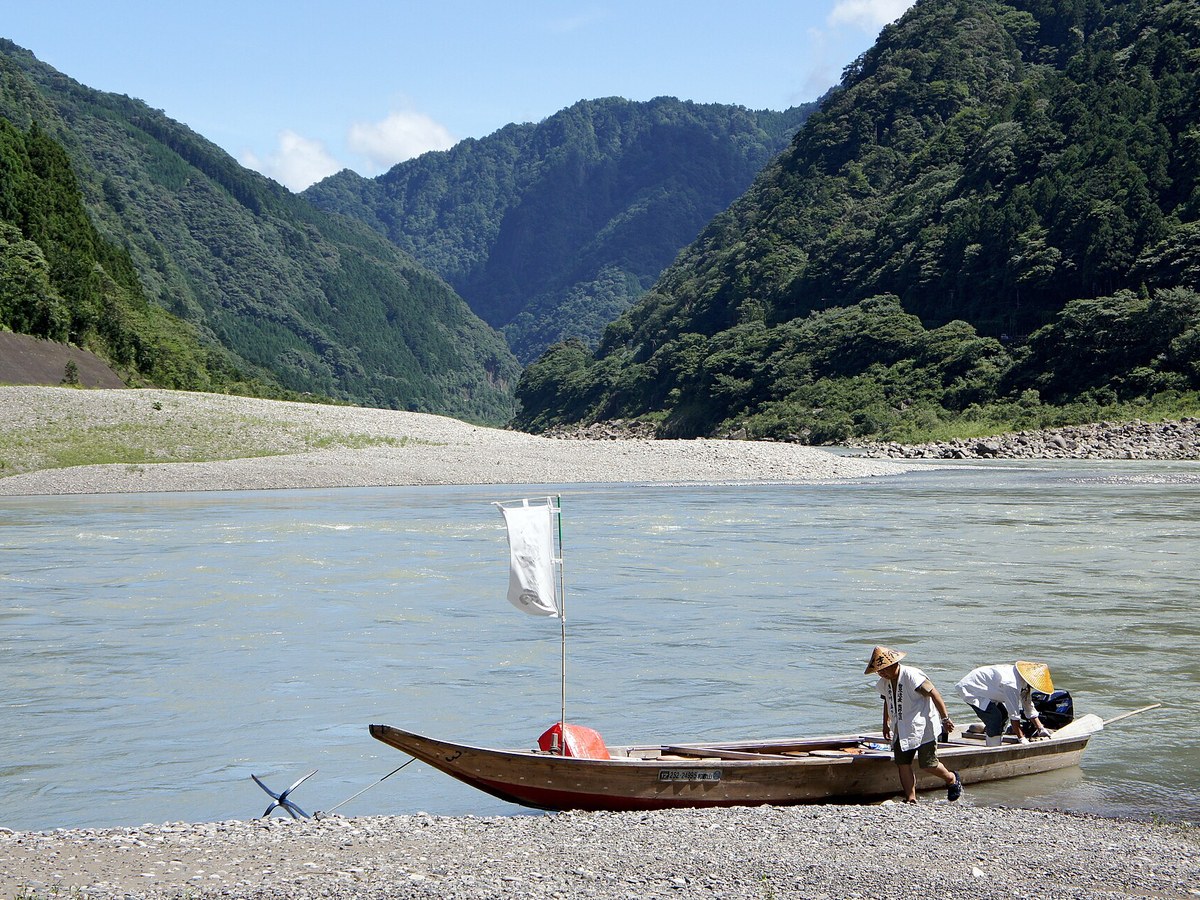
Geography explains the dish's borders. Mehari sushi belongs to the Nanki — the southern Wakayama of Shingu, Nachikatsuura and the Kumano coast — and to the mountain villages behind it; the Umami record notes it is also eaten across the prefectural line in the mountain villages of Mie and Nara, which is exactly the map a forestry lunch would draw. It was long familiar as the boxed meal sold at Shingu Station, the ekiben travellers met on the Kisei line, and it remains one of the first names on any list of Wakayama's own foods.
One house, made to order since 1962
For most of its life mehari sushi was home and worksite food; its commercial history has a name and a date. Sohonke Mehariya was founded in Shingu in 1962, and is known, on the directory record, for being the first to commercialize mehari-zushi — turning the mountain lunch into a shop's signature without changing its method. Its own published commitments read like a refusal to industrialise: ingredients from Wakayama, including the rice and fresh Wakayama-grown takana leaves; the lightly pickled takana and secret sauce kept to the method guarded since 1962; and no pre-making, in either shop — the Shingu main house, a sixteen-minute walk from Shingu Station, or the Wakayama City branch, five minutes from the station in front of which it stands.
The house has also solved the dish's one problem — that a warm, hand-formed ball does not travel — in the dish's own terms: alongside the shops it offers takeaway and mail-order products from its official site, so the freshly made taste can be had at home. The leaf, after all, was always the packaging.
Eating it in Shingu and Wakayama City
Eat it first where it was commercialised. Sohonke Mehariya's Shingu main house (5-6 Yakushimachi, Shingu City) serves the balls with set meals built around them — kushikatsu and oden alongside, on the restaurant's own account — and the GOOD LUCK TRIP listing puts a meal there in the ¥2,000–3,000 budget range; the Wakayama Station branch serves the same made-to-order balls for a city lunch. Order the plain form before the variations: warm rice, secret sauce, one whole leaf, eaten with the hands while the rice is still warm.
Beyond the two shops, mehari sushi is the Nanki's everyday souvenir — station boxes at Shingu, shop counters along the Kumano coast, and the maker's own mail order for everyone further away. It keeps its nature in every format: a lunch first and a delicacy second, which is why it has outlasted a century of fancier Wakayama foods.
Sources — checked 12 November 2026
- GOOD LUCK TRIP — Sohonke Mehariya Shingu Honten: what to eat, access, hours and price (checked 12 November 2026)
- Umami Information Center — Wakayama local cuisine: meharizushi (checked 12 November 2026)
- Sohonke Mehariya (official site) — the Shingu mehari sushi house, founded 1962 (checked 12 November 2026)
Original prose and official links only; no source text or maker media reproduced. Photos are credited Creative Commons works, not product photographs.
Editorial review 2026-11-12