Every wine country eventually writes its best valley into law. Yamanashi did it first in Japan: in July 2013 the National Tax Agency designated 'Yamanashi' as the country's first geographical indication for wine, and at the centre of the specification stands a grape found almost nowhere else — Koshu, pink-skinned, delicate, and grown in the valley that shares its ancient name.
A specification, not a slogan
Read the GI the way a customs officer would. To print 'Yamanashi' on a bottle, the National Tax Agency's specification requires the wine to be made solely from grapes harvested inside Yamanashi Prefecture, from a variety list that begins with Koshu — the prefecture's own grape, cultivated there since long ago, on the specification's wording — with the juice sugar at harvest at least 14% for Koshu. The wine must be produced in the prefecture, bottled in the prefecture in its shipping container, and confirmed by the GI's management commission, which sits at the Yamanashi Prefecture Wine Manufacturers' Association in Kofu.
The character the law protects is specific: Koshu wines with a rich aroma and a gentle spread of taste, the dry style carrying a fruity citrus scent and crisp acidity. That is a recognisable glass — pale, low in alcohol at about 11 to 12%, smelling of yuzu and white peach — and it is the opposite of an import imitation. Japan's first wine GI did not protect a copy of Bordeaux. It protected the local grape's own accent.
The grape that came down the Silk Road
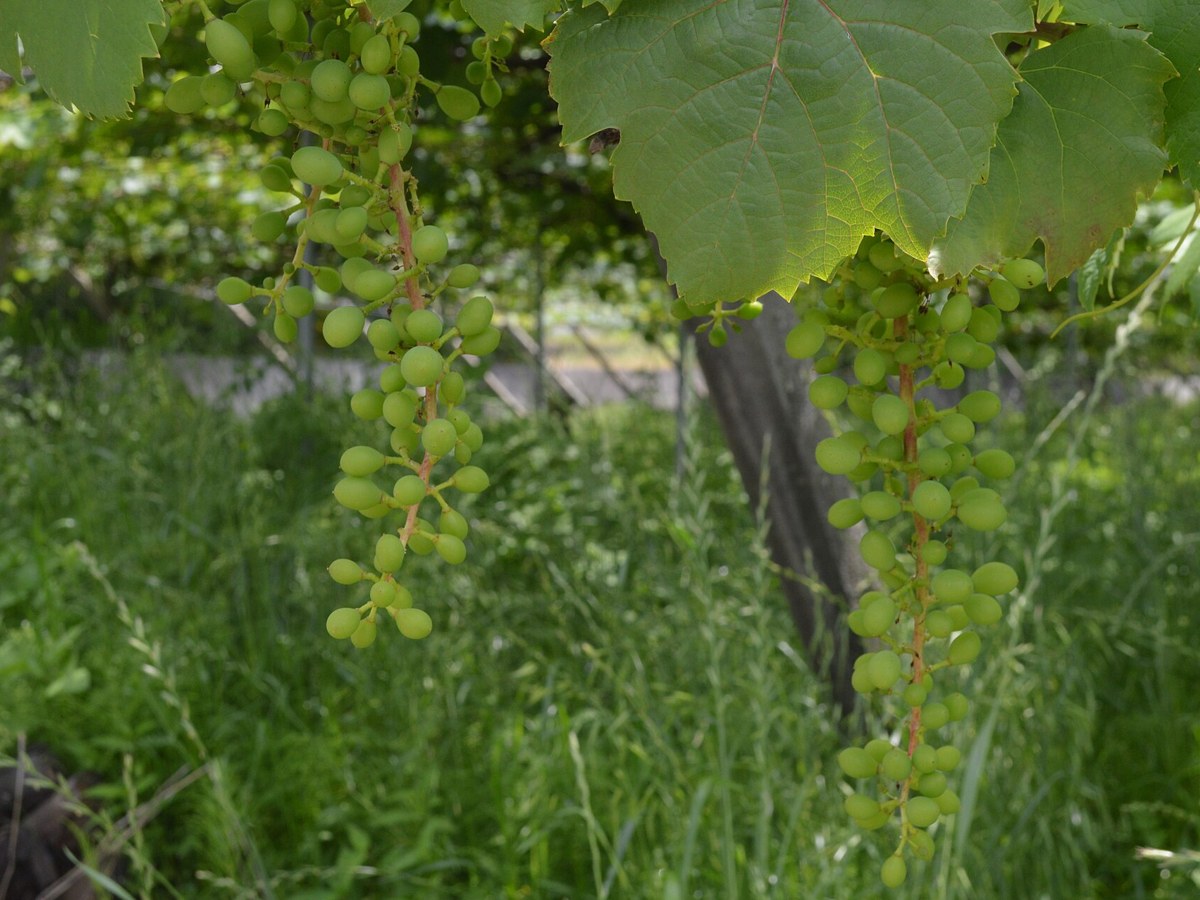
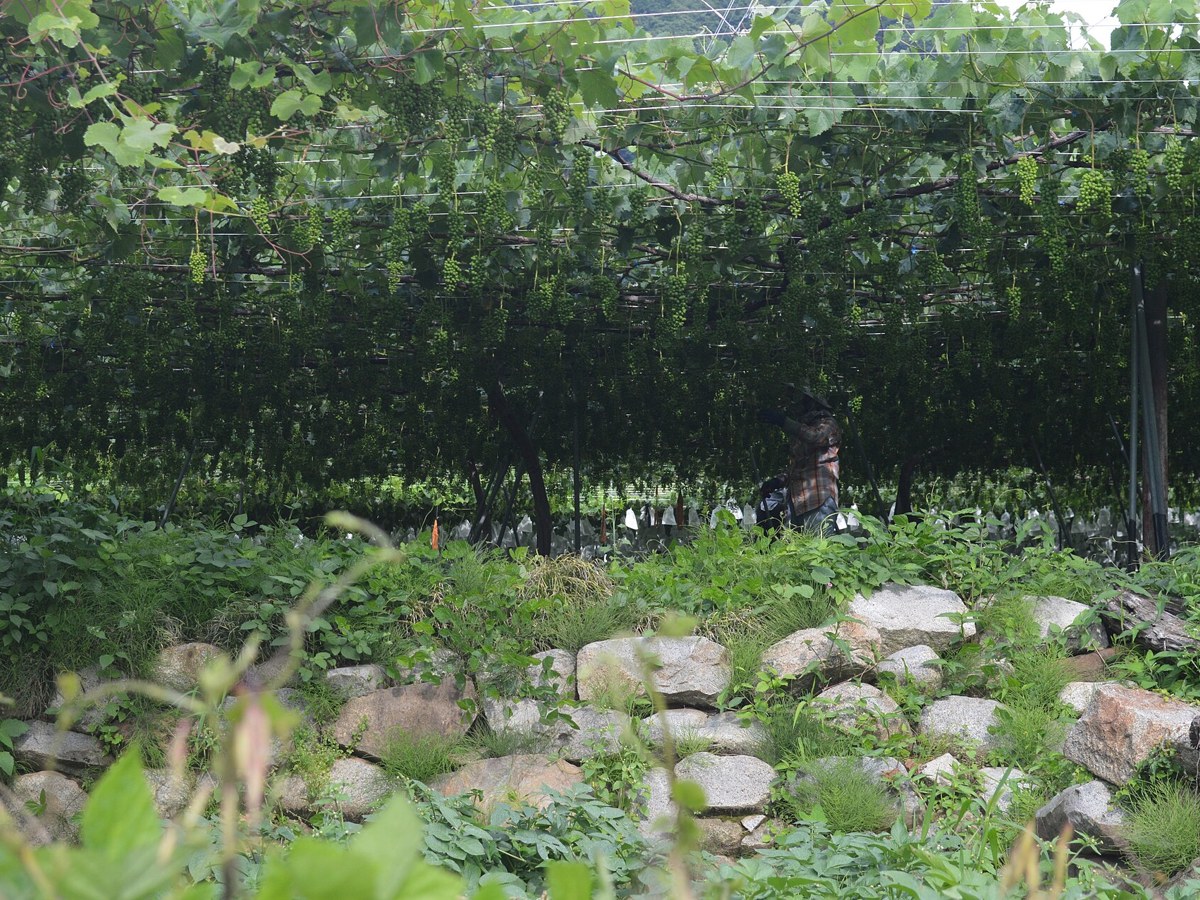
Koshu is a hybrid — mostly European Vitis vinifera crossed with East Asian wild vines, on the checked scientific accounts — that reached Japan along the Silk Road and found its home in the Koshu Valley, above all around Katsunuma in today's Koshu City. The prefecture now holds about 95% of Japan's Koshu plantings, turns out roughly 40% of the country's domestic wine and counts more than 80 wineries. In 2010 Koshu became the first Japanese variety entered on the OIV's international list, which is what lets the name travel on labels abroad.
The valley's modern house is Grace Wine: the Misawa family founded its Katsunuma winery in 1923, named the brand for the Three Graces in 1953, and in 2014 saw its Cuvée Misawa Akeno Koshu 2013 become the first Japanese wine to take a regional trophy and gold medal at the Decanter World Wine Awards. That arc — a protected valley, a listed grape, an international trophy — is why a Koshu bottle is a souvenir with paperwork.
What a bottle costs
Buy the variety pure first. Chateau Jun, a Koshu City winery founded in 1979 at Katsunuma, lists its Koshu 2025 — 100% Koshu, 750 ml — at ¥2,500 before tax on its maker's release, the bottle that took Silver and 91 points at the Decanter World Wine Awards 2026. At the everyday end, the food retailer Shinanoya's Koshu Nouveau 2026, made by Chateau Katsunuma from Yamanashi Koshu, sells at ¥1,990 (¥2,189 tax included) for 750 ml in a run of 840 bottles — a new-wine price for the valley's new vintage.
Yamanashi's standing stories in this collection are a kinako mochi and an iron-pot noodle stew — sweets and supper. Koshu wine gives the prefecture its glass: the drink the basin's cold mornings were, in the end, for. Serve it cold, with the seafood the specification itself notes the prefecture's winemakers quietly optimised for — their wines carry unusually low iron, so the fish course stays clean.
Yamanashi's shelf, poured
Set the bottle beside Yamanashi's two standing stories and the prefecture's table is complete in a new way. Shingen mochi is the warlord's sweet and hoto is the farmhouse's stew; Koshu wine is the valley's legal instrument — the one Yamanashi product whose name a national agency will defend bottle by bottle.
Read the back label before the front: look for the GI name and the Koshu variety, both Yamanashi-grown and Yamanashi-bottled. A ¥2,189 nouveau is the cheapest ticket into Japan's oldest wine law — and the valley has been ripening the grapes for it, on the checked accounts, for about a thousand years.
Sources — checked 10 November 2026
- National Tax Agency: Product Specification of Geographical Indication 'Yamanashi' (wine)
- National Tax Agency: Information on GIs protected in Japan
- Bloomberg via BusinessWorld: The best Japanese wine made from koshu grapes (checked account)
- Chateau Jun maker's release: Koshu 2025 Decanter award and price (via Mapion news release)
- Shinanoya release: Koshu Nouveau 2026 by Chateau Katsunuma (via Gourmet Press)
Original prose and official links only; no source text or maker media reproduced. Photos are credited Creative Commons works, not product photographs.
Editorial review 2026-11-10