Karamen is not ramen, and Nobeoka will correct you if you call it that. Miyazaki's spicy noodle soup was born in the city's grilled-meat restaurants — a late-night improvisation of chilli, garlic, minced pork, garlic chives and beaten egg over springy noodles that contain no konjac despite being called konjac noodles. You order it by a number: heat 0 is a plain noodle soup, heat 5 is the people's choice, and somewhere past 25 the bowl becomes a dare. This is the story of Miyazaki's red soul food.
A grill-shop noodle, not a ramen
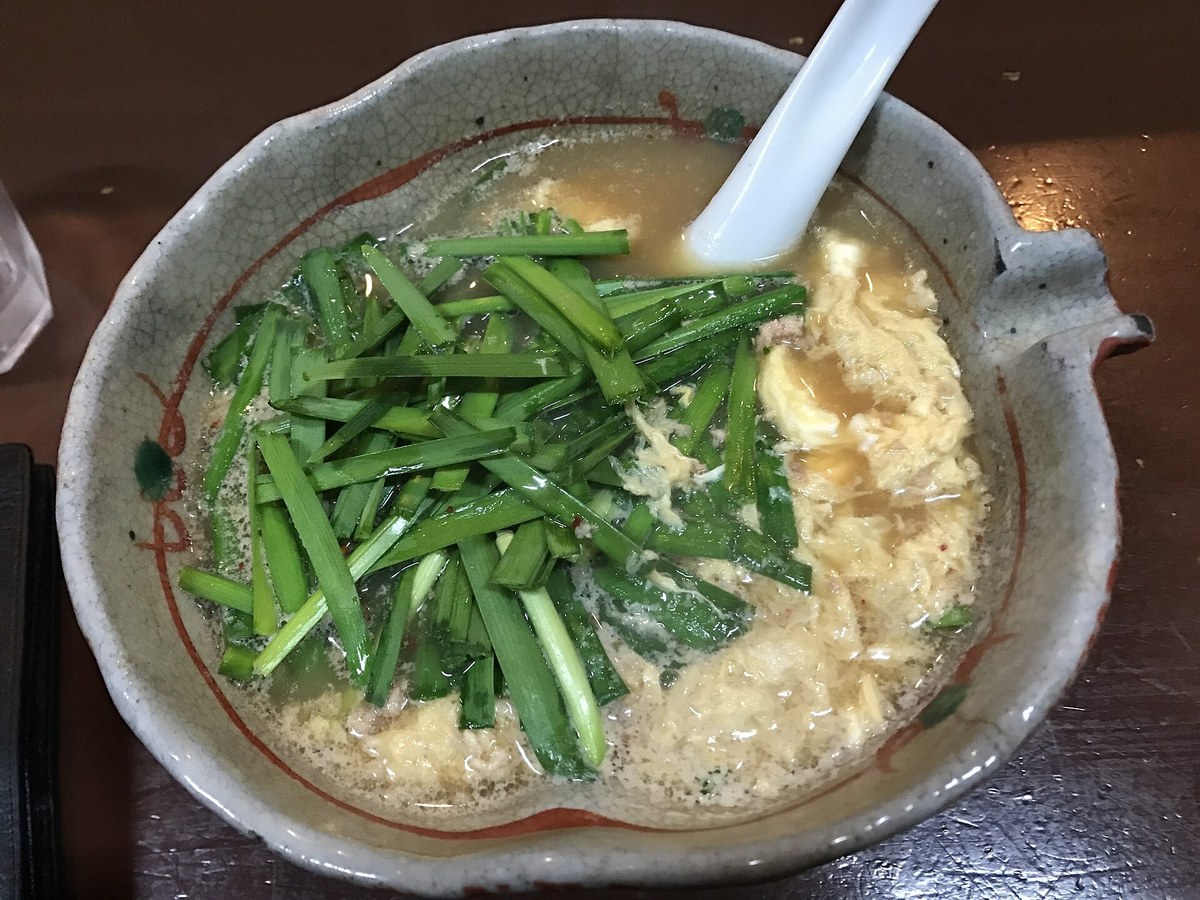
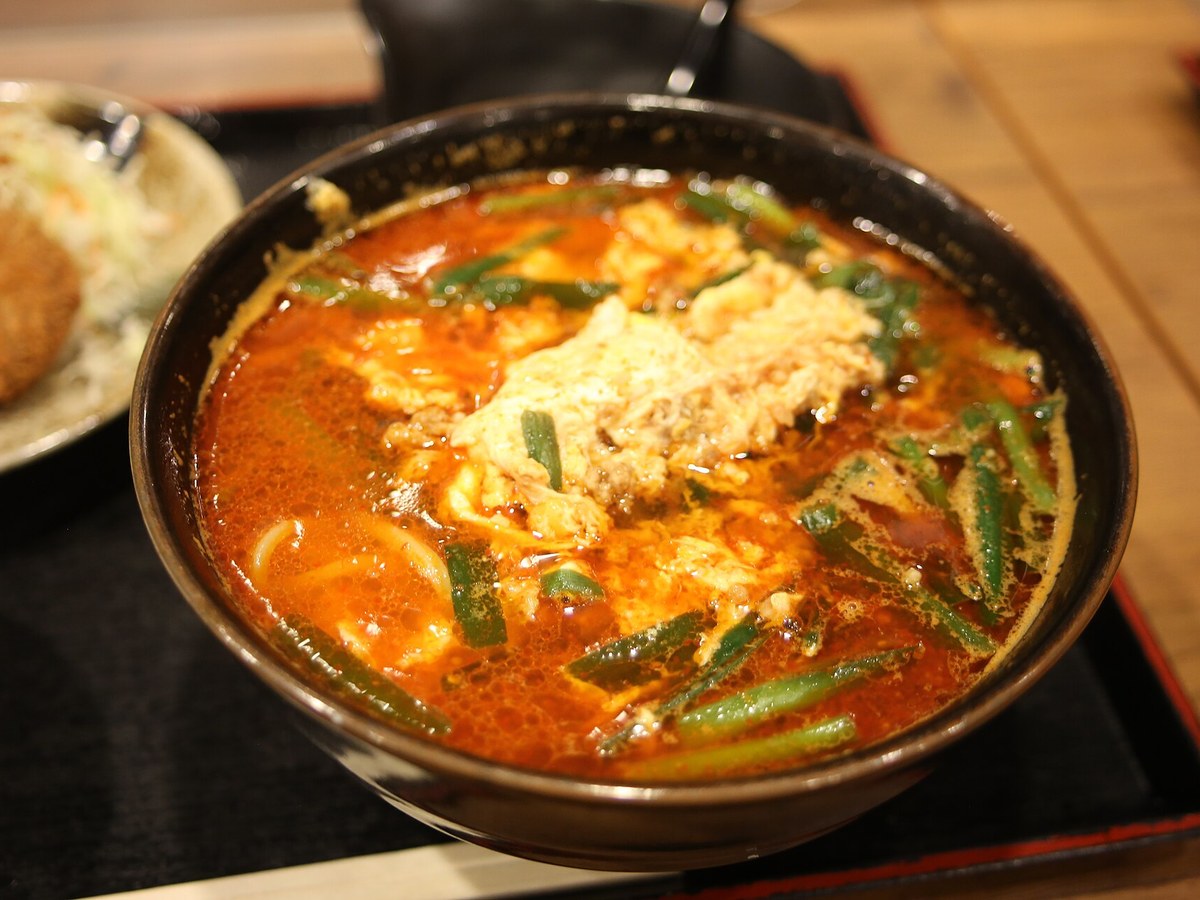
Karamen is Nobeoka's chilli-and-garlic noodle soup: minced pork, a mountain of garlic chives, egg swirled through the broth, a heat level you choose by number, and noodles that are usually made in the springy konjac style (Soul Food in Japan, 26 September 2026). The broth is red and clear rather than thick — no cloudy pork richness, no emulsified fat — closer to a hot-pot liquor than to any ramen soup.
That is because it did not come down a ramen lineage. Karamen was born in the back half of the last century in Nobeoka, a port and factory city on Miyazaki's northern coast, in the world of small grilled-meat restaurants — the kind of shop where somebody is always improvising a late-night noodle for the staff and the regulars. The garlic, the chilli, the minced pork, the egg: these are yakiniku-shop instincts applied to soup, and Nobeoka, having invented it more or less by accident, found itself with a signature.
1987: an izakaya side menu becomes a chain
The dish has a named birthplace. Karamen began in 1987 as a side menu at the izakaya Masumoto in Nobeoka, and the company — still headquartered in Nobeoka — is known across Japan as ganso karamen, the originator (Masumoto record, updated 5 November 2026). The Masumoto formula is fixed: a soy-sauce-based soup, a unique blend of minced meat, garlic, egg and chives, and a heat that is dialled bowl by bowl.
From Nobeoka the shops spread across Miyazaki and then, by franchise, across Japan — Miyazaki City's drinking district drinks to karamen as its closing bowl, and independent houses such as Kochiya in the Nishitachi quarter defend their own versions. But the range of shops that lets you understand the dish properly is still in Nobeoka itself, where small independent noodle shops around the city centre are its heart (Soul Food in Japan).
Konjac noodles with no konjac, heat by numbers
The standard noodles are called konjac noodles — konnyaku men — and contain no konjac at all. They are a unique noodle made mainly from buckwheat flour and wheat flour, with a translucent, springy bite so like konjac that the nickname became the name (Masumoto product record). They carry dietary fibre, stretch less than wheat noodles in the hot broth, and suit the soup's other fixed points: about five cloves of garlic go into one Masumoto serving, and the nira chives come from Miyazaki and Kumamoto.
Heat is the ordering ritual. The scale is each shop's own — a 5 in one place is not a 5 in another — but at Masumoto the ladder is printed with prices: the Ganso karamen, regular size, costs 1,020 yen at heat 0, 1,080 yen at heats 1–5, 1,140 yen at 6–10, 1,200 yen at 11–15 and up to 1,380 yen at heats 26–30, all including tax; small bowls start at 880 yen, and tomato, white, miso and curry versions start at 1,160 yen (price table read November 2026). A take-home instant version of Masumoto karamen (166 g) sells for 584 yen including tax. First visit: heat 3 to 5, konjac noodles, and a side of the shop's melting pork cartilage if it is offered.
Why karamen is Miyazaki-only
Spicy noodle soups exist across Asia, and karamen shops now trade in Tokyo and Osaka. But the codified dish — the clear red soy-based broth, the buckwheat-wheat konjac noodle, the five-clove garlic load, the numbered heat ladder and the grill-shop cast of pork, egg and nira — was assembled in Nobeoka's yakiniku restaurants and named there, and Miyazaki is still the only prefecture where it is a default late-night order rather than an import.
It is also the rare soul food with no ancient pedigree, and proud of it: no feudal lord, no temple, no hundred-year scroll — a side menu from 1987 that a factory city liked so much it became a prefecture's signature. Karamen's history is short enough to have a living inventor and long enough to have a hometown.
Sources — checked 13 November 2026
- Soul Food in Japan — Karamen: Nobeoka's chilli-and-garlic noodle soup (published 26 September 2026)
- McKee Blog — Karamenya Masumoto Chuo-dori: Ganso karamen and price table (updated 5 November 2026)
Checked 13 November 2026 (stored links re-fetched and judged per product): reserved where the page says so, with an editorial review note kept per product. Press, PR and travel use stays outside the grant.
Editorial review 2026-11-13