A mango, in Miyazaki, can fail. The prefecture grows fine Irwin mangoes by the greenhouse-full, but its famous name is reserved for the fruit that clears four hurdles at once — sweetness, weight, colour, looks — after ripening on the tree until it chooses its own harvest day. It gives Miyazaki, cheese sweets and chicken so far, its third story: the Egg of the Sun.
A brand, not a variety
Start with what the name is not. Taiyo no Tamago — Egg of the Sun — is not a cultivar. The fruit is the Irwin mango, the red-skinned 'apple mango' grown in Miyazaki's greenhouses; 'Miyazaki mango' means any mango grown in the prefecture, while Taiyo no Tamago is the premium brand that only the top fruit may carry. The brand belongs to JA Miyazaki, the prefecture's farm cooperative, and its economic federation, JA Miyazaki Keizairen, certifies each fruit; the name itself is trademarked.
The industry is startlingly young for a national luxury. Trial cultivation of mangoes began in Miyazaki only around 1984, and by 1987 the growers had perfected the harvest method that defines the brand; the name was later chosen with public input. Within one working lifetime, a prefecture that had never grown a mango built the most famous mango label in Japan — not by finding an old variety, but by writing a strict standard and keeping it.
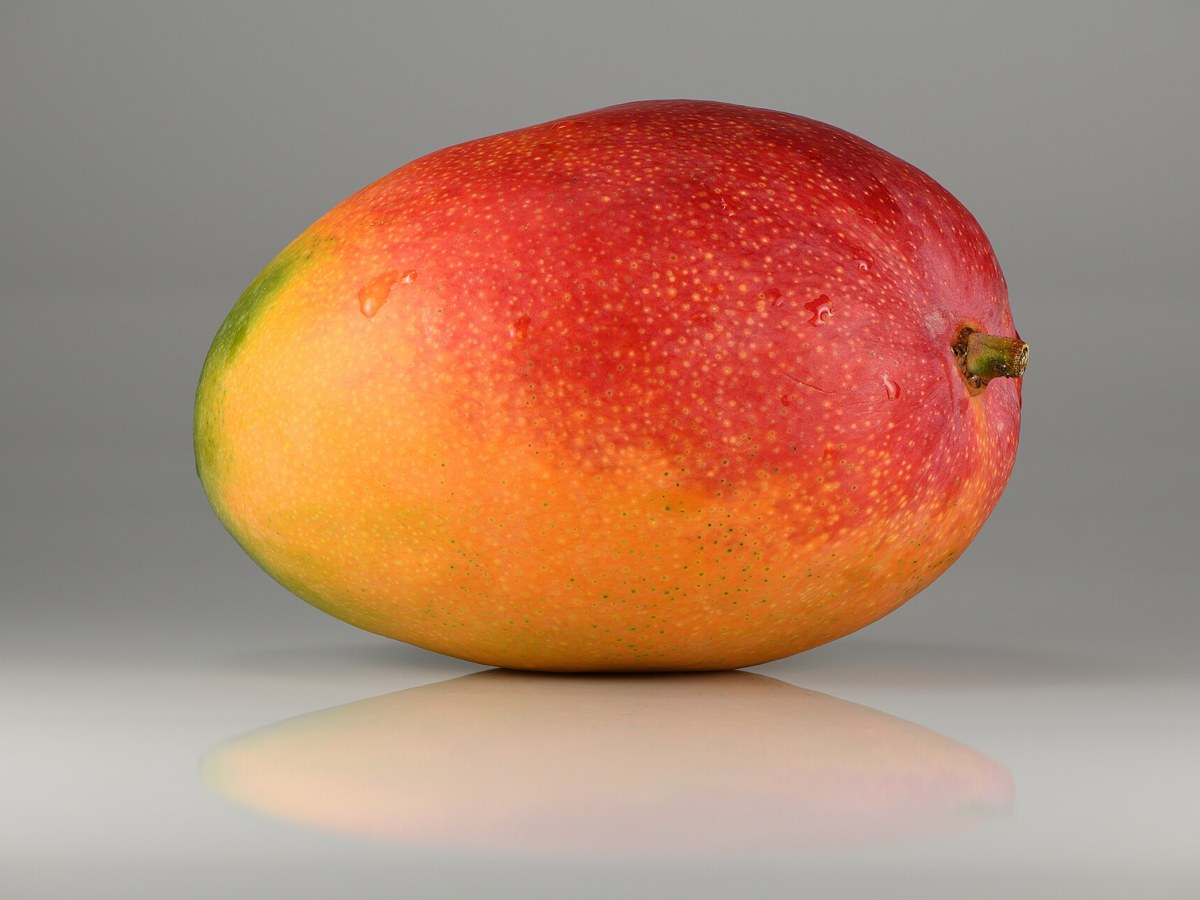
Fifteen Brix, three hundred and fifty grams, half red
The standard fits on an index card, and JA tests every single fruit against it. Sugar content: 15 degrees Brix or higher — against the 10 to 12 of an ordinary sweet fruit. Weight: at least 350 grams, which is size 2L or larger. Skin: a deep, glossy red covering at least half the surface. And the whole fruit must be flawless in shape and appearance. Fruit that passes on every count earns the name; the federation's own reporting of the same criteria — weight, high sugar, and the red coverage — is what the auction houses quote when the season opens.
Inside the brand there are two grades: AA, carrying the red label, is the highest, chosen for especially strong colour and presentation; A, with the blue label, is the next — and both meet the full Taiyo no Tamago standard. The scarcity is structural: only a limited share of the prefecture's mangoes can clear a bar set at the top of size, sweetness and looks simultaneously, and the graders are not allowed to be kind.
The fruit that harvests itself
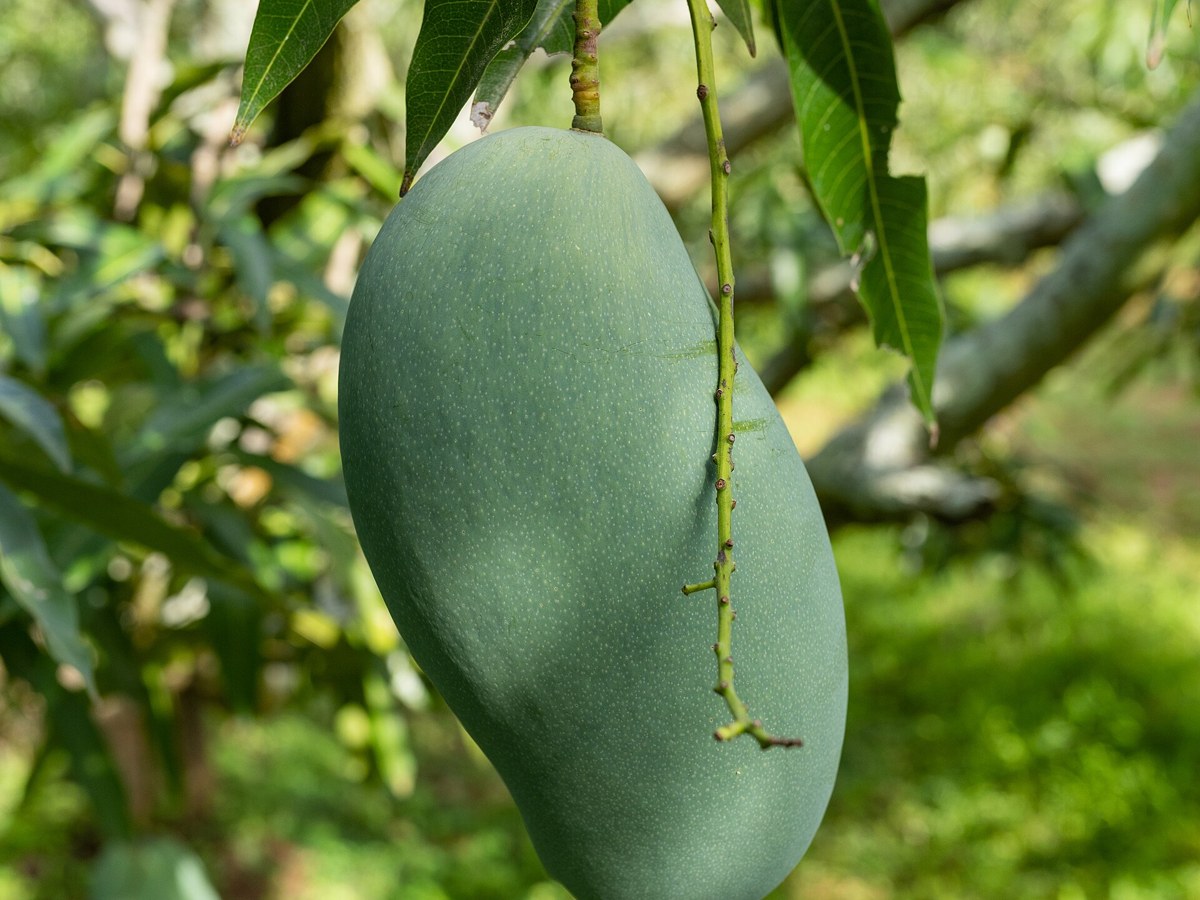
The method is the brand's poetry and its cost base in one. A Taiyo no Tamago mango is never picked early and never cut from the branch. As each fruit ripens on the tree, a small net is tied around it; the mango swells, colours and sweetens in the greenhouse sun until, perfectly ripe, it lets go — and the net catches it. The fruit picks its own moment, arrives fully ripe with no home ripening needed, and cannot be hurried by a harvest calendar.
That patience is why the supply behaves as it does. Shipments run mainly from April into the summer, with the peak in the early-summer gift season; each fruit's timing is its own, quantities stay limited, and the best fruit sells quickly when it appears. A mango that decides its own birthday is never going to be a bulk commodity.
Several thousand yen a fruit, half a million a pair
At retail, the honest anchor is restraint itself: a single Taiyo no Tamago costs several thousand yen, and premium gift boxes cost considerably more — the fruit appears at high-end department stores and fruit specialists, packed as a luxury gift rather than sold as everyday produce. It is bought to be given: for celebrations, for thanks, as the summer present whose box announces its price band before it is opened.
Above retail sits the theatre. At the season's ceremonial first auctions, pairs of top-grade fruit have fetched hundreds of thousands of yen — the record stands at 500,000 yen for a pair, set in the 2019 season on the Miyazaki federation's own reporting. Those prices are symbolic, as the brand's own accounts say plainly; they advertise the standard, and the standard is the story. In season, in Miyazaki or at a department store's fruit counter, look for the label and the grade sticker: red AA or blue A, on a fruit heavy in the hand and red over half its skin, already ripe and ready to eat.
Sources — checked 10 November 2026
- Food in Japan: Taiyo no Tamago — Miyazaki's Egg of the Sun Mango
- Fruitnet (Japan Today): Mangoes sell for record US$4,500
- Specialty Produce: Miyazaki Mangoes — information and facts
Original prose and official links only; no source text or maker media reproduced. Photos are credited Creative Commons works, not product photographs.
Editorial review 2026-11-10