Katsumeshi is yoshoku restructured around chopsticks: rice on a flat plate, a beef cutlet laid over it, a demi-glace-style tare poured on top and boiled cabbage at the side — no knife, no fork, no ceremony. Kakogawa invented it in 1947, and the dish stayed so local that it barely exists outside the city and its Higashi-Harima neighbours.
One plate short, one dish born
The founding account is a shortage. Just after the war, in 1947, Iroha Shokudo — a diner in Teraya-cho in the old Kakogawa town — began serving beef cutlet the new way: when plates ran short, rice, the cutlet and its tare went onto a single flat plate together. The expedient turned out to be the concept.
The concept, as the record carries it, was deliberate even if the trigger was not: “a yoshoku you can eat casually with chopsticks.” Western food without western tableware — the cutlet pre-cut, the sauce already on, the cabbage boiled and waiting. Katsumeshi is eaten with chopsticks as a matter of course; a spoon is the rarity.
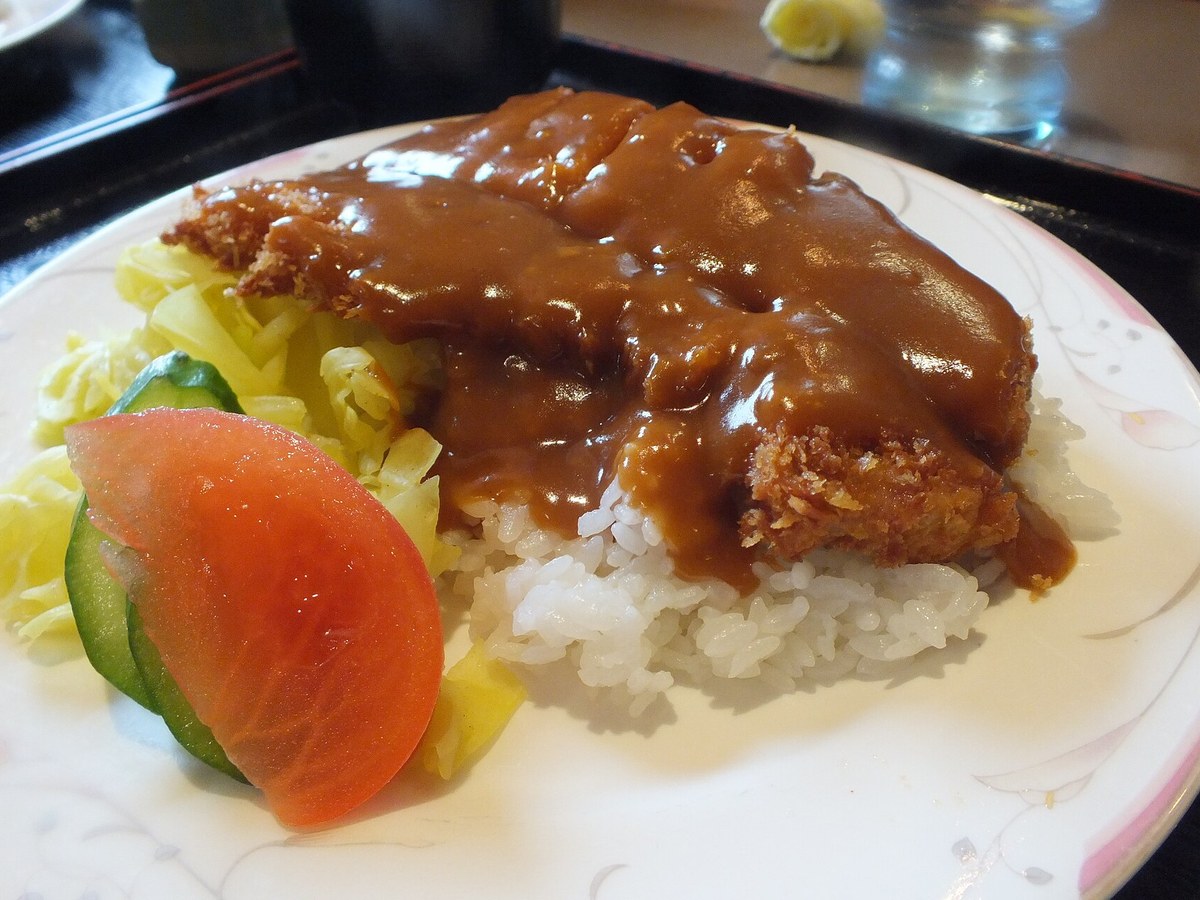
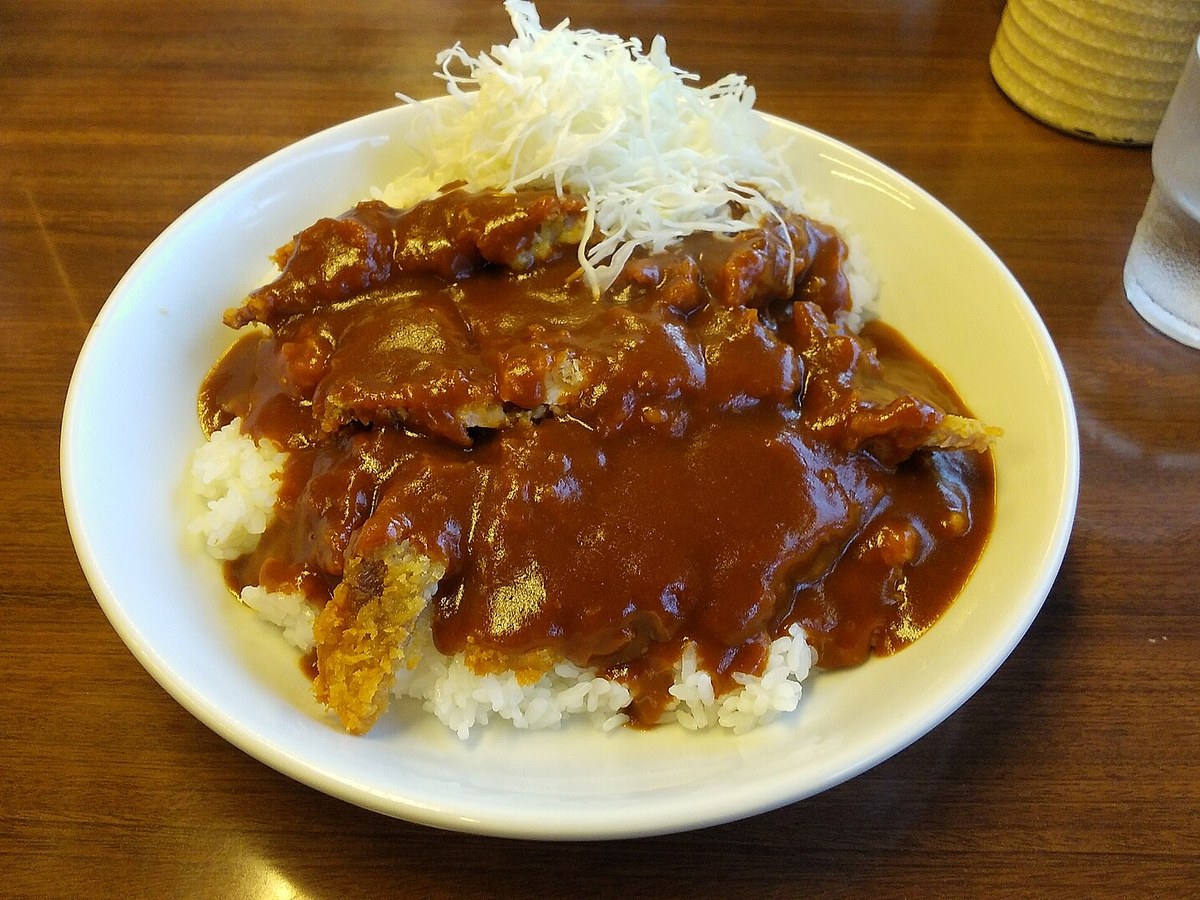
Tare-led or katsu-led: one dish, two poles
The plate’s grammar is fixed — flat plate, white rice, cutlet, tare, boiled cabbage — but its balance is each shop’s argument. At the original pole the tare leads: a thin, pounded beef cutlet under a generous flood of reddish demi-glace-style sauce, sweet-savoury with onions cooked in, a plate closer to katsu-hayashi. At the modern pole the cutlet leads: thick meat, a darker, tonkatsu-sauce-leaning tare in smaller measure.
The cutlet itself is beef by definition in the home city — bifukatsu — with pork versions standing as the accepted variant. Every other element can be argued; the plate, the chopsticks and Kakogawa cannot.
A dish that stayed home
Katsumeshi spread the way diner food spreads — through the city’s shokudo and kissaten until specialty shops appeared — and then, unusually, it stopped. Outside Kakogawa and its Higashi-Harima neighbours Takasago, Harima and Inami, almost no shop serves it; even in Himeji, in the same old Harima province, it is rare, and Kobe holds only a few outposts.
At home it never stopped being fed to the city: katsumeshi appears in Kakogawa’s school lunches and high-school cafeterias, its promotion leagues publish maps of the serving shops, and the dish has its own mascots, Kattsun and Demi-chan, made in 2008. Old city-centre houses have closed for want of successors; new suburban shops keep opening. The dish’s range is a few kilometres; its roots are the whole city.
Eating it with chopsticks
Order it where the tare is the house’s secret — every katsumeshi shop guards its own blend, Worcestershire and ketchup and consommé at the base, wine or sake in the reduction. The current top end shows where the plate can go: at Kakoichi, opened in August 2026, the local press records a katsumeshi at ¥1,500 including tax — a wagyu mille-feuille cutlet under a tare rebuilt over three years to recreate the owner’s mother’s plate.
The diner plates of the old shops are the reference form, and cheaper; the wagyu version is the dish dressed for a celebration. Either way, pick up the chopsticks. A spoon would miss the point of 1947.
Sources — checked 14 November 2026
- Katsumeshi — encyclopedia record (1947 Iroha Shokudo, the plate, the narrow range)
- Kiss PRESS — Kakoichi, Kakogawa: the mother’s-taste katsumeshi (menu record)
Checked 14 November 2026 (stored links re-fetched and judged per product): reserved where the page says so, with an editorial review note kept per product. Press, PR and travel use stays outside the grant.
Editorial review 2026-11-14