An onion you can eat raw like an apple, from an island that has grown almost nothing else so willingly for 130 years. Awaji Island onions are measured, not just praised: pungency at most sixty percent of other regions, sugar three to four points higher, and a softness the prefecture’s researchers call overwhelming. The secret is partly the seabed soil and sea wind — and partly a building found nowhere else, the onion shed, where the harvest hangs and sweetens in the breeze.
Sweetness you can measure
Hyogo Prefecture’s agricultural record does not deal in adjectives; it deals in numbers. The pungency marker in an Awaji Island onion — its pyruvic acid content — is at most about 60 percent of other producing regions’ onions. Its total sugar when sautéed runs about 9 to 10 percent, some three to four points higher than other onions. And on the third measure, softness, the prefecture’s researchers found the island onion overwhelmingly softer than its rivals. Sweet, mild and tender is not a slogan on Awaji; it is a lab result.
The calendar behind the numbers is long. Seed is sown in September, the seedlings are transplanted into the rice fields in November and December, and the crop sits through the winter, swelling slowly as the temperatures swing, until the leaves fall naturally and the necks close in May and June. Eight to nine months in the ground is the first ingredient; what happens after harvest is the second.
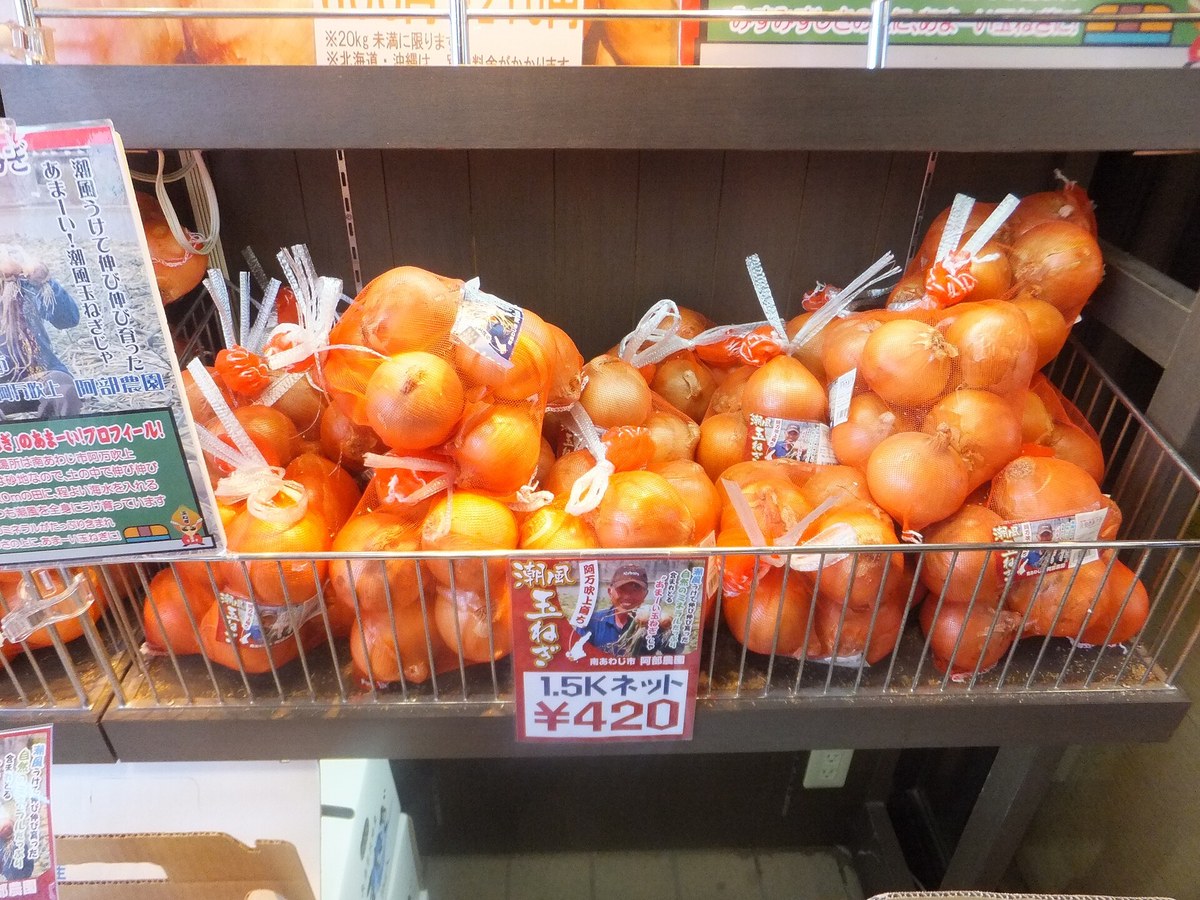
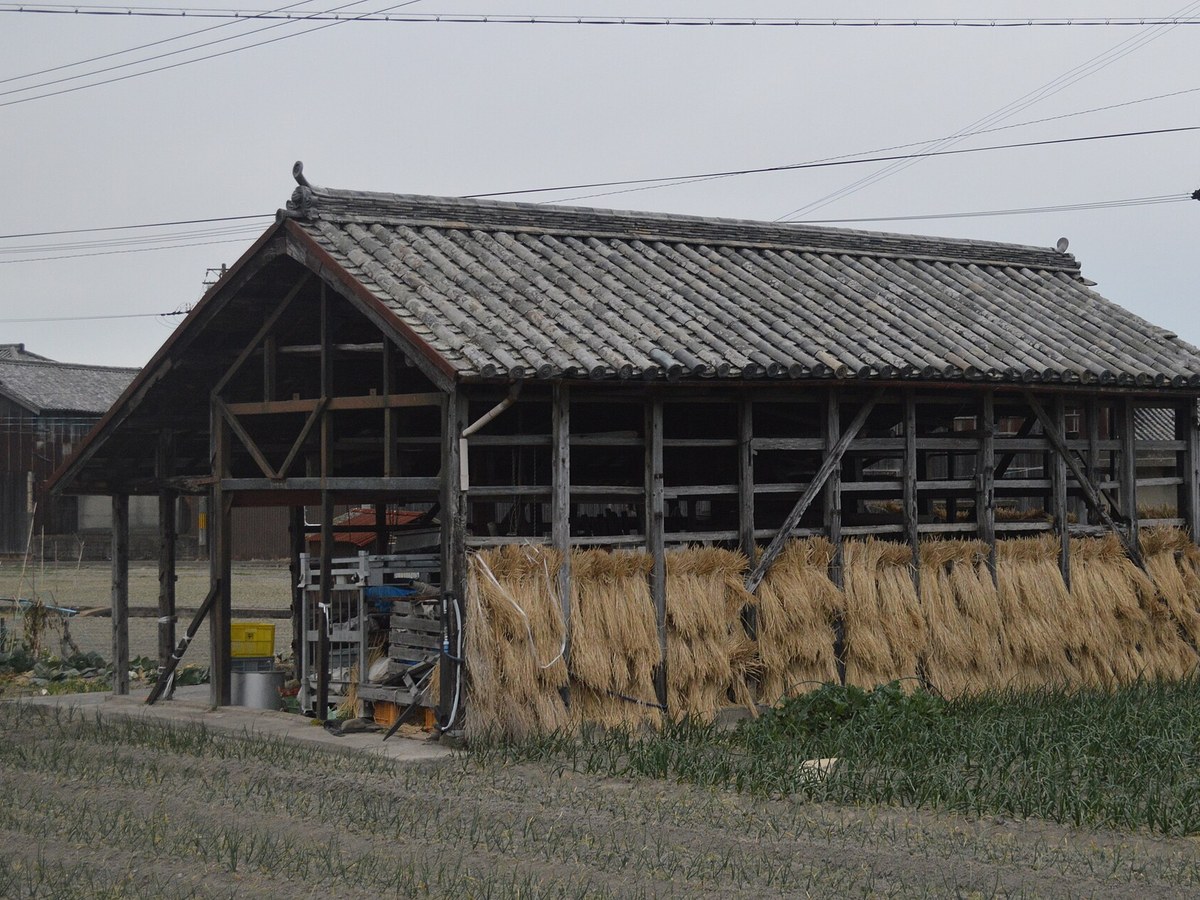
The onion shed
Part of the harvest ships at once. The rest goes into the structure that makes the Awaji onion itself: the tamanegi-goya, the onion shed — an open-sided storehouse where the onions are hung in bunches and dried slowly in the natural wind. The prefecture’s record credits the shed with deepening both the sweetness and the gloss of the skins: as the onions rest, starch converts and the flavour concentrates. The sheds, strung with hanging onions through the summer, are the island’s signature farm building.
Under the crop is an older rotation. Onions on Awaji are grown as the second crop after rice, in fields fed with cow manure from the island’s dairy farms, on soil that rose from the seabed and is rich in marine minerals. Cultivation began about 130 years ago, around 1890, and the island — mild at an average 16 degrees, with long daylight — became one of Japan’s leading onion regions on the strength of that system.
Brands on top of the island name
Within the island name, growers now run brands of their own. The Michi-no-eki Awaji roadside station sells its own limited brand, Goshikihama Gold: a mid-season onion grown in the sea breeze of Goshikihama on the west coast, fed with an organic fertiliser made from the island’s chirimen baby sardines, field-dried for about a week to ten days after harvest, and measured at 11.2 degrees of sugar against a typical onion’s five to seven. Its dated record is exact: 2 kilograms for 750 yen including tax, on sale from 15 July 2026 at the station’s official online shop.
The island sells the onion every way it can be carried: netted bulbs at roadside stations and farm shops, the famous onion soup, and harvest experiences at farms such as Hamada Farm in Minamiawaji, where visitors pull their own net of onions from the Mihara Plain fields and learn the rotation from the grower. Order the island’s burger and the onion arrives as a thick fried cutlet; order the soup and it arrives from a tap.
Why the Awaji onion belongs to one island
Onions are grown across Japan, and sweet onions are bred in several regions. The article documented here is defined by a chain that exists in one place only: an island of seabed soil and marine minerals, a rice-and-onion rotation fed by dairy manure, a nine-month season, and a drying building — the onion shed — that belongs to Awaji’s farmscape and finishes the crop’s sweetness after harvest. The prefecture’s measurements are the receipt: this combination produces numbers other regions’ onions do not reach.
It helps that the island committed. Awaji did not dabble in onions; it built its farm economy, its roadside stations, its soups and burgers and brands around the bulb, for a hundred and thirty years. The onion on the shelf is the end of that whole system, not just a vegetable with a postcode.
Sources — checked 13 November 2026
- Hyogo Prefecture — Awaji Island onion (growing calendar, onion sheds, measured sweetness)
- KKday — Awaji Island onion harvesting experience, Hamada Farm, Minamiawaji
- Mapion News (@Press release) — Michi-no-eki Awaji official shop: Goshikihama Gold onions on sale
Checked 13 November 2026 (stored links re-fetched and judged per product): reserved where the page says so, with an editorial review note kept per product. Press, PR and travel use stays outside the grant.
Editorial review 2026-11-13