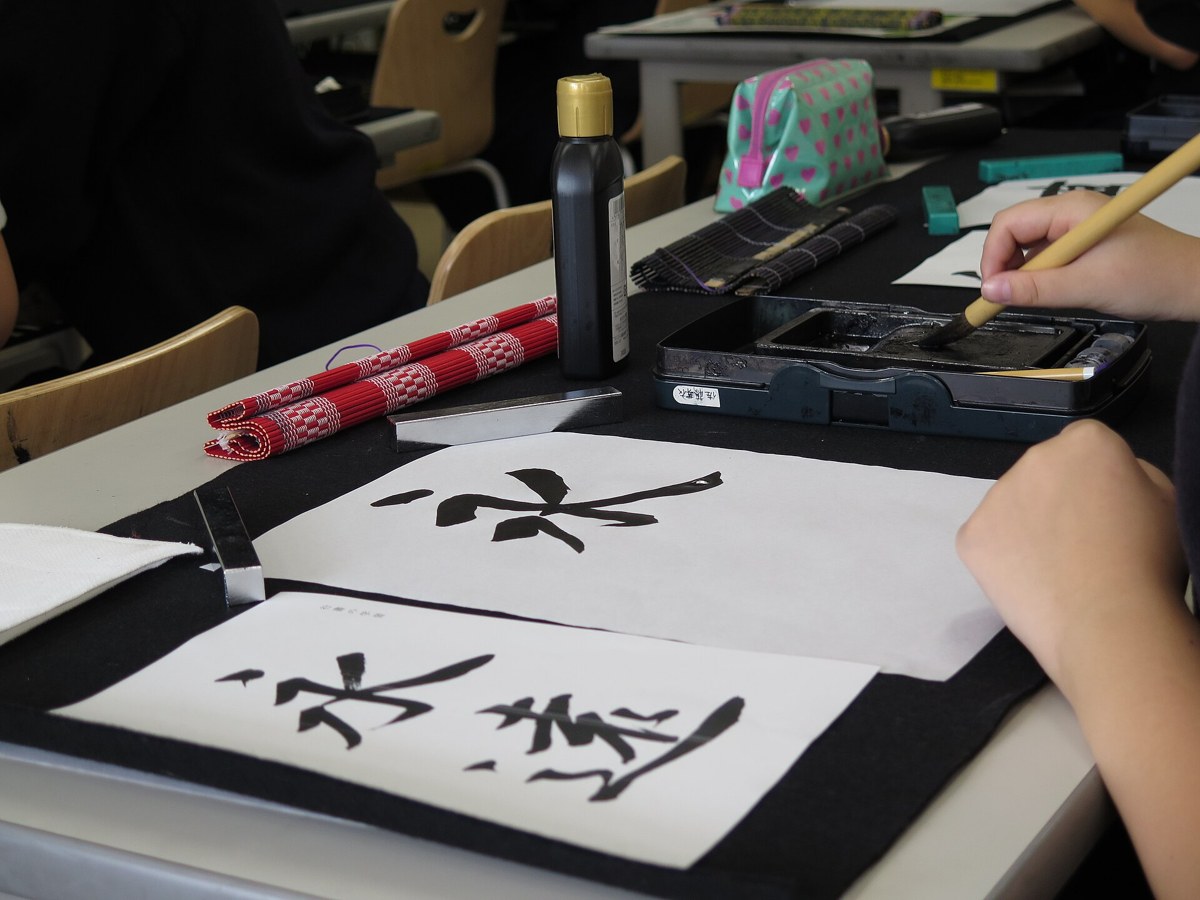
Some papers are judged by whiteness; this one is judged by how ink misbehaves on it. Tottori's fifth story is Inshu washi — the paper of Aoya and Saji, in the former Inaba province, carrying twelve centuries of records and the majority of Japan's calligraphy paper, because its fibres are tuned to give sumi ink its shading, bleed and blend.
Paper in the Shosoin, paper for the court
Tottori Prefecture's own history of the paper starts in the treasure house: an eighth-century document preserved in the Shosoin repository carries the seal of Inaba province, and the Engishiki, compiled between 905 and 927, records paper from Inaba presented to the Imperial court. The prefecture counts the history at more than 1,200 years — older than most of the crafts in this collection by half a millennium.
The province protected its raw material early. Around 1600 the lord Kamei Korenori, ruling the Shikano area, issued edicts protecting the mulberry and gampi trees the paper is made from — the prefecture quotes his ruling that these trees must not be cut — and in the Edo period production ran as a protected trade under the kamiza, the paper guild. The Web Japan Atlas places the modern industry at Aoya Town and Saji Village, both now inside Tottori City, and ranks its output second in all Japan only to Echizen.
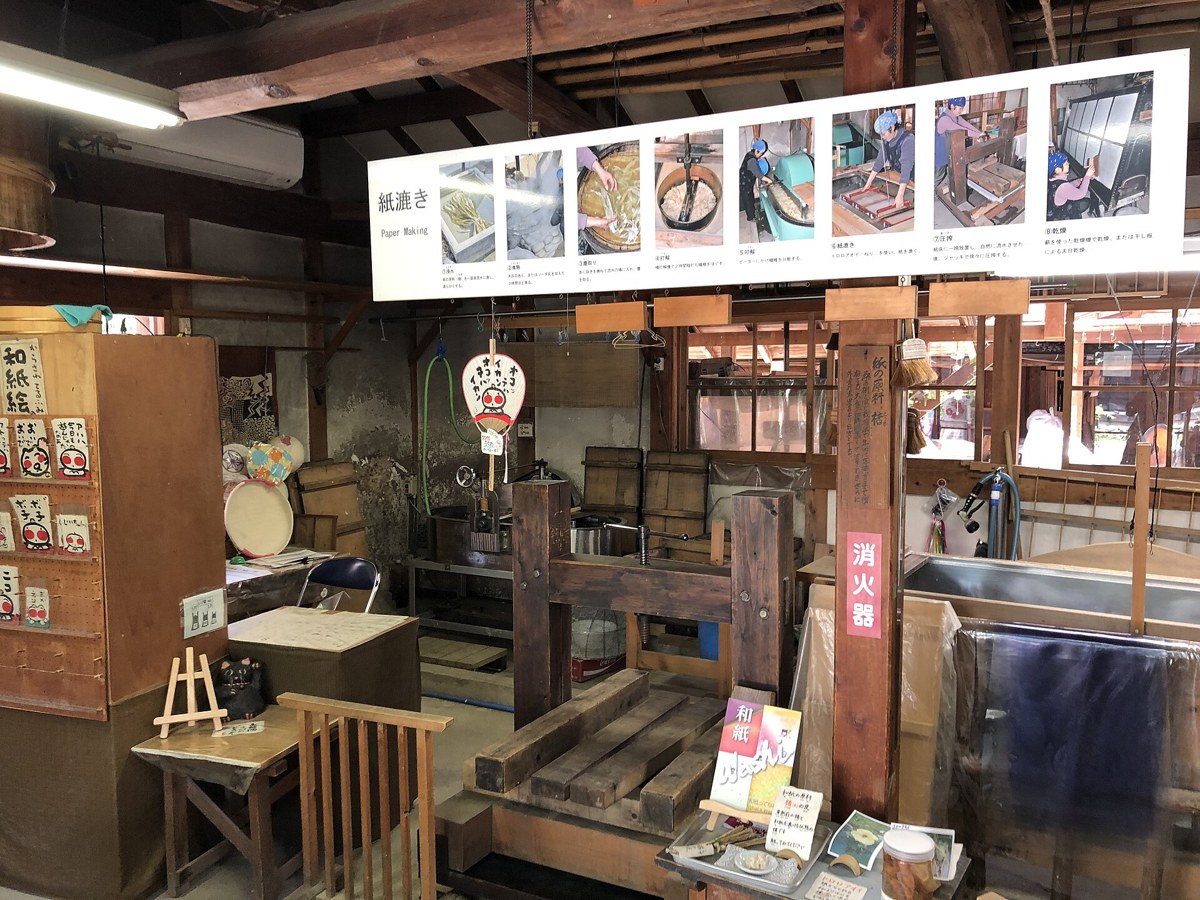
Bark, stomped and scraped — skin and all
Inshu's sheet begins with three fibres — paper mulberry, mitsumata and gampi — steamed so the bark slips free. The prefecture's account follows the bark through two named workings: kagofumi, stomping the bark pieces to soften the inner fibres, and kagonade, scraping away the damaged sections and knots with a knife's edge. Then comes the local signature: where most washi uses only the inner bark, Inshu characteristically uses the greenish epidermis as well, and the difference is in the sheet's texture and strength.
In the vat, the pulp is loosened in the sukifune and mixed with sana — the Inshu word for the mucilage drawn from tororo-aoi roots — which keeps the fibres evenly suspended while the sugeta frame scoops and rocks the sheet into being. For calligraphy paper the recipe is a tuned blend: mulberry, paperbush, gampi and also straw, cogongrass, bamboo and wood fibre, mixed, in the prefecture's words, to showcase the varied richness of ink through shading, bleeding and blending.
First designated, and biggest where it counts
The Atlas records the formal standing: Inshu washi was designated a Traditional Craft in 1975 by the Ministry of International Trade and Industry, and it was one of the first products in Japan to receive the designation. By then the industry had already survived one reinvention — Meiji-era mechanisation had multiplied its workshops from about five hundred to more than thirteen hundred, and its promoter Fusayasu Kihachi had taken an award at the Paris World Exposition of 1900.
The second reinvention is the one that defines it now. When office machines and new lifestyles destroyed the market for thin office paper and shoji paper after the war, Inshu's makers shifted to calligraphy, craft and dyed papers. On prefectural accounts, Inshu gasen-shi — the paper for calligraphy and ink painting — now accounts for sixty to seventy per cent of national output, the largest share in Japan: the second-biggest washi country became the biggest in the category that matters most.
The Aoya studio, and a pad for the post
The paper's front door is the Aoya Washi Studio at 313 Yamane, Aoya-cho, Tottori City — the public workshop the prefecture describes, with its exhibitions of Inshu applications, including the Akari-ten lighting show, and hands-on work such as making a washi lampshade. The Tottori Tourism Guide gives the practical shape of a visit: open nine to five, closed Mondays, entry free, exhibition admission a few hundred yen, and paper-making experience from 300 yen.
Away from Aoya, the paper reaches most hands as stationery. Maruman's art-paper postcard pad S139C is made from Inshu gasen-shi formed in Tottori — fifteen postcard-size sheets, chosen, the product record says, from Inshu's range for the way it takes sumi: absorbing well, bleeding just enough. It is the designation of 1975 sold as a pad of postcards, and the cheapest way in this collection to write on a Traditional Craft. The same fibre travels further from the desk, too: dyed Inshu sheets are torn into chigiri-e pictures, folded into accessories, and formed into lampshades, wallcoverings and fusuma — all of them listed by the prefecture among the paper's modern lives.
Sources — checked 11 November 2026
- Web Japan Atlas (MOFA): Inshu washi
- Tottori Prefectural Government (Google Arts & Culture): Inshu washi, Aoya district
- Tottori Tourism Guide: Aoya Washi Studio
- Yodobashi: Maruman art-paper postcards, Inshu gasen-shi S139C
Original prose and official links only; no source text or maker media reproduced. Photos are credited Creative Commons works, not product photographs.
Editorial review 2026-11-11