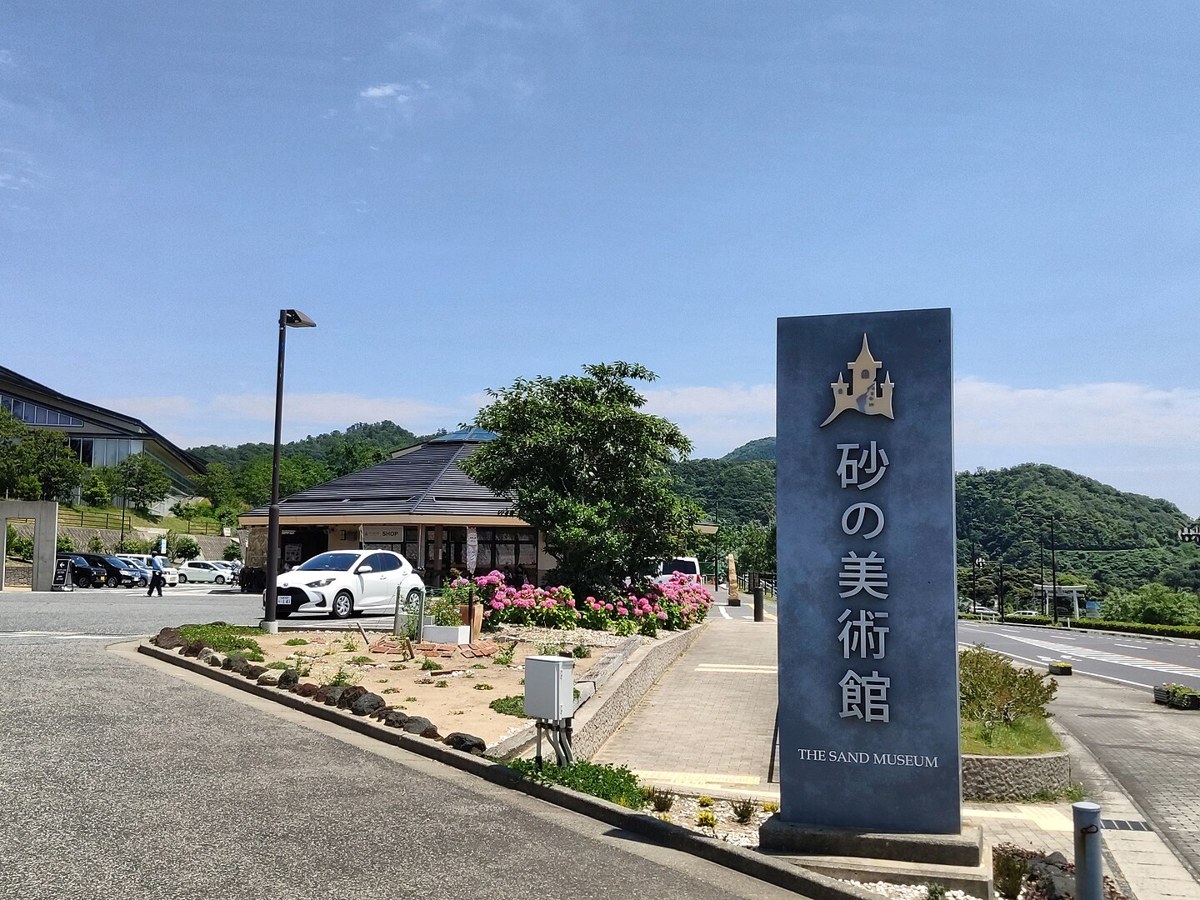
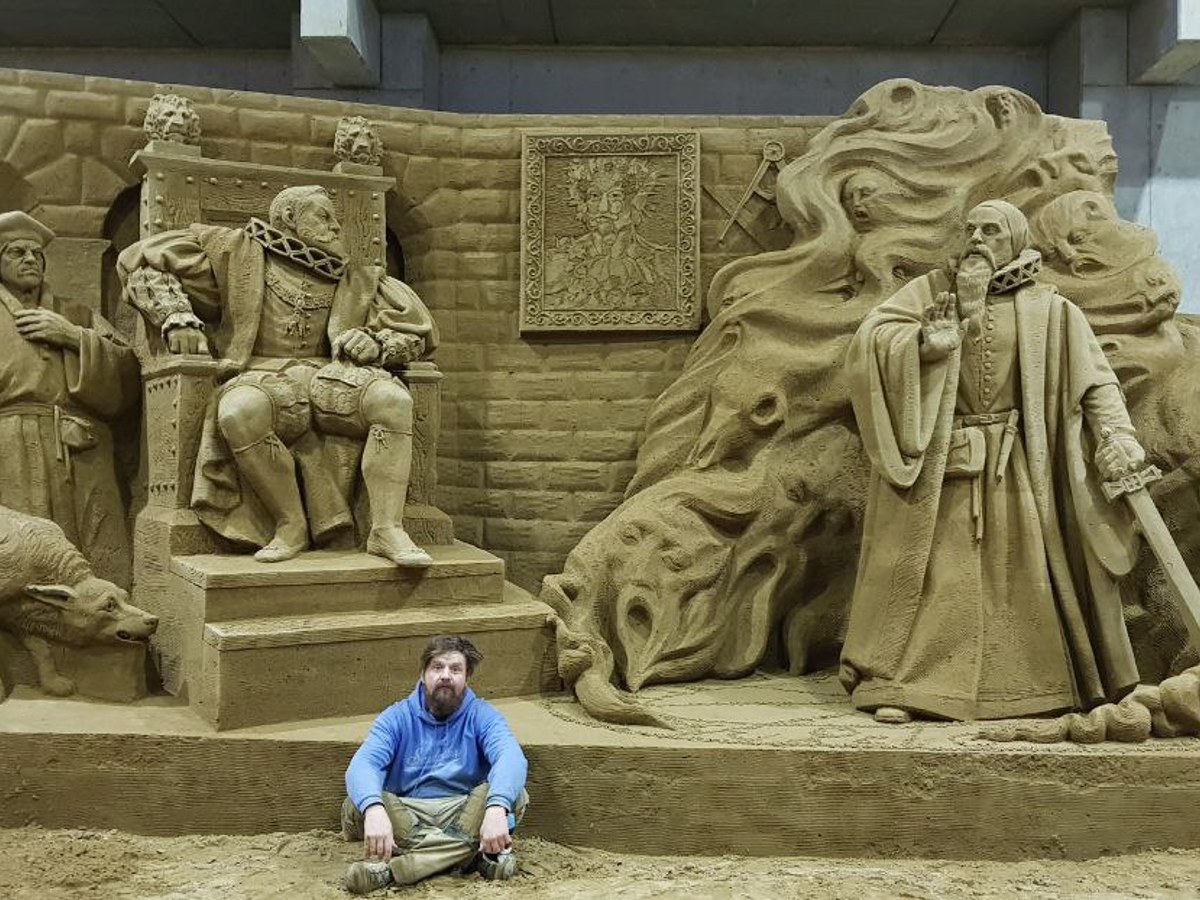
Every museum in the world exists to stop time. This one exists to schedule its surrender. Beside the Tottori Sand Dunes, the Sand Museum fills a hall each spring with monumental sculpture — cathedrals, armies, whole city skylines — carved from nothing but sand and water, by sculptors flown in from around the world. In January it all comes down, the sand goes back into the pile, and the next country is carved. Admission to see what can never be seen again: ¥800.
From dune-side show to world first
The official travel information gives the project's three acts. The dream began beside the dunes themselves: on 18 November 2006 the Sand Museum, a project to exhibit sand sculptures, was opened as an outdoor exhibition. In 2008 the project moved into a large tent, and in 2012 it moved again — into a world-first indoor sand sculpture museum, a permanent hall for the least permanent medium in art.
The producer is a person, not a committee. Katsuhiko Chaen, a world-renowned sand sculptor, is the museum's general producer; he invites sand sculptors from all over the world to create world-class sand sculptures every year. Under his direction the museum has been exhibiting sand sculptures under one concept since 2006 — 'Travel Around the World in Sand' — with regularly changing themes, one country or region at a time.
Sand, water, and no glue
The supervised directory record states the material rule that makes the work astonishing: the intricate sculptures are all made from sand and water alone. To be gentle to the environment, the policy bans glue — no adhesive, no armature of resin, nothing between the grains but moisture and pressure. What holds a cathedral up is compaction and the sculptors' understanding of exactly how much a wall of wet sand will bear.
And then it is destroyed, on schedule. The theme changes each year, the record continues, and after the exhibition period the sculptures are all levelled — unavailable at any other time; you cannot see the same work ever again. The sand itself is reused for the next exhibition, so the material is permanent and only the art is temporary: the exact inversion of every other museum on earth.
The current exhibition, and the terms
The museum's own information page fixes the present season: the current exhibition period runs from 24 April 2026 to 3 January 2027, with dates subject to change, and the museum is closed during exhibition preparation periods — the winter weeks when the old world is levelled and the new one rises. The main gate opens 9:00 am to 6:00 pm, with last admission at 5:30 pm, and because the museum is indoor, visitors can admire the exhibits regardless of the weather outside on the dunes.
Admission, tax included, is ¥800 for adults and ¥400 for students — elementary, junior high and high school — for a single ticket; groups of twenty or more pay ¥600 and ¥300, and children under elementary school age enter free. Photography of the sculptures is permitted, so the only lasting version of each year's world is the one in its visitors' cameras.
Why a sand museum, here
The setting explains the institution. The museum stands beside the Tottori Sand Dunes, the great coastal dune field that is Tottori's emblem — a landscape built by wind and sea out of exactly the material in the hall. The project took the prefecture's most famous substance, which tourists could only look at, and gave it a second life as the medium of a world tour: each year a different country, carved by that country's and the world's sculptors, in Tottori sand.
That is the venue's exclusivity in its purest form. A sand sculpture cannot be shipped, franchised or reproduced; the exhibition is the place, the season and the pile of sand, and when the season ends the work returns to being a beach. Tottori's three standing stories are all things you can eat or drink — pears, crab, milk coffee. Its fourth is the one thing on the site you can only look at, briefly, before it is gone.
Sources — checked 11 November 2026
- The Kansai Guide: The Sand Museum, Tottori Sand Dunes (checked official travel information)
- GOOD LUCK TRIP directory: Tottori Sand Dunes The Sand Museum (checked, museum-supervised record)
- The Sand Museum: Official Information (checked museum page)
Original prose and official links only; no source text or maker media reproduced. Photos are credited Creative Commons works, not product photographs.
Editorial review 2026-11-11