Hita yakisoba breaks the first rule of yakisoba: do not stir. The noodles are laid on a fiercely oiled teppan and left alone until their edges crisp — pari-pari outside, chewy inside — then sauced at the last moment with bean sprouts, green onion and diced pork. A Hita founder asked in the 1950s whether a grilled noodle dish could exist; the city has answered on iron ever since.
“Is there a grilled noodle dish?” — Sofuren, 1957
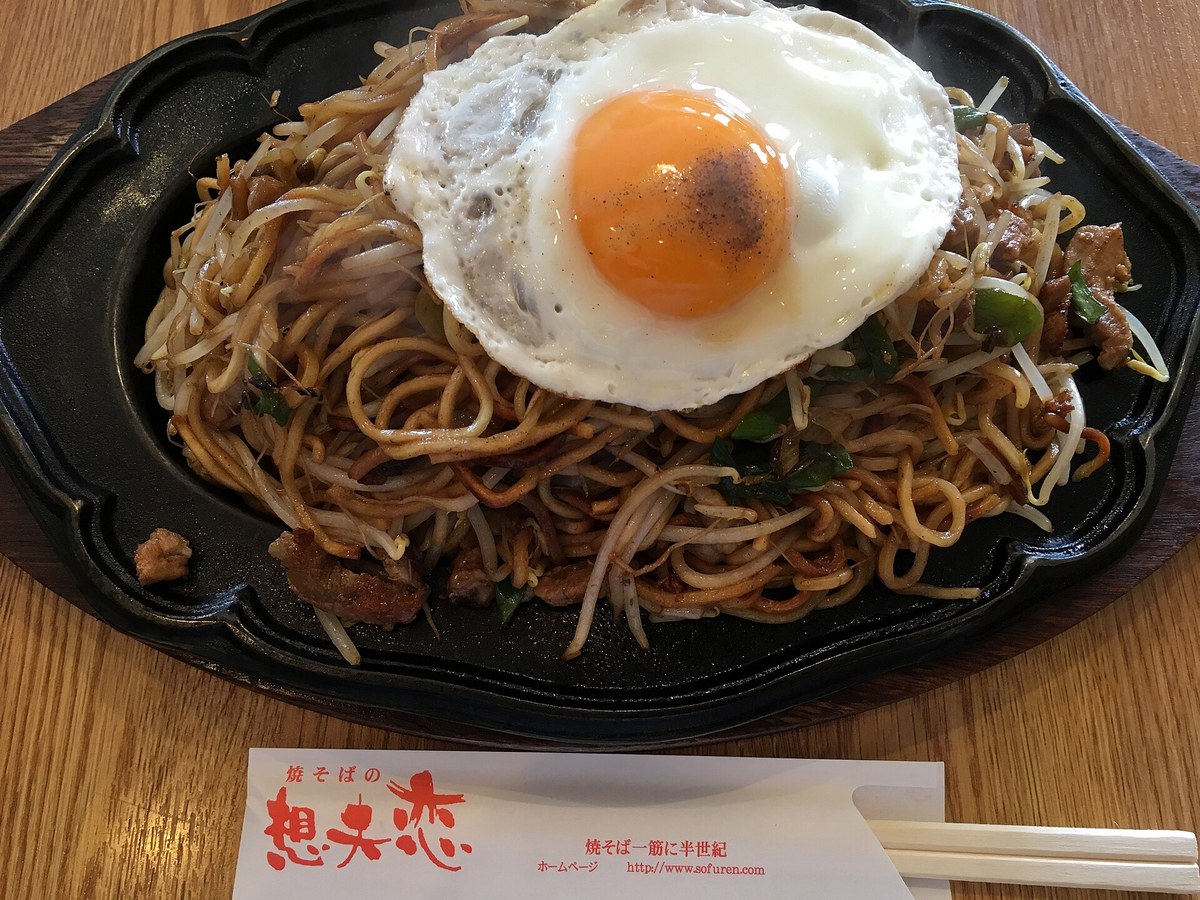
The dish starts as a question. In the late 1950s Chika Sumiyasu, founder of the Hita yakisoba house Sofuren — the house dates itself to 1957 — wondered whether a noodle dish built on grilling, rather than stir-frying, could exist, and worked through trial and error until it did: noodles grilled on the teppan until part of them crisps hard, the texture the city now calls pari-pari.
Sofuren’s own account of the method is precise about order: the diced pork goes on the iron first to render its fat and flavour; the boiled, drained noodles are laid over and left to take their char — pressed and grilled, never tossed — and only at the end are the bean sprouts and green onion folded through and the house’s secret sauce worked in.
Grilled, not fried: the method is the dish
Ordinary yakisoba moves constantly; Hita yakisoba barely moves at all. The teppan is oiled generously, the noodle cake sits, and the cook waits — ten minutes and more at the reference house — while the underside turns fox-brown and crisp and the top stays chewy. The finished plate is a study in contrast: crisp strands against soft ones, crunchy moyashi against both, the sauce dark and sweet-savoury over everything.
The ingredient list is the city standard and deliberately short: moyashi, negi and pork — at Sofuren, pork cut by hand into batons and a contracted thick moyashi bred not to weep. No cabbage. The restraint is what lets the char speak.
A city of houses, a founder’s trademark
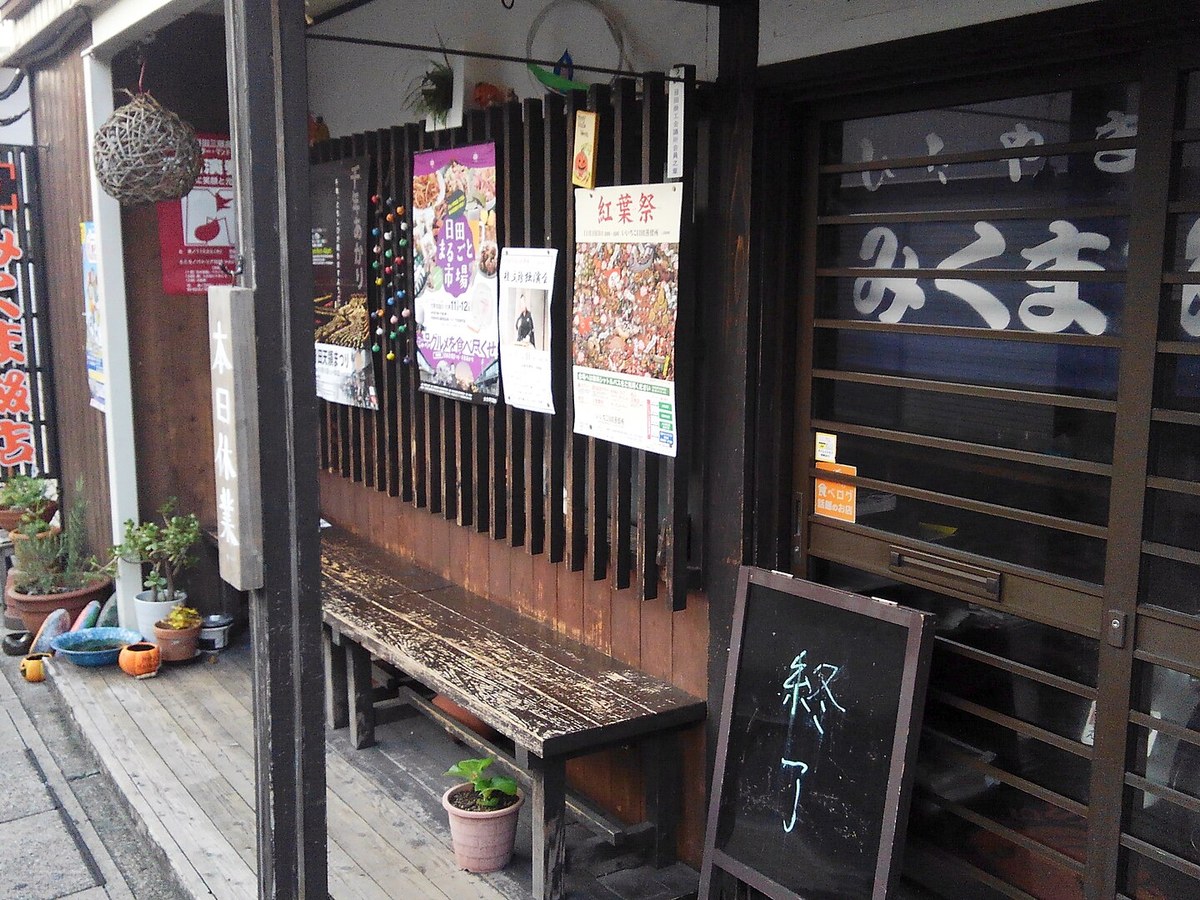
From Sofuren the dish spread through Hita’s ramen shops and diners; the encyclopedia record counts a dozen-plus serving houses in the city — Sofuren’s own branches, Mikuma Hanten among the old names, Rairaiken grilling since the 1950s on the prefecture’s record — and Hita-style shops now appear well beyond Oita. The prefecture’s tourism record describes the dish in one line: grilled, not stir-fried.
The name itself is guarded at home: written “Hita yakisoba”, it is Sofuren’s registered trademark (27 August 2009). A stone monument to Hita as the dish’s birthplace was raised at the head store, on the association record — a founder’s dish that became a city’s, with the paperwork to prove both halves.
Eating it on the iron’s terms
Eat it in Hita, at the counter if you can, and watch your plate not being stirred. At Sofuren’s head store the reference plate — Sofuren-yaki — is ¥1,150 including tax on the city tourism association’s restaurant database, checked for this story; other city houses run lower, Rairaiken’s plate at ¥750 on the same record. Order, wait, and listen: the sizzle slowing is the sound of the crust forming.
There is no shortcut form worth the name — the char does not survive a packet. The dish is a place, a plate of iron, and ten patient minutes in a cedar-water city in the mountains of Oita.
Sources — checked 14 November 2026
- Hita yakisoba — encyclopedia record (method, Sofuren origin, trademark)
- Hita gourmet guide — five yakisoba houses cross-checked against the tourism association database
- Sofuren yakisoba — Oita’s soul food, grilled not stir-fried (survey quoting the house)
Checked 14 November 2026 (stored links re-fetched and judged per product): reserved where the page says so, with an editorial review note kept per product. Press, PR and travel use stays outside the grant.
Editorial review 2026-11-14