Hato Sablé is Kamakura’s pigeon-shaped butter biscuit: a crisp, plain, golden sablé stamped in the form of the bird of Tsurugaoka Hachimangu, made by Toshimaya since the Meiji years from a recipe that has barely changed since its founder worked it out. It is sold, by the maker’s own deliberate policy, only in Kanagawa and Tokyo — and it has been the souvenir of Kamakura for well over a century.
A biscuit shaped like a shrine’s bird
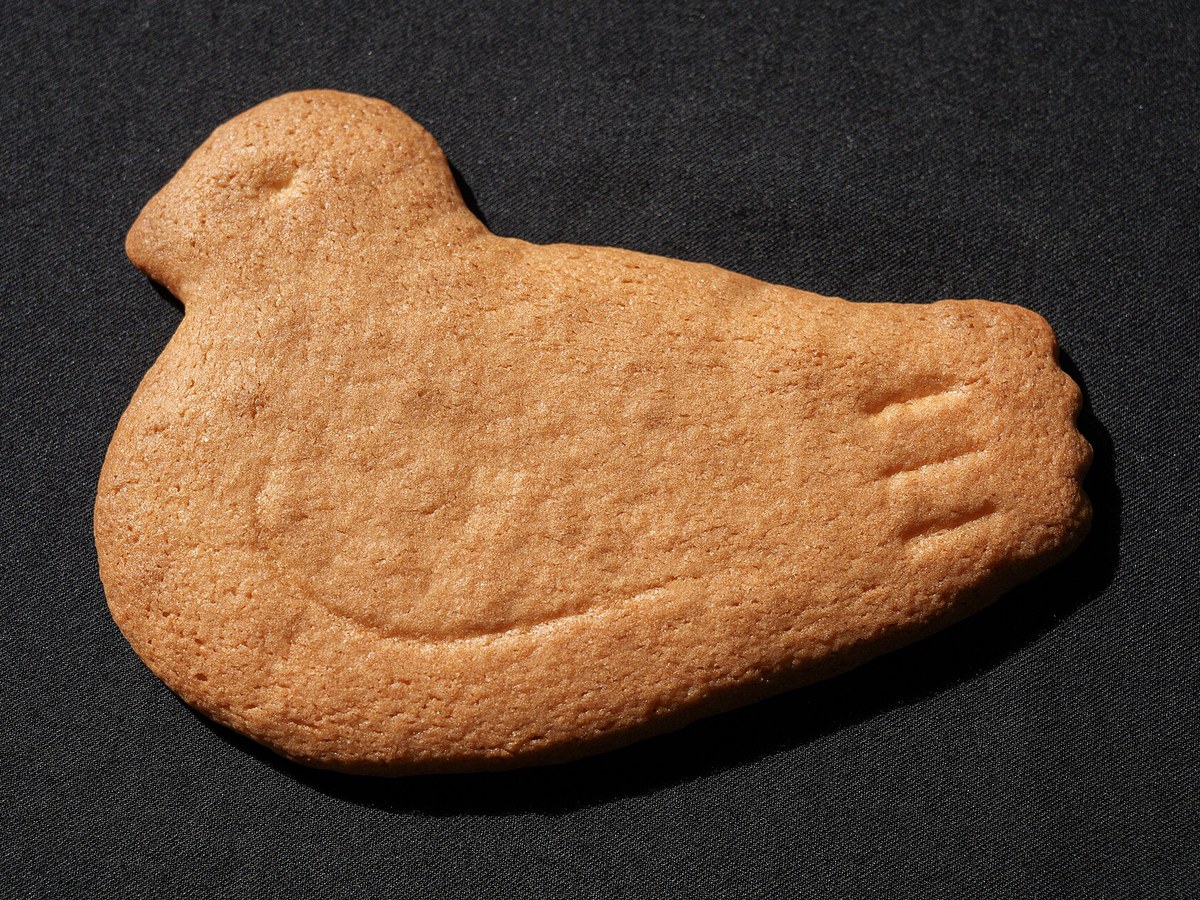
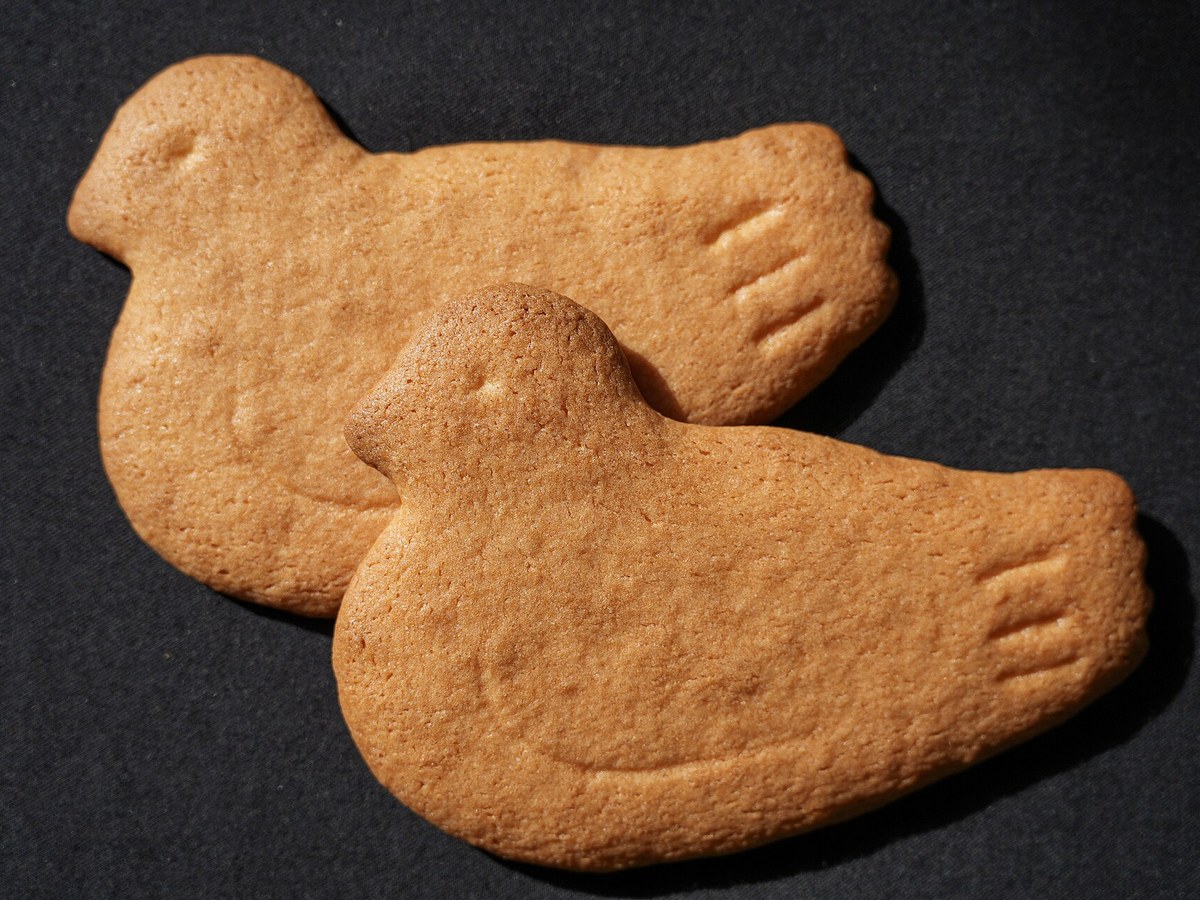
The two photographs are the whole product: one biscuit, then two, each a plump pigeon in profile — beak, eye, breast and a tail ruled with three lines — baked to an even gold. The recipe beneath the shape is deliberately plain: wheat flour, butter (salted butter, as it has always been), egg and sugar, with no spice, mixed by skilled hands and adjusted by the day’s temperature and humidity, the baking timed to the second. About a hundred craftsmen work on the biscuit at the maker’s factories.
Nothing about it has been allowed to drift. The shape and size are the founder’s, kept from his own mould; the blend, called the wari, is almost unchanged since the beginning. Smaller pigeons, chocolate, nut and raisin variants were all considered over the years — and all refused, after the third-generation president heard that the sumo elder Shikimori Inosuke had called the biscuit’s shape, size and bite a sufficient memory of Meiji.
The founder and the foreign biscuit
Toshimaya was founded in 1894, and the biscuit was devised by its first master, Kubota Kyujiro. The spark, on the house record, was a gift: a Westerner staying at Kamakura’s Kaihin-in in the spring of 1894 gave him a large biscuit decorated with Joan of Arc on horseback, and its taste convinced him that Japan’s children would love such a thing. Butter was hard to come by; he travelled to the Yokohama foreign settlement for supplies and prototyped daily with his craftsmen until the butter blend gave way.
A ship’s captain, home from a European run, tasted the result and told him it resembled a French sablé — a word Kyujiro had never heard, and liked all the more because its sound sat close to the Japanese name Saburo. For the shape he turned to the shrine he revered: the “hachi” character on Tsurugaoka Hachimangu’s plaque reads as two pigeons facing each other, and the shrine’s pigeons were the children’s friends. The biscuit became a pigeon, and the pigeon became the name.
Fed to dogs, then to imperial households
At first the butter taste was too foreign: the biscuits were called “butter-stinking”, sales stalled, and the founder and his wife Fude gave them away free in the neighbourhood — Fude later learned, and never told her husband, that at least one recipient had fed his to the dog. The turn came about 1921, when two paediatricians published a newspaper recommendation calling the biscuit ideal weaning food; orders followed from the imperial households at Hayama and Kamakura. The 1923 earthquake flattened the shop; Toshimaya rebuilt, and in a Kamakura then famous as the east’s fashionable twin to Ashiya, the butter pigeon became the house’s signature.
War stopped production in 1941 for want of sugar. When controls lifted in 1950 the third president, Masahiko, bet the house on Western sweets: he carried the sablé to Switzerland, Denmark, France and Finland, was praised in all of them, mechanised production (a dedicated factory in 1971; daily output in the hundreds of thousands by the late 1970s), and built the yellow tin — the colour of butter, born in the late 1950s — into an object fans reuse for decades.
Buying the pigeon
The maker’s published prices, reported from its own Hato Day releases: the 8-piece box is ¥1,080, and the 10-piece bag’s regular price is ¥1,350 (sold at a special ¥1,150 on Hato Day, 10 August). Paper boxes come in 6 and 8 pieces; the yellow tins in 16, 25, 34 and 44; a 4-piece hand-carry pack has been sold since 1974, with a main-shop-only illustrated version. Each tin carries the little booklet “Hato no Tsubuyaki”, the biscuit’s own birth story.
And the geography is the point. Toshimaya sells where it can see its goods: its own shops in Kamakura, department stores and stations across Kanagawa and Tokyo — and, by stated policy, nowhere else in Japan. Everyone else uses the maker’s official online shop. A souvenir you genuinely cannot buy in Osaka or Fukuoka is a rarer thing than it sounds; this one has kept that line since Meiji.
Sources — checked 14 November 2026
- Hato Sable — encyclopedia record (Toshimaya, the founder, the unchanged recipe, the sales policy)
- Toshimaya’s Hato Day prices — ITmedia report of the maker’s 2026 release, with the maker’s 2025 release via Mapion
Checked 14 November 2026 (stored links re-fetched and judged per product): reserved where the page says so, with an editorial review note kept per product. Press, PR and travel use stays outside the grant.
Editorial review 2026-11-14