Goma-dofu is the tofu with no soy in it: sesame ground past patience, bound with kuzu starch and kneaded until it sets like silk. It is a pillar of shojin temple cooking — the encyclopedia calls it indispensable to Mount Koya and Eiheiji — and on the Wakayama temple mountain it is lunch, souvenir and discipline in a single pale block.
Tofu in name, sesame in fact
Begin with the correction the encyclopedia makes in its second breath: despite the name, goma-dofu is not tofu and contains no soy. It is sesame and kuzu. The sesame’s husks are taken off and the seeds ground, carefully and at length, until the paste is smooth on the tongue; water-slaked kuzu starch joins it, and the mixture is heated and kneaded until it turns silk-like, then poured into a mould and set into the pale block in our photographs.
It is eaten the way tofu is eaten — cold, as it stands — but seasoned as itself: with wasabi soy sauce or a tare to balance the sesame oil’s richness, sometimes with dashi. Per the standard food tables the block is mostly water and sesame: 81 kcal and 1.5 g of protein in 100 g, with 4.3 g of fat — the nutrition of a seed, wearing the shape of a tofu.
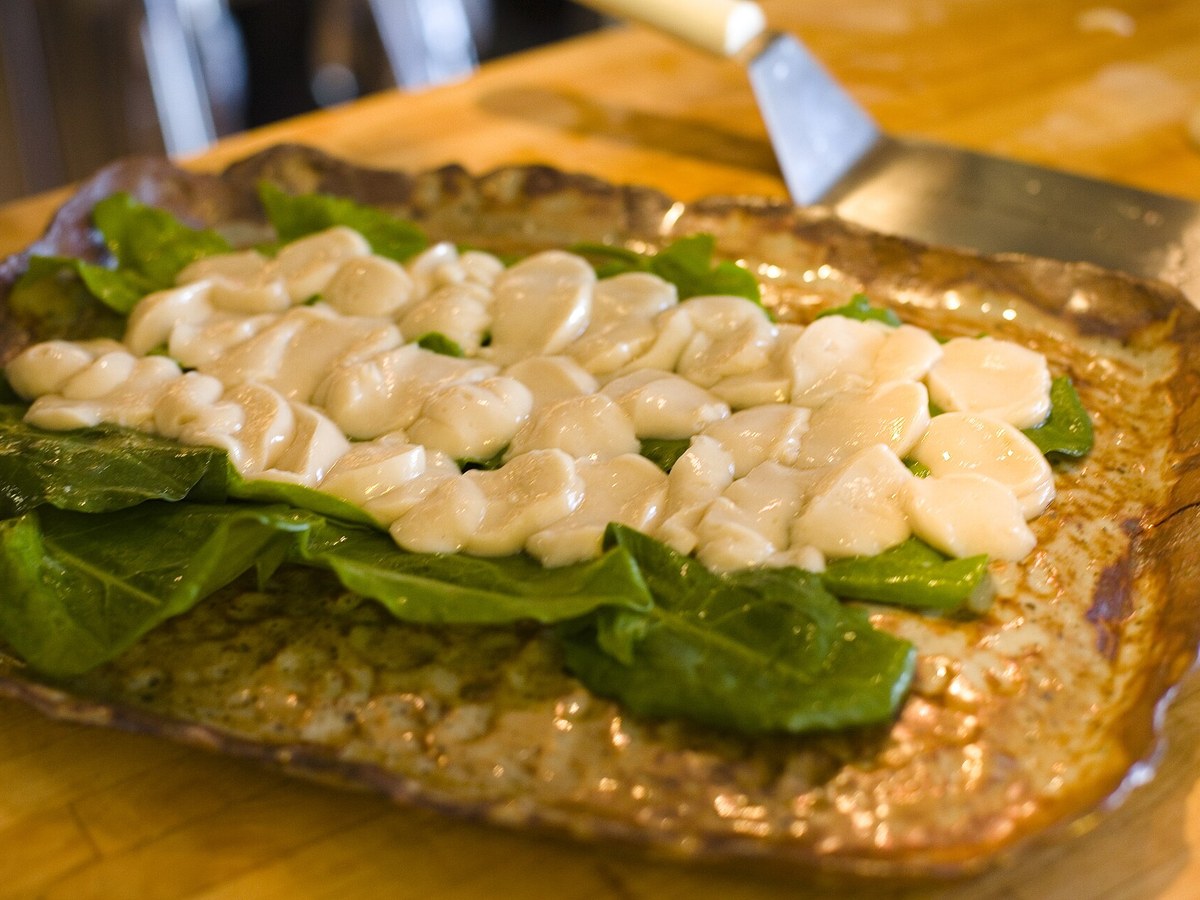
The grinding is the training
Goma-dofu belongs to shojin ryori, the vegetarian cooking of the Zen temples, and the encyclopedia is plain about its standing: it is said to be indispensable to the shojin tables of Mount Koya and of Eiheiji. The labour is the point — husking and grinding sesame to silk is painstaking work, and in a Zen kitchen the cooking is itself counted as training, so the troublesome dish was guarded rather than simplified.
The formal standard is hon-kuzu, true kuzu starch. Home cooks substitute prepared sesame paste and potato starch, and the retort versions in every supermarket stretch the formula further, with other starches and sometimes soy among the ingredients — the encyclopedia lists them as the industrial branch of the family, distinct from the block ground at the temple gate.
The mountain’s standard plate
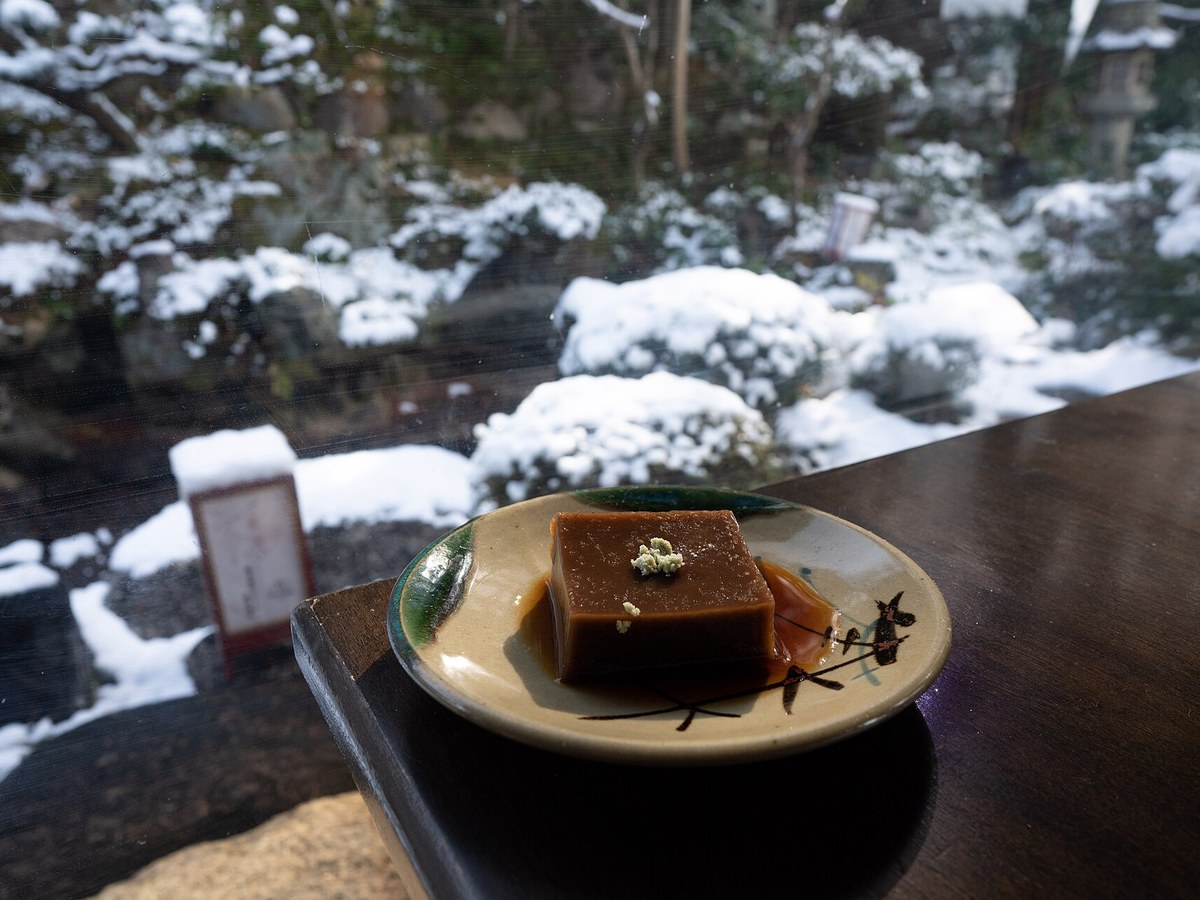
On Mount Koya the dish is infrastructure: a standard of the temple lodgings’ meals and of Zen-temple lunches across Wakayama, Nara and Kyoto, and a souvenir sold on the mountain itself, in the Yoshino district and at roadside stations. Our second photograph is the dish in its natural setting — a serving of sesame tofu set before a temple garden in the snow.
Freshness is the catch that keeps it local. The true fresh block, bought at its maker’s, must be eaten the day it is made or the day after — which is why the mountain’s own makers, Kakuhama and Hamadaya among them, anchor the souvenir trade in cups and gift packs, and why the fresh plate remains a thing you travel to a temple town to eat.
The cup, the pack and the fresh plate
The measured prices run in three bands. The cup: Daikaku Sohompo’s Koyasan kuro goma-dofu, 120 g, is ¥321 tax included at the national retailer read for this page (list price ¥327), and Hijiri Foods’ white Koyasan goma-dofu cup, also 120 g, is ¥162 on the same retailer’s record. The souvenir pack: Kakuhama’s Koyasan-limited mini eight-piece set is ¥750 on the mountain’s souvenir guide.
And the fresh plate is the temple lunch itself — eaten at a shukubo table on the mountain where the grinding-as-training rule made the dish. Buy the cup anywhere; eat the fresh block on Mount Koya.
Sources — checked 14 November 2026
- Goma-dofu — encyclopedia record (the soy-free sesame block, the Koyasan standing, the fresh limit)
- Koyasan goma-dofu prices — Yodobashi and Koyasan souvenir guide records, checked November 2026
Checked 14 November 2026 (stored links re-fetched and judged per product): reserved where the page says so, with an editorial review note kept per product. Press, PR and travel use stays outside the grant.
Editorial review 2026-11-14