Dozeu nabe is Edo’s loach pot: whole little loaches simmered in a shallow iron pot over charcoal, buried under a mound of chopped negi and eaten in the shitamachi streets of Asakusa. It began as the cheap, nourishing summer food of the common town — and two Asakusa houses have served it for some two centuries.
The loach pot of Edo
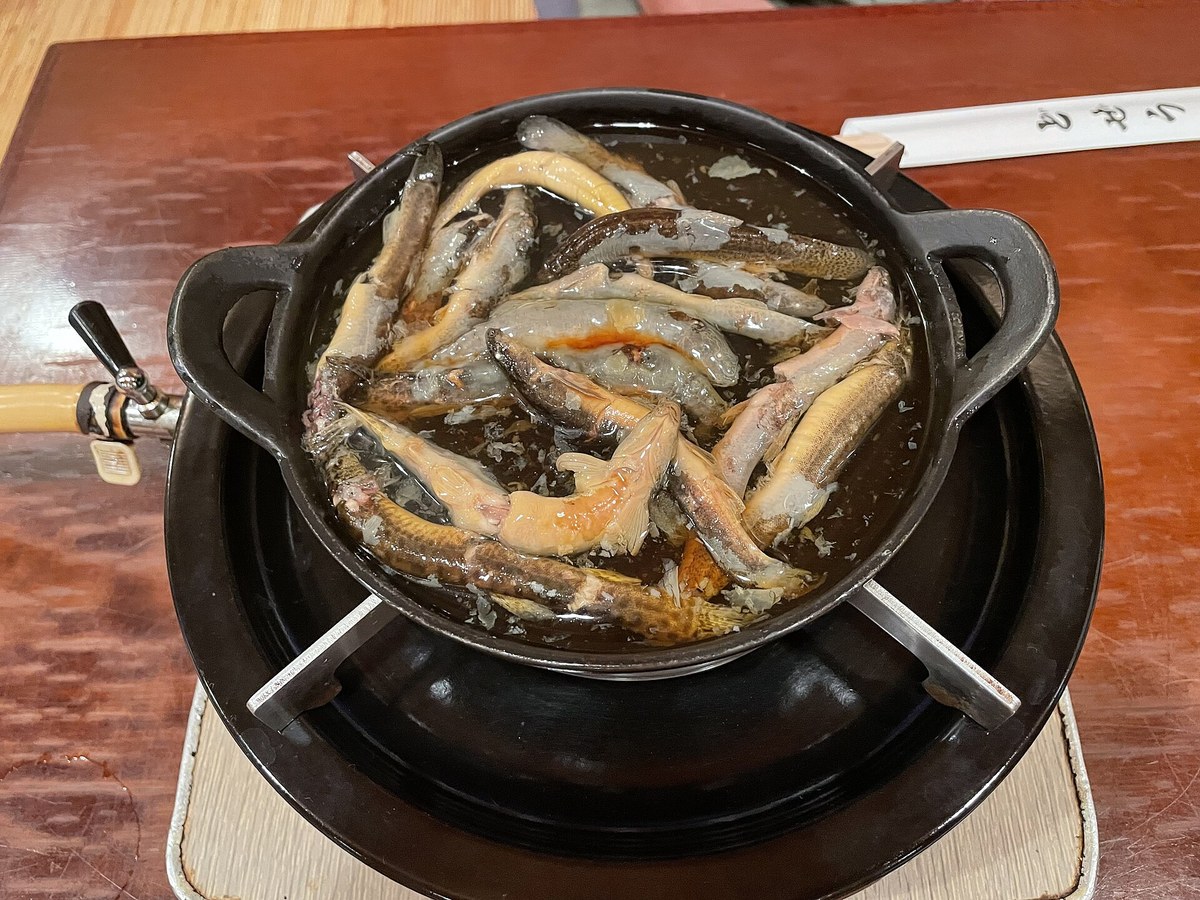
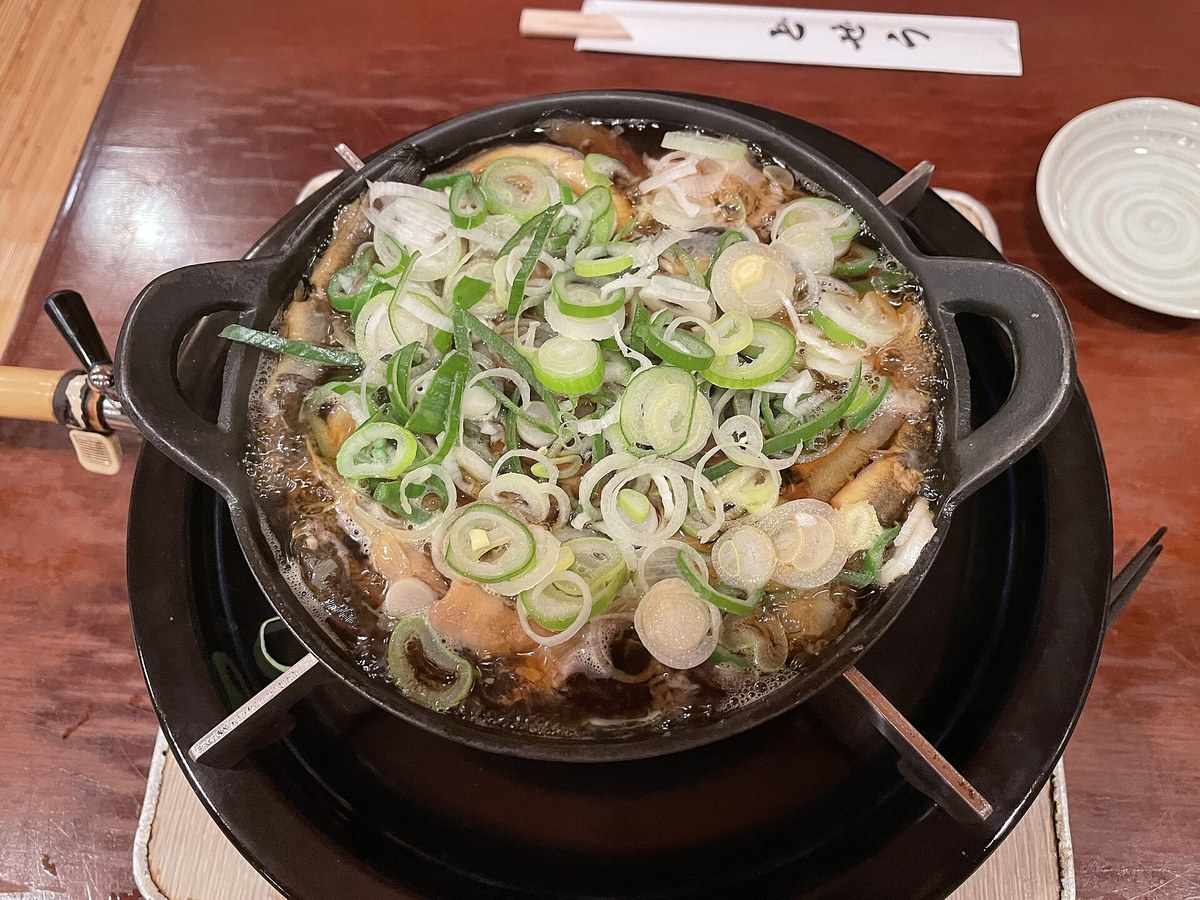
The dish is a shallow iron pot and a charcoal brazier. Small loaches go in whole — maru, in the trade’s word — pre-simmered until the bones soften, then finished at the table in warishita, the soy-and-mirin broth, and eaten under a heap of chopped negi with shichimi and sansho to hand. Open the loach and bone it and the pot changes its name to nuki-nabe; open it, stew it with burdock and bind it with egg and it becomes yanagawa-nabe, the famous offshoot.
In Edo the loach was the people’s stamina fish: nourishment to rival eel at a fraction of the price, and a summer food above all — in haiku the loach is a summer word. The old spelling dozeu, three characters of good omen, is the one the Asakusa houses still paint on their signs.
1801–1804: Komagata and the Echigoya
Komagata Dozeu, the quarter’s senior house, was founded in 1801 by Echigoya Sukeshichi, a Musashi man who opened a loach-soup eatery on the road to Sensoji. The encyclopedia record dates the whole-loach pot itself to 1804, begun by Echigoya at Asakusa Komagata — the maru-nabe that defines dozeu nabe proper. Komagata’s way is a double cooking: the loaches, first made drunk on sake, are simmered in Edo sweet miso until tender, then laid in the shallow pot and finished with warishita at the table.
The house still stands on Edo-dori in its merchant form — second floor windowless toward the street, by the old account so as not to look down on a daimyo procession — rebuilt in 1964 from Edo-period drawings. Its dozeu-nabe is ¥2,100 on the record checked in October 2026, with dozeu-jiru, the miso soup of the smallest loaches, at ¥350.
Iidaya, the house in our photographs
Our two photographs were taken at Dozeu Iidaya in Nishi-Asakusa, by Kappabashi: the whole loaches dark in the shallow pot, and the same pot a moment later under its mound of negi. Iidaya has kept its sign in this quarter since its founding in the Keio years at the end of the Edo period, and its own history says the warishita has not changed since — the house guards the broth the way other houses guard a recipe book.
Iidaya’s official menu, read this run, lists the honenuki pot — the boned form — at ¥2,100, dozeu-jiru at ¥300 in Edo sweet miso with the smallest whole loaches left in for their bitterness, and dozeu nanbanzuke, the little loaches fried crisp and pickled, at ¥1,000. Two houses, one quarter, the same two-thousand-yen pot: Asakusa prices its tradition gently.
Eating it now
Go to Asakusa and choose your house: Komagata for the founding name and the great tatami hall, Iidaya for the Kappabashi backstreet. Order the pot, let the negi wilt into the broth before you eat, and add a bowl of dozeu-jiru alongside — the soup is the older dish, the one the whole trade grew from. Summer is the season, but both houses serve through the year.
The encyclopedia record closes on a warning worth repeating: wild loach numbers have fallen, and what Edo ate because it was cheap is becoming a considered purchase. The ¥2,100 pot is, by the standards of what it now costs to source, still the shitamachi bargain it always was.
Sources — checked 15 November 2026
- Yanagawa nabe — encyclopedia record (the dozeu-nabe family, the 1804 Echigoya maru-nabe origin, the falling loach numbers)
- Komagata Dozeu — agatajapan record, checked 1 October 2026 (the 1801 founding, the Edo sweet-miso cooking, the ¥2,100 pot)
- Dozeu Iidaya — the house’s official site (the Keio-era founding, the unchanged warishita, the ¥2,100 honenuki pot)
Checked 15 November 2026 (stored links re-fetched and judged per product): reserved where the page says so, with an editorial review note kept per product. Press, PR and travel use stays outside the grant.
Editorial review 2026-11-15