Fukagawa meshi is the clam rice of Tokyo’s old fishing shore: asari, hamaguri and aoyagi shellfish simmered with negi and poured over plain rice — or cooked into it — in the shitamachi quarter that gave it its name. It began as the bukkake-meshi Fukagawa’s fishermen ate between jobs, was written down in 1893 as a rickshaw man’s bowl at one sen five rin, and travels today as two rival station bentos that cannot even agree on how it is made.
The fishermen’s bukkake-meshi
The root dish has a workman’s name: bukkake-meshi, “poured-over rice”. On the record, it was what Fukagawa’s fishermen ate in the gaps of the working day — a simmering pot of shellfish and negi kept ready, ladled over a bowl of plain rice the moment a man sat down. The shellfish was originally not the asari of today but bakagai (aoyagi), landed in quantity in the waters around Edo-period Fukagawa; asari took its place around the Meiji–Taisho turn, as the bay and its landings changed.
Shellfish-and-rice cookery exists at fishing ports all over Japan, the record concedes — but it is Tokyo’s Fukagawa that became the name the whole country uses, and the dish carries the quarter’s name to this day.
One sen five rin: the 1893 bowl
The dish’s class origins are on paper. Matsubara Iwagoro’s 1893 reportage of the capital’s slums, 『Saiankoku no Tokyo』, lists “Fukagawa-meshi” among the foods of rickshaw men: shucked bakagai simmered with chopped negi, poured over rice in a bowl the moment a customer came in — an instant dish at one sen five rin a bowl, so redolent of the shore, the writer warned, that ordinary people could hardly eat it, yet in that world the most thriving simple food of winter.
Nothing about the bowl was genteel, and that is its pedigree: a fast, cheap, briny working lunch from the bay side of Edo, which the modern city has adopted without sanding off its name or its shellfish.
Two constructions, two station bentos
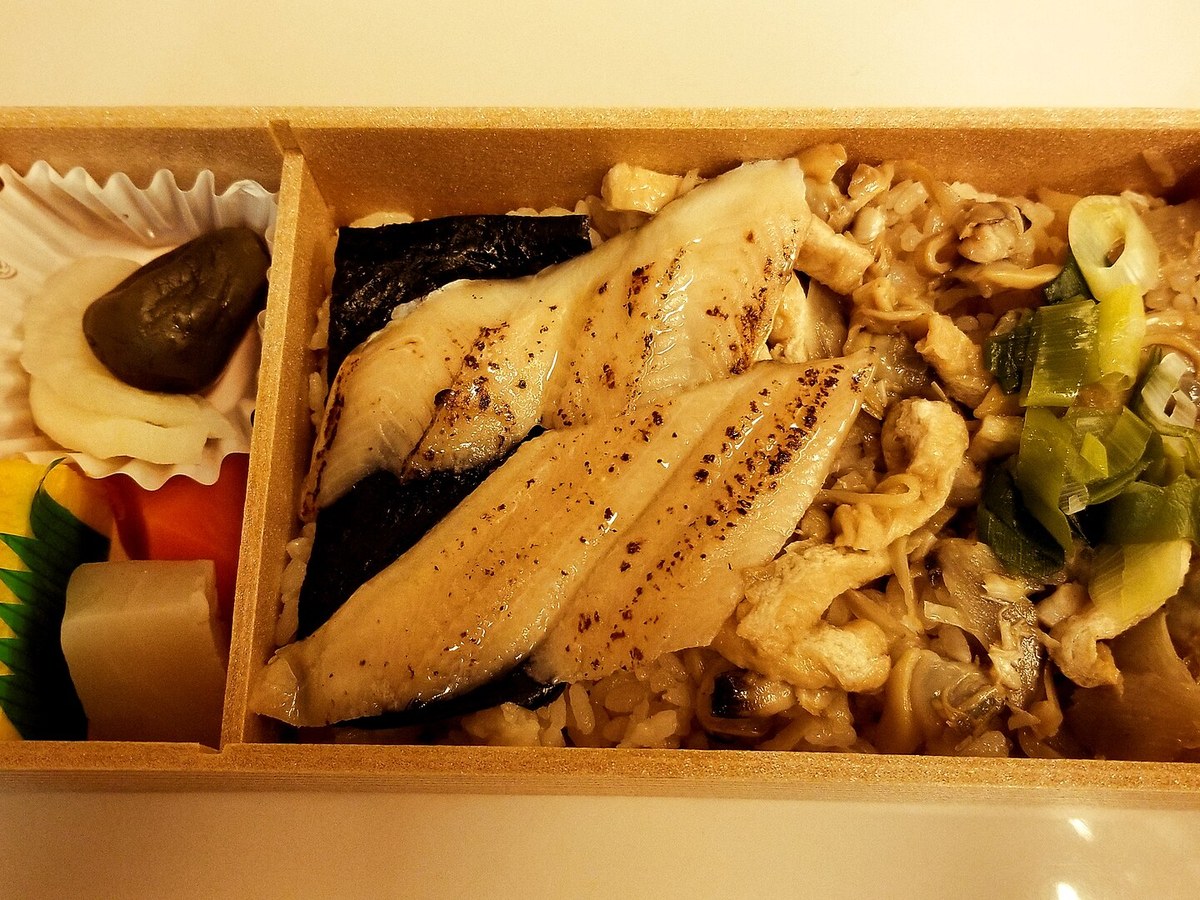
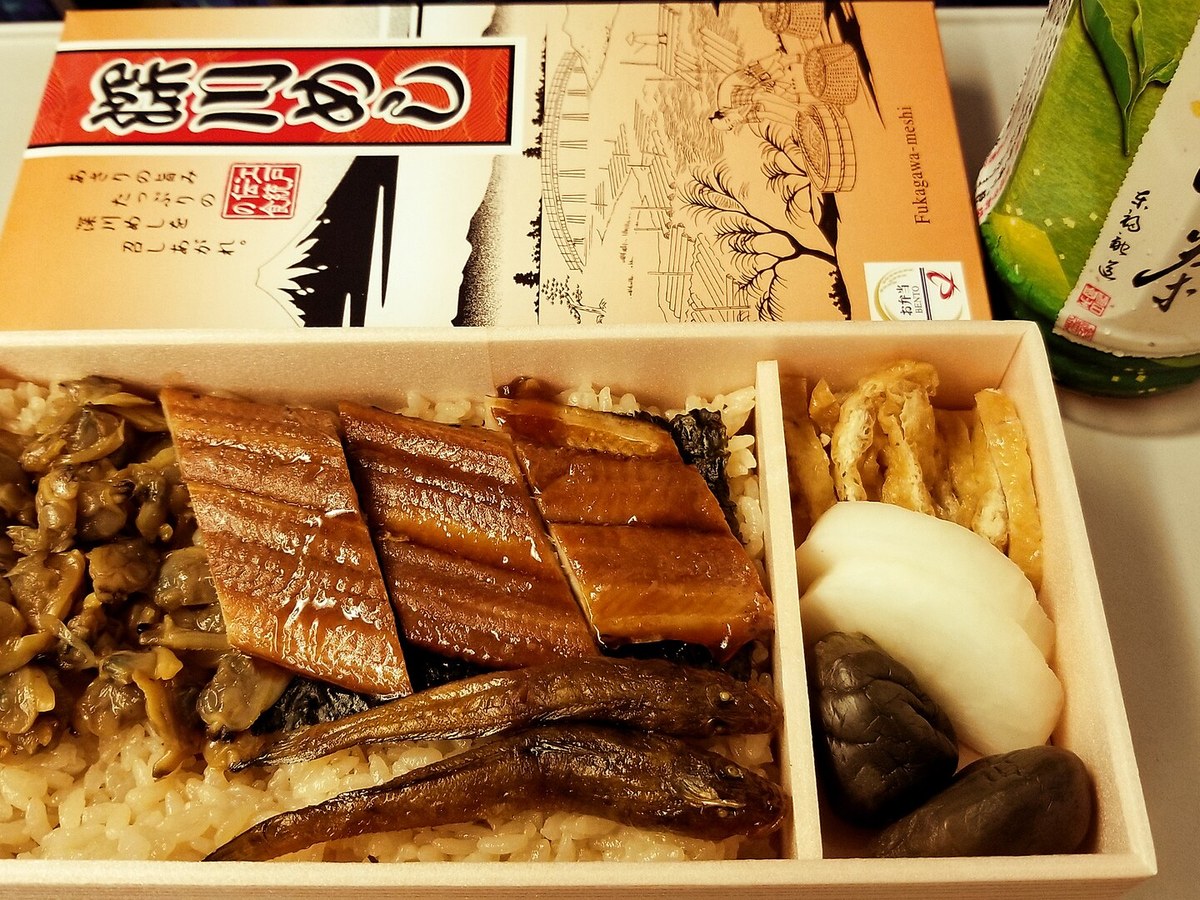
Modern Fukagawa meshi comes in two constructions, and the split is the story. The bukkake type pours the simmered shellfish broth over plain rice, as the fishermen ate it; the takikomi type cooks the shellfish into the rice itself. The shops that multiplied from about 2000 mostly serve takikomi — it holds, travels and reheats better — while the poured form keeps the older grammar.
The two great ekiben split along exactly that line. JR Central Passengers’ station bento is takikomi, sold at Tokyo, Shinagawa and Shin-Yokohama for the Tokaido Shinkansen. Nihonbashi Daimasu’s bento, sold at JR East stations, began as takikomi and was renewed in 2013 into the bukkake type. Both boxes carry simmered anago — and the record is careful to note that the anago is an addition, not a defining element: Fukagawa meshi is the shellfish and the rice.
Eating it in Fukagawa, or at the station
Eat it in the quarter if you can: the shitamachi streets east of the Sumida still serve both constructions, and the poured bowl, eaten hot where the fishermen ate it, is the reference form. The station version is the honest second best — on JR Tokai’s official market, read for this story, the Fukagawa meshi ekiben for Tokyo Station pickup stands at ¥1,300 including tax, clam-rich takikomi rice in a box built for a Shinkansen tray.
Whichever box you open, read it correctly: the dark simmered clams are the dish, the anago is the garnish the bento makers added, and the negi is not decoration — it has been in the pot since the bakagai days.
Sources — checked 14 November 2026
- Fukagawa meshi — encyclopedia record (the bukkake root, the 1893 bowl, the two ekiben)
- JR Central MARKET (JR Tokai) — Fukagawa meshi ekiben, Tokyo Station pickup
Checked 14 November 2026 (stored links re-fetched and judged per product): reserved where the page says so, with an editorial review note kept per product. Press, PR and travel use stays outside the grant.
Editorial review 2026-11-14