Chagayu is rice cooked in tea, and in Nara it has a pet name — okai-san — and a pedigree: temple records at Todaiji name tea-gruel forms in the eighth century, and Yamato households ate it morning after morning for more than a thousand years. Nara’s bowl is deliberately loose: stir it too much and you have made it wrong.
Rice cooked in tea
The method is in the name: rice simmered in tea — home-made bancha, hojicha or powdered tea by district, the tea drawn in a cloth bag set into the pot. Vegetables, tubers or beans may join it — sweet potato, chestnut, azuki or broad beans by season — and the salt hand differs from house to house. What defines the Yamato bowl is what it refuses to be: sticky. The old saying runs "Yamato no chagayu, Kyo no shiragayu, Kawachi no dorogui" — and Yamato’s share is a loose, free-running gruel, eaten hot and salty.
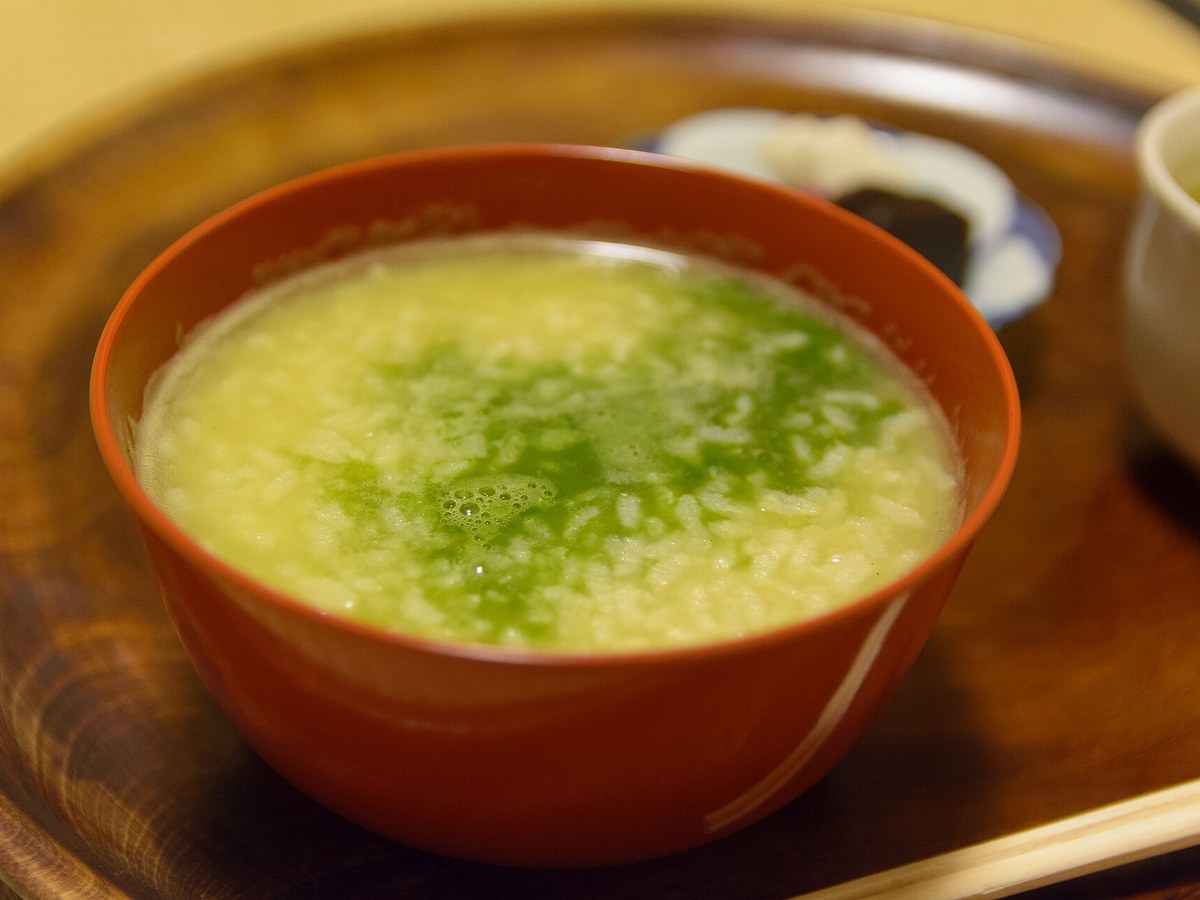
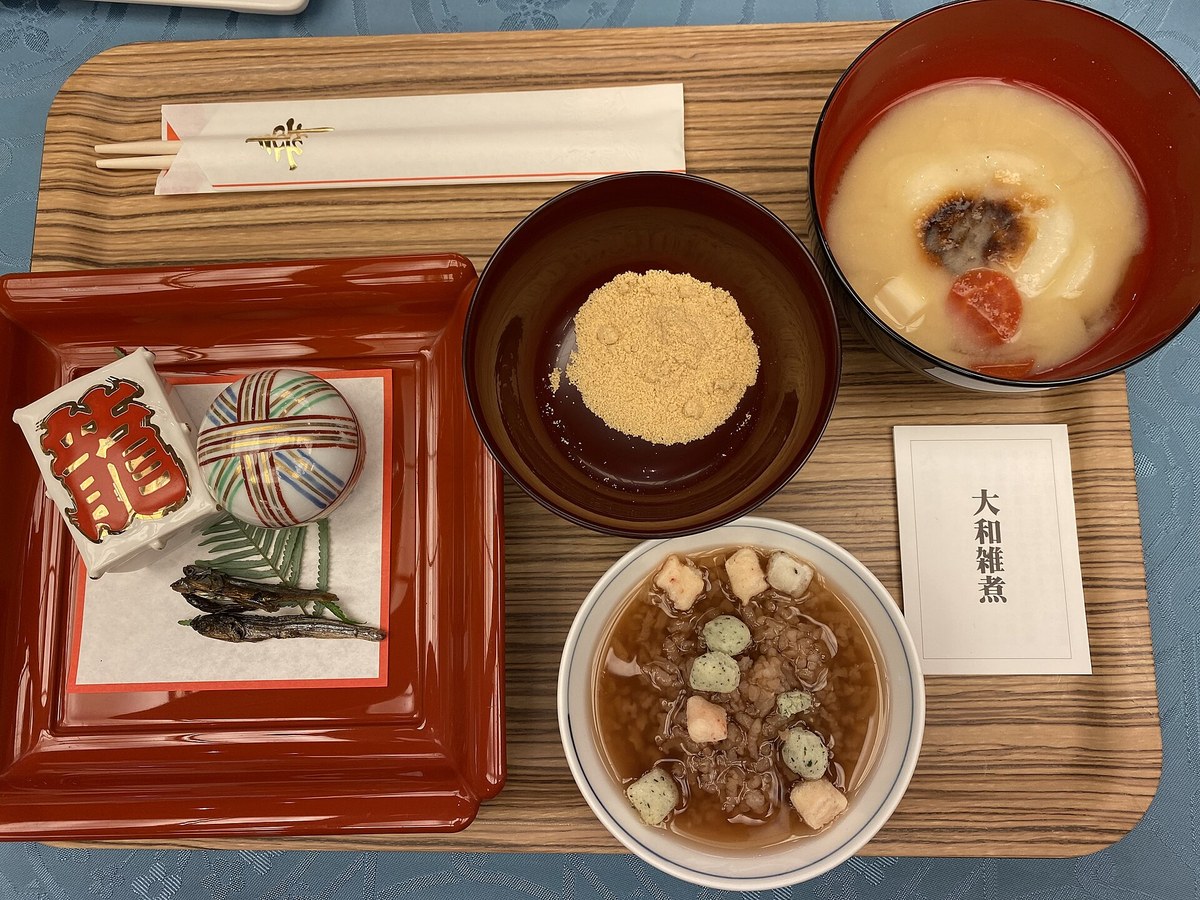
Nara households cooked rice in the evening and made the morning’s chagayu from the cold leftovers — ire-gayu, the put-in gruel; a bowl cooked from raw rice was age-chagayu. Okaki crackers or mochi went in when there were any, and in summer the bowl was eaten cold. Our photographs are the bowl itself, green with tea, and a Yamato set tray served in Nara with the gruel among its dishes.
Eight centuries at Todaiji, and a 1954 scare
The Kojiruien, quoted in the encyclopedia record, ties the custom to the building of the Great Buddha: households across Yamato ate gruel to stretch their rice while they helped the work, in the reign of Emperor Shomu. The written menu records of the Shunie — the Omizutori rite at Todaiji’s Nigatsudo, kept without a break since 752 — name "age-cha" and "gobo", which the record explains as chagayu with the liquid drawn off, and chagayu with its liquid kept: tea gruel inside the temple diet of the eighth century.
The bowl’s modern history has a strange chapter: in 1954 a theory blamed Nara’s salty, loose, hot chagayu habit for stomach illness and a campaign called for the gruel’s abolition. Tastes changed anyway, and the everyday bowl has thinned — which is why the surviving chagayu houses in Nara now serve it as heritage.
Okai-san across the south Kinki
Chagayu is the general name, but its heartland is the southern Kinki: Nara, Wakayama and Mie’s Iga, where it was a daily food loved under the name okai-san. From there the record traces it across western Japan — carried, it suggests, as far as Noto, Aomori and Sendai on the kitamae shipping routes, and in Edo it was sold from the seventeenth century as "Nara-cha", firming up on the way into Nara-chameshi.
The cooking discipline is restraint: bring the tea to the boil, add the rice, and barely stir — only turn it over now and then with the ladle and skim the foam — because stirring is what makes gruel gluey, and gluey is exactly what Yamato chagayu is not.
Eating it in Nara
The measured lunch this run is Chagayu Saron Tsukihiboshi, facing the Nara National Museum: a set built on twenty-plus house pickles, all you can eat, with white rice, chagayu and miso soup — refills allowed — at ¥2,000 tax included. At the other end of the scale, the Nara Hotel’s Mikasa serves a full chagayu breakfast set, green-tea gruel with grilled fish, sesame tofu, Yamato vegetables and narazuke, at ¥5,000.
Eat chagayu the Yamato way: hot, loose, and with pickles — narazuke above all — doing the seasoning work the bowl itself declines to do.
Sources — checked 15 November 2026
- Chagayu — encyclopedia record (the loose Yamato form, the Todaiji records, the 1954 abolition call)
- Chagayu Saron Tsukihiboshi and the Nara Hotel Mikasa — Nara food record compiled from official shop information, Oct 2026 (the ¥2,000 set, the ¥5,000 breakfast)
Checked 15 November 2026 (stored links re-fetched and judged per product): reserved where the page says so, with an editorial review note kept per product. Press, PR and travel use stays outside the grant.
Editorial review 2026-11-15