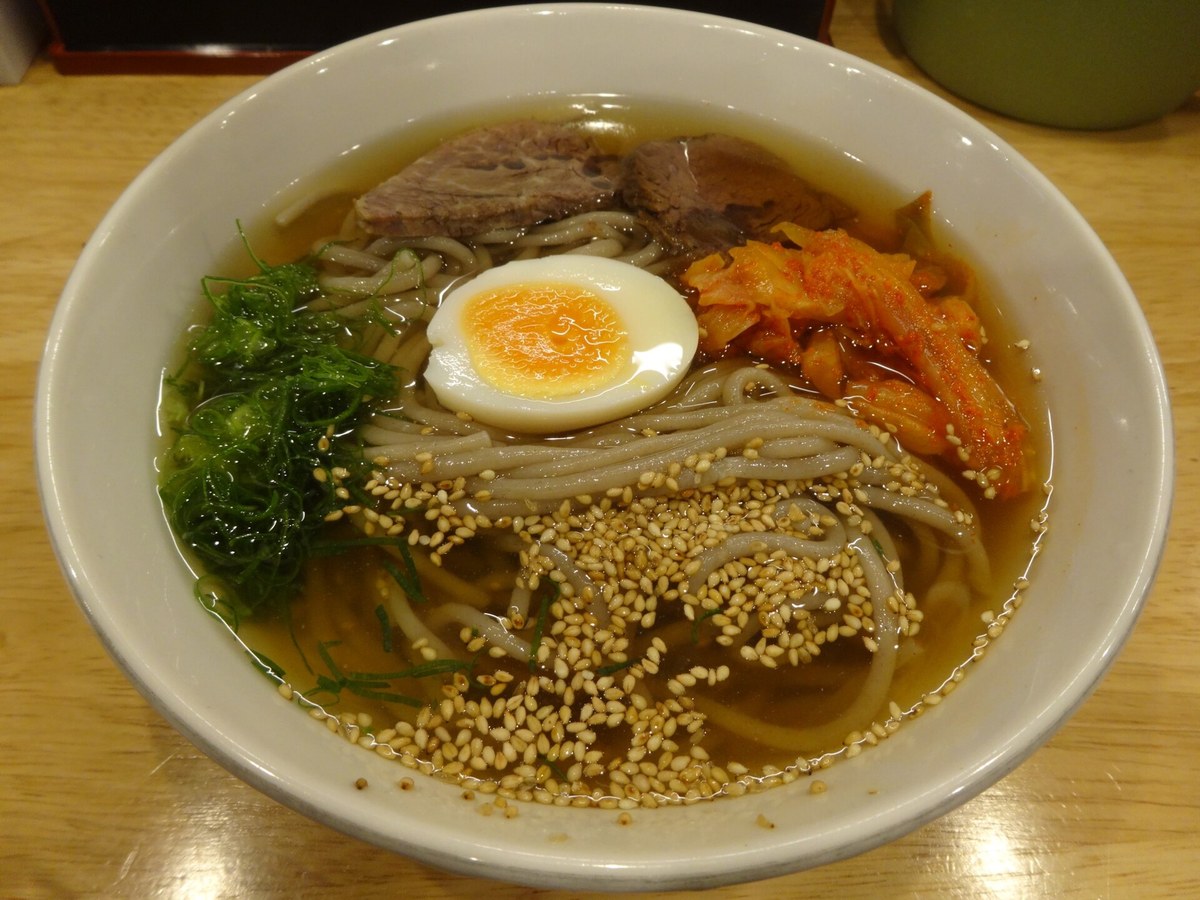
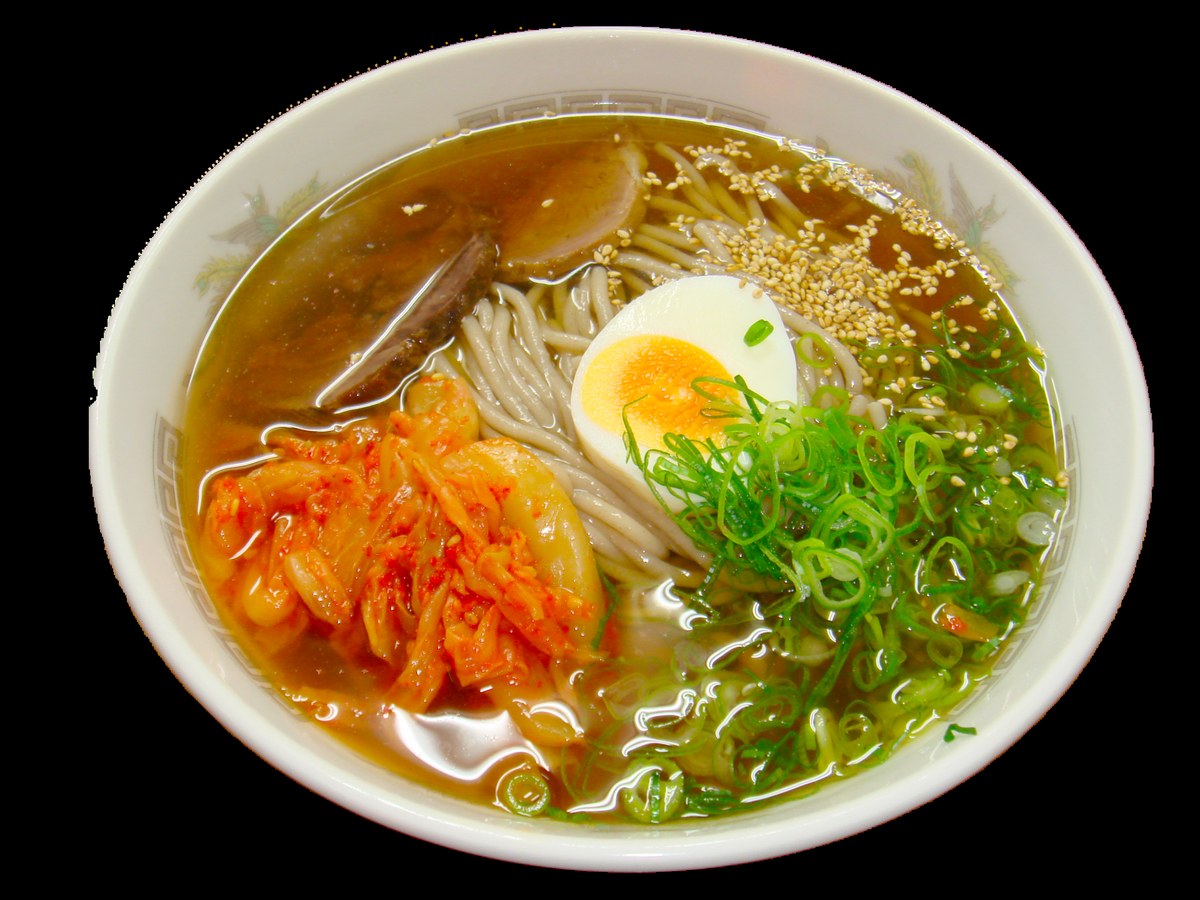
Beppu reimen is a Korean cold noodle that a spa city made Japanese: chewy noodles of wheat, buckwheat and starch in a chilled seafood soup re-arranged wa-fu, under beef and cabbage kimchi. A repatriated cook opened the first shop about 1950, and the onsen capital adopted the bowl so completely that sixty or seventy shops now serve it — Beppu’s citizens call it their soul food.
A repatriation bowl in a steam town
The record’s origin is dated to about 1950: a cook who had come home from Manchuria — the region of north-east China where many Korean residents had lived — opened a shop in Beppu and served the cold noodle of that world. Beppu, a city that lives by welcoming travellers to its hot springs, took the bowl in and kept it.
The adoption was total. The encyclopedia record counts sixty to seventy shops serving Beppu reimen in the city today, and the city itself has promoted the dish since 2009 under its Beppu Reimen Project, publishing a map and a website to establish it as a meibutsu — a named local speciality. Beppu’s citizens, on the record, call it their soul food.
Two lines, one cold soup
The noodle is a deliberate hybrid: wheat flour, buckwheat flour and starch, worked to a chew that stands up to a chilled soup. The soup itself is the Japanese turn on the form — a seafood-based stock arranged wa-fu, cold and clean, where the Korean original leans on beef and dongchimi brine.
The city’s shops divide into two lines, and Beppu eaters know which they are in. The specialist line serves the chewy, thicker noodle with cabbage kimchi (yangbaechu); the yakiniku line, born in the barbecue houses, serves a smoother mid-thin noodle with hakusai kimchi. Ramen shops and izakaya carry the dish beyond both lines, and for winter there is onmen — the same bowl served warm.
The convenience-store test
In July 2010 the dish passed the test that separates a local taste from a local industry: Lawson put a Beppu reimen, supervised by the Beppu Reimendan — the dish’s volunteer promotion society — into 923 Kyushu stores with a sales target of 50,000 meals. It sold about 75,000. A cold noodle from one spa city outsold its own launch plan across a whole region.
That is the pattern of the dish’s life: carried in by one cook, standardised by a city project, guarded by a volunteer “dan”, and eaten far beyond the steam. What never changed is the reference point — a cold bowl in Beppu itself, where the onsen heat outside is half the seasoning.
Eating it between the steam
Eat it in the specialist line if you can. Rokusei, a hand-stretched-noodle specialist founded in 2001 in Beppu’s Matsubara district, tunes its noodle blend of wheat, buckwheat and starch for chew and throat-feel and builds its soup on Japanese beef and kelp; on the prefectural record read for this story its reimen stands at ¥990 including tax for the regular bowl, ¥1,150 large and ¥1,300 extra-large, with house beef chashu and house cabbage kimchi.
Order it after a bath, as the city does. The correct Beppu sequence is steam, cold noodles, and the walk back through the onsen streets — a repatriation dish of 1950 that became the taste of Japan’s most welcoming city.
Sources — checked 14 November 2026
- Beppu reimen — encyclopedia record (the 1950 origin, the two lines, the city project)
- edit Oita (Oita Prefecture) — Rokusei, Beppu: the hand-stretched reimen house
Checked 14 November 2026 (stored links re-fetched and judged per product): reserved where the page says so, with an editorial review note kept per product. Press, PR and travel use stays outside the grant.
Editorial review 2026-11-14