Mikkabi mikan is not a variety. It is a place that learned to taste like one: the unshu mandarins grown around Mikkabi, on the north shore of Lake Hamana, where a town of about one hundredth of Shizuoka’s area grows a third of the prefecture’s mikan. The brand runs as a relay — soft-skinned wase fruit in November, then the big stored Aoshima from the New Year into spring — and every fruit that carries the name has passed through one of the largest grading plants in Japan.
A brand, not a variety
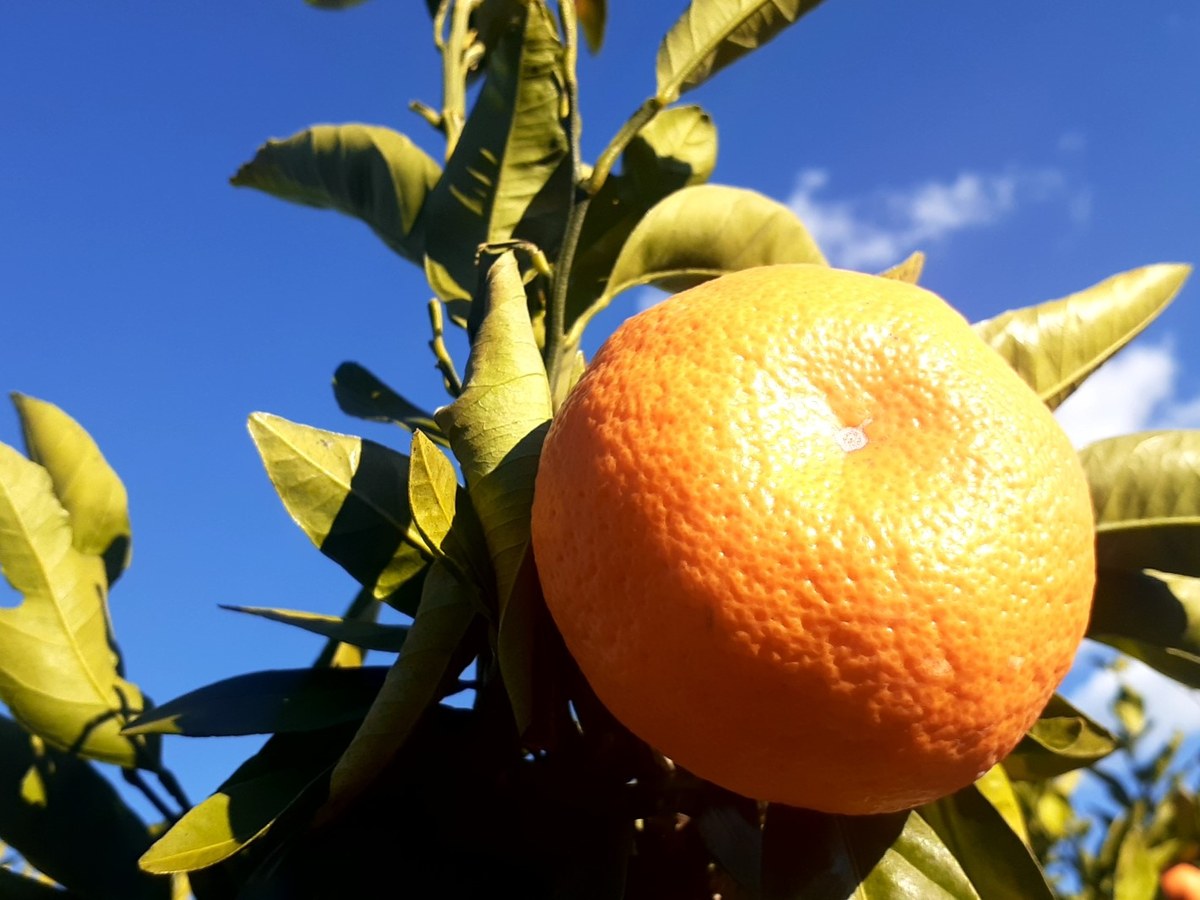
Say what the name is first, because the JA itself insists on it: “Mikkabi mikan” is not a cultivar name but the brand of the unshu mikan grown around Mikkabi, the old town on the north shore of Lake Hamana in western Shizuoka. JA Mikkabi registered it as a regional collective trademark in 2007, and the fruit is counted among Japan’s three great mikan. The district is Shizuoka’s largest mikan ground: the cooperative’s own account notes that a town of roughly one hundredth of the prefecture’s area produces about a third of its mikan.
The flavour the brand promises is not maximum sweetness. It is balance — sweetness carried on enough acidity to give it depth, the taste the JA describes as koku, richness — grown on sunny, well-drained slopes of red volcanic-ash soil, in the dry Enshu wind off the lake.
Three hundred years to the Aoshima
The first trees are put about three hundred years back. In the mid-Edo period a grower in Hirayama brought Kishu mikan seedlings home from Nachi, far to the west; in the Tenpo years, 1830–43, larger-fruited unshu stock was brought from Kira in Mikawa and replaced the Kishu fruit — the unshu line the district still grows. Meiji growers planted the hillsides out as orchards, and the shipping cooperative that still runs the brand was founded in 1960.
The modern brand rests on one cultivar above all: Aoshima, the big late fruit that stores. For Aoshima alone, the record gives Mikkabi first place in Japan for both shipments and planted area. The district also kept faith with the fruit in its school: the old Mikkabi high school ran its own orchard, and until 1972 had a citrus department of its own.
The relay: wase, then Aoshima
Two harvests carry the name in turn. Wase, the early fruit, is picked in October and November and shipped into December; its segment membrane is soft, and a small finished grade of it — kanjuku wase “Kokoro”, grown only in orchards that meet a strict standard — is shipped for a few days in December. Aoshima, the mainstay, is picked in November and December and then rested in the district’s roji storehouses under managed temperature and humidity, where the acid edge rounds off; it ships from January into March, and on the JA’s account can be enjoyed into April, mellowing as it waits.
The 2026 crop opened on 8 November, when JA Mikkabi began gathering and grading the wase fruit — about 7,500 tonnes expected by early December — and the first trucks left for market the next day. First-day fruit came in from twenty-nine growers at about fifty tonnes.
Five million fruit a day, and the mark
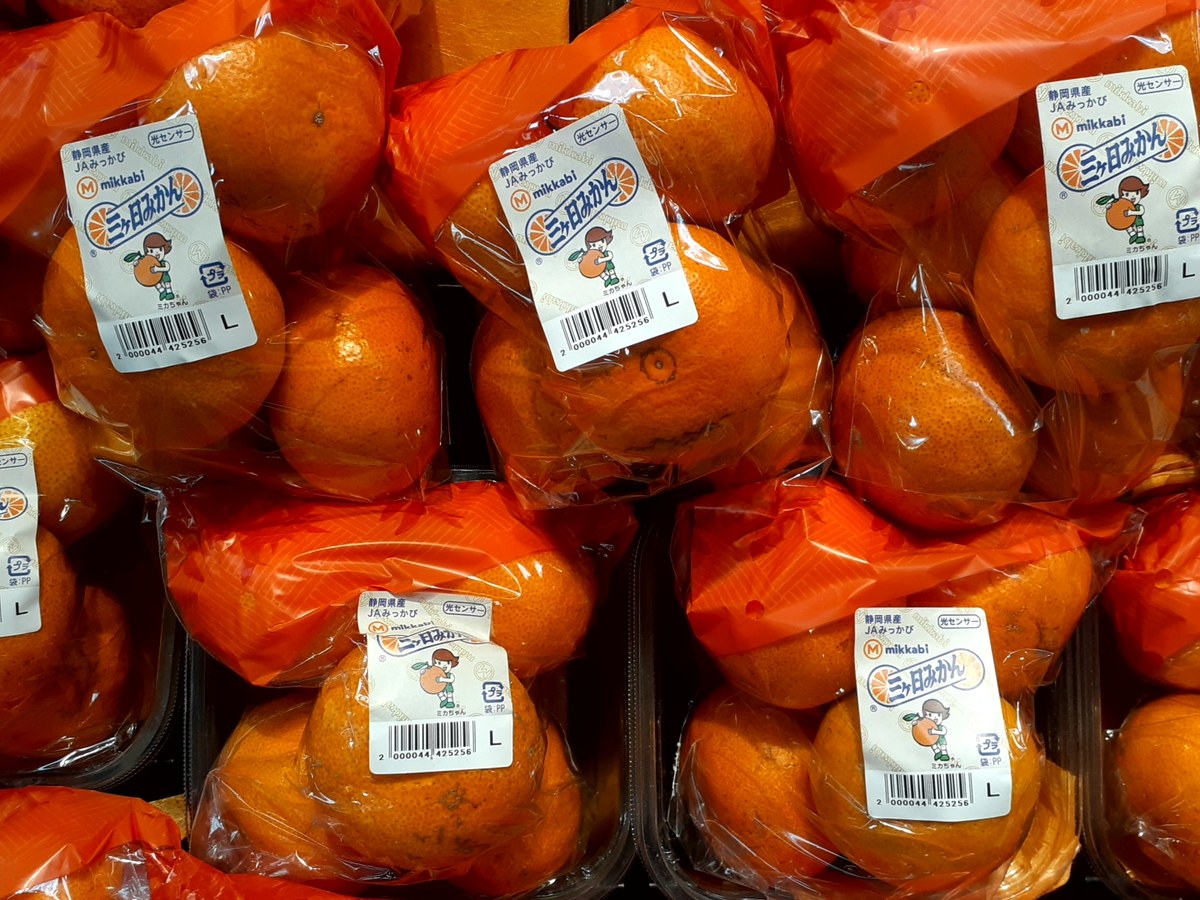
Behind the brand stands a machine. The grading plant completed in 2021 is among the largest in Japan: about 500 tonnes a day, which the cooperative converts for you — at 100 grams a fruit, about five million mikan a day — read by optical sensors and AI as well as by human eyes, from intake to packing in one line. About eighty percent of the town’s mikan passes through it, and the fruit that passes carries the Mika-chan mark: the mascot, born in 1979, printed on the bags — like the bagged fruit in the second photograph — is the sign the fruit met the standard.
Mikkabi also holds a first in the health register: in 2015 it became the first fresh food in Japan accepted as a Food with Function Claims (for its β-cryptoxanthin), and GABA followed in 2020 — the only fresh produce, on the JA’s account, to carry both. Buy it from the source if you can: on JA Mikkabi’s official online shop, read for this story, the 2026 wase boxes and the Aoshima boxes are both listed from ¥4,230, with the “Kokoro” finished-wase grade from ¥3,417.
Sources — checked 14 November 2026
- Mikkabi mikan — encyclopedia record (the Edo seedlings, the Aoshima standing, the harvest calendar)
- JA Mikkabi — 2026 crop release (the brand definition, the wase opening, the grading plant)
- JA Mikkabi official online shop — the 2026 listings and the brand pages
Checked 14 November 2026 (stored links re-fetched and judged per product): reserved where the page says so, with an editorial review note kept per product. Press, PR and travel use stays outside the grant.
Editorial review 2026-11-14